Emerald Cut Bulk Supplier: MOQ and SKU planning
Understanding MOQ for Bulk Emerald Cut Orders When you’re building a catalog, the minimum order quantity (MOQ) can shape your enti…
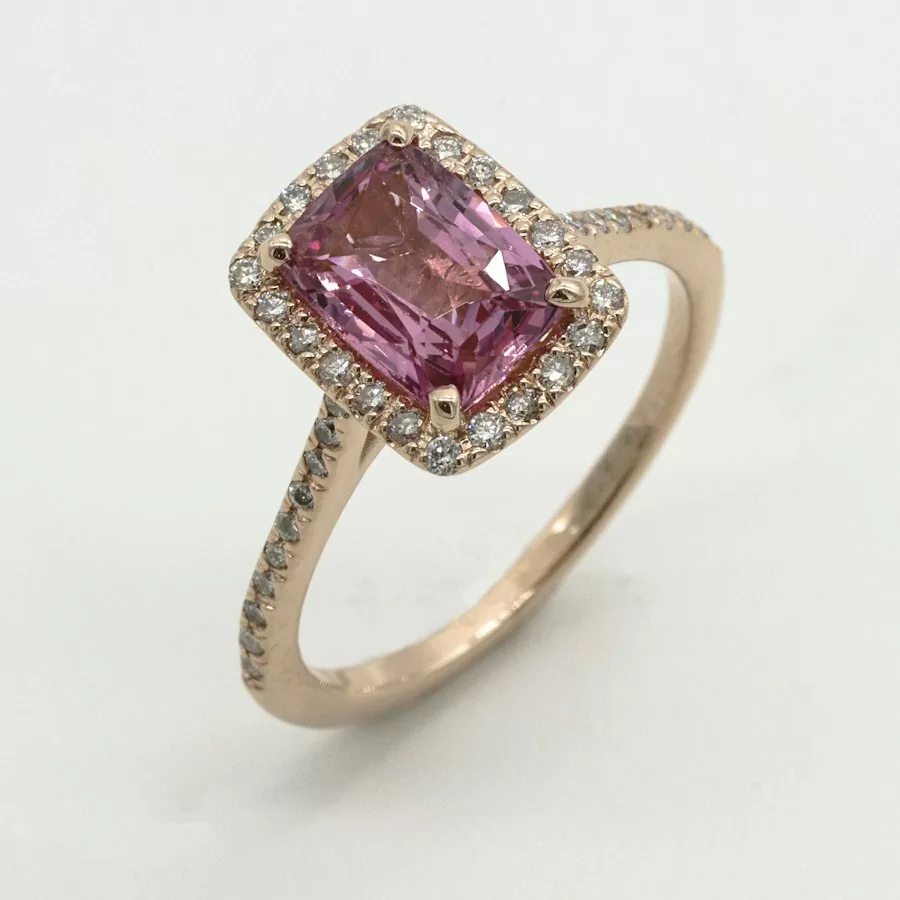
For years the men's jewelry story was limited to wedding bands and a watch. That has quietly changed. Signet and pinky rings moved out of estate cases and onto the hands of a broad, younger male customer who wants a ring with presence but not a diamond-sized budget. The shape that has emerged as the default for this modern signet is the emerald cut, set horizontally across the finger. Its clean step-cut lines read masculine and architectural, its large flat table creates a bold flash, and moissanite makes the whole thing affordable enough to sell as a lifestyle piece rather than an heirloom. Wholesale buyers who ignored the men's category are now rebuilding it around this one configuration.
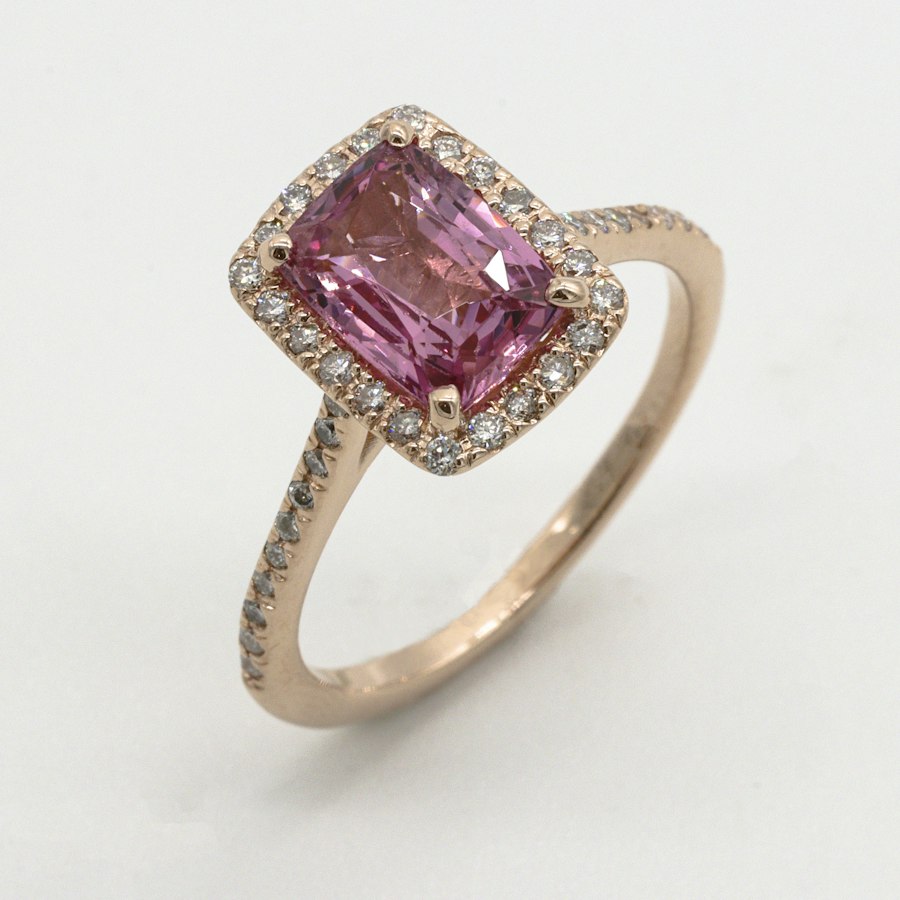
A vertical emerald cut on a signet points up the finger and reads tall and narrow. Rotated ninety degrees, the same stone stretches across the knuckle, filling the wide face of a signet and giving the ring a grounded, substantial look. This horizontal orientation is the signature of the modern men's signet revival. Because the emerald cut is a rectangle, it adapts to the rotation gracefully—unlike a marquise, which would look awkward stretched sideways. The flat, open table also works well on a signet, where the stone sits flush in a heavy bezel rather than raised on prongs.
Start from the core emerald cut understanding: the step-cut design shows clarity more than fire, which means the customer is buying shape and presence, not sparkle. That positioning fits the men's signet buyer perfectly, because he usually wants something understated and architectural rather than a sparkling statement.
The emerald cut's large open facets are transparent; they do not hide inclusions or a slight bowing the way a brilliant cut does. On a signet where the stone is the whole design, any windowing or milky look becomes obvious. This means the men's signet line needs cleaner, well-proportioned emerald stock than a comparable women's line. Buyers should favor stones with a balanced depth and a crisp, even table rather than the cheapest available emerald. Moissanite's typical VVS-to-VS clarity is an advantage here, because the step cut reveals exactly what is inside—and inside a quality moissanite there is almost nothing to see.
The durability of moissanite (9.25 Mohs) also matters for a men's ring that gets worn harder than most. Read more on moissanite durability and hardness. A stone that survives a workshop, a gym bag and daily hand-washing without scratching is exactly what a male everyday-wear customer is paying for.
For a horizontal signet, think in rectangles: 8x6 mm, 9x7 mm and 10x8 mm are the workhorse sizes. The 9x7 horizontal is the sweet spot—it fills a typical signet face without overwhelming the finger. Stock those three sizes in depth and keep larger rectangles as made-to-order. Because the stone is set in a bezel, the girdle is protected, which lets you accept stones with slightly more edge tolerance than a prong-set ring would allow. Do not confuse that with low quality, though; the face still has to be clean.
Men's signets sell in heavier widths—8 to 12 mm bands—and in sterling silver, stainless-look finishes, and gold. The horizontal emerald center in white moissanite reads well against both cool and warm metals. The customer is often buying his first "statement" ring, so price the line as an accessible premium rather than an investment piece. Moissanite's face-up size per dollar is the hook: a 10x8 emerald that reads substantial costs a fraction of what a comparable diamond would, which is how the category scales.
The buyer profile is broader than it used to be. It includes gifting partners shopping for a first "grown-up" ring, men who want a non-wedding ring with meaning, and a younger crowd that treats signets as everyday accessories rather than formalwear. That means the price point has to be approachable—most of these customers are not shopping estate jewelry budgets. Moissanite's cost structure is what makes the category open to them: a substantial horizontal emerald that would be out of reach in diamond becomes a considered purchase. Stock the line at a price that lets a customer buy without a saving-up campaign, and the reorders come through gifts and referrals.
The men's signet is no longer a niche order. It is a repeat business built on a single, repeatable formula: horizontal emerald moissanite, clean step cut, heavy bezel, accessible price. Stock the three hero rectangles, QC the window, and let the design do the rest. The customers are already looking for it.
Independent background on moissanite — how its hardness and refractive index compare with diamond — is documented in the Wikipedia article on moissanite.
Yes for price-sensitive customers who want brilliance and hardness. Moissanite ranks 9.25 on the Mohs scale, holds up to daily wear and costs a fraction of a natural diamond of the same size, so it resells fast in bridal and fashion lines.
MOQ starts at 50 pieces per design for stock items. Custom cuts and private-label settings usually start at 100–300 pieces depending on the mold.
Yes. Every parcel ships with GRA or IGI documentation listing carat weight, color grade and cut. We recommend passing the certificate to your end customer for trust.
Samples ship in 3–5 days. Bulk runs take 15–20 days under 500 pieces, and 25–30 days for custom work.
MOQ is 1 stone for samples. Bulk orders are priced by quantity tier; send your cut, carat, color and clarity requirements and we will return a wholesale quotation.
Sample stones ship within 7-14 days. Bulk production lead time is 15-25 days after deposit confirmation; international delivery after dispatch typically takes 3-10 business days depending on destination.
Prices are quoted per carat in US dollars with tiered wholesale pricing. We accept T/T (30% deposit, balance before shipment), PayPal and Western Union for sample and small orders.
Looking for loose stones or a custom cut? Talk to the factory directly.
Send InquiryWritten by the Holycome manufacturing & quality team. Every figure and claim in this article comes from our own production floor in Wuzhou, China — in-house casting, stone setting and a three-pass quality inspection we have run since 2008.
Materials are tested for nickel, lead and cadmium release by SGS and CTT International; moissanite centre stones ship with their GRA warranty card and report. We also hold an independent SMETA / Sedex ethical-trade audit and a Hong Kong Customs AML registration.
Reviewed for accuracy by our quality team before publication. Last updated .
Written by the Holycome manufacturing & quality team. Every figure and claim in this article comes from our own production floor in Wuzhou, China — in-house casting, stone setting and a three-pass quality inspection we have run since 2008.
Materials are tested for nickel, lead and cadmium release by SGS and CTT International; moissanite centre stones ship with their GRA warranty card and report. We also hold an independent SMETA / Sedex ethical-trade audit and a Hong Kong Customs AML registration.
Reviewed for accuracy by our quality team before publication. Last updated .

Understanding MOQ for Bulk Emerald Cut Orders When you’re building a catalog, the minimum order quantity (MOQ) can shape your enti…
Understanding the Emerald Cut Factory Direct Lead Time When you order an emerald cut from HolyCome, the first thing that shapes yo…

Why Emerald Cut Wholesale Matters for Your Resale Business Emerald cut stones are a staple in boutique and online resale markets b…
Understanding the Emerald Cut Custom OEM Process When you approach us for an emerald cut custom OEM, you’re not just getting a pie…
Understanding Stone Setting Durability in Emerald Cut Pieces When you source emerald cut stones, the setting is as crucial as the …