Lab Grown Diamonds Bulk Supplier: MOQ and SKU planning
Understanding MOQ for Bulk Lab‑Grown Diamond Orders When you first hit our portal, the Minimum Order Quantity (MOQ) can feel like …

Lab Grown Diamonds have shifted from a novelty category to a central part of trend-driven resale in the US market, and wholesale buyers who treat them as a style play rather than a commodity purchase are the ones moving inventory fastest. Because lab grown stones are created in controlled laboratory environments rather than mined from the earth, they deliver the look and durability customers want at price points that make fashion-forward formats profitable to stock.
This article covers the practical decisions a wholesale buyer faces when building a trend-focused program: which styles to order, which cuts and sizes to prioritize, how to pair stones with the right metals, how to structure MOQs and payment terms, and how to use sampling and QC to protect your margins before committing to bulk.
Trend buying means ordering what retail customers actually wear, not what looks impressive in a supplier catalog. Current demand in the US market clusters around a handful of repeatable formats, and your first order should test breadth across these styles rather than depth in any single design.
Studs, solitaire pendants, slim bands, and tennis bracelets in the 0.3 to 1.0 carat range turn over faster than oversized halo rings or three-stone statement settings. These formats sit at gifting price points, which widens your retail customer base and shortens sell-through cycles. Buyers who anchor their assortment in everyday pieces then add seasonal statement styles on top report steadier restocking than those who lead with hero pieces.
Pavé bands, baguette-accent rings, and stacked designs are among the styles seeing the strongest movement on social platforms. Lab grown pricing makes dense, diamond-forward looks accessible at mid-tier retail prices, which is where resale margin works best. When ordering these as custom work, specify pavé bead quality, stone alignment tolerances, and metal thickness in writing, because these construction details separate sellable stock from clearance inventory later.
Yellow gold and rose gold settings photograph strongly and drive engagement for social-driven sellers, while white metal pairings remain the safe volume choice for everyday studs and pendants. Rather than guessing, split a test order across two or three metal pairings and let sell-through data decide where you concentrate the next run.
Loose stones are sold by the carat, and finished pieces are priced per piece, so your cut and size mix directly affects both cost and retail positioning. Most trend programs center on rounds and ovals between 0.3 and 1.5 carats. Rounds are the easiest to sell at retail because customers recognize them instantly; ovals and emerald cuts photograph well, carry a distinct look, and help your listings stand out in crowded marketplaces.
Graded stones arrive with GRA or IGI papers, and you should request the certificate number for every stone above your threshold. IGI grading is widely recognized for lab grown stones in the US market, and having paperwork on file shortens the customer conversation at retail and supports your listing descriptions. For small melee stones used in pavé work, individual certification is not practical, so the supplier's inspection discipline becomes your quality assurance instead.
The metal you pair with stones changes both cost and positioning, and accurate naming matters for US resale. Your realistic options are 925 sterling silver, gold vermeil, gold plated finishes, or 10K, 14K, and 18K solid gold. Plated and vermeil pieces must be marketed as exactly that, never as solid gold, since US consumers increasingly verify listings and mislabeling creates returns, chargebacks, and legal exposure.
For trend testing, 925 sterling silver settings with lab grown stones deliver the look at accessible price points and let you trial styles with minimal capital. Gold vermeil adds perceived weight and quality for mid-tier positioning. Solid gold, most often 14K for the US market, belongs in your core assortment once a style has proven itself in testing.
A common sequence is sterling silver test runs, vermeil for the second order, then a solid gold custom run of 30 pieces once sell-through is confirmed.
Wholesale buyers have real flexibility here, and structuring orders well is where trend programs succeed or stall. Stock styles carry a minimum order of 1 piece, which means you can assemble a mixed test cart across many styles without heavy commitment. Custom work, including specific carat mixes, unique settings, or branded packaging, requires a 30-piece minimum per design. Loose stones are sold by the carat, so building your own inventory follows the per-carat pricing path.
Pricing is quoted per piece or per carat depending on the item, so compare quotes on the same basis when evaluating suppliers. Payment terms are standard and predictable: T/T with a 30 percent deposit and 70 percent balance before shipment for production orders, and PayPal for sample orders, which keeps your sampling risk low.
Sampling takes 7 to 10 days, which is fast enough to test multiple designs in parallel before a season peaks. Order samples of every style you are considering, examine stone setting quality, plating or metal finish, and how the piece photographs, then commit bulk budget only to proven designs. Bulk production takes 15 to 25 days after approval, so a sample round followed by a bulk run fits comfortably inside a typical buying season if you start early.
A supplier running three-stage QC, covering incoming material, in-process checks, and a pre-shipment AQL inspection, gives you a documented path from raw stone to packed carton. Ask which AQL level is applied at pre-ship, whether reports are shared with buyers, and how defects found at each stage are handled. For trend pieces where appearance drives the sale, this discipline is what keeps return rates manageable.
DDP delivery to the US takes 5 to 8 days, which means landed cost is predictable and no customs handling lands on your side. Combined with 7 to 10 day sampling and 15 to 25 day production, a realistic planning window from first sample request to stock on your shelf is roughly four to six weeks. Back-planning from holiday or gifting dates with that window keeps trend programs from arriving late.
The table below summarizes the buying parameters at a glance.
| Stage | Timeline | Minimum | Payment |
|---|---|---|---|
| Sampling | 7 to 10 days | 1 piece | PayPal |
| Bulk production | 15 to 25 days | 30 pieces custom | T/T 30/70 |
| DDP delivery | 5 to 8 days | None | Included in terms |
With those numbers in hand, you can build a buying calendar that sequences multiple test-and-scale cycles within a single season, rather than betting an entire budget on one bulk order.
The buyers who do well with Lab Grown Diamonds run a loop: watch retail and social signals, sample broadly at 1-piece minimums, confirm sell-through, then scale winners with 30-piece custom runs in the metal tier the data supports. Graded stones with GRA or IGI papers and a supplier inspection process at incoming, in-process, and pre-ship stages keep quality consistent as volume grows.
To see how these buying principles apply across other categories, browse our wholesale jewelry buying guides. To review the production standards, inspection process, and company background behind the stones and settings discussed here, read about our manufacturing facility. When you are ready to request samples or quotes on a trend assortment, contact our sales team and we will scope the order with you.
MOQ is 1 piece for stock styles and 30 pieces for custom work, and loose stones are sold by the carat. Sampling takes 7 to 10 days, and bulk production runs 15 to 25 days after the sample is approved. Pricing is quoted per piece or per carat depending on the item. Payment is T/T with a 30% deposit and the 70% balance before shipment, and PayPal is accepted for sample orders.
Yes. Stock styles carry a 1-piece minimum, so you can order individual samples across many designs. PayPal is accepted for sample orders, keeping the trial low risk.
Custom work requires 30 pieces per design. That includes specific carat mixes, custom settings, or branded packaging beyond existing stock styles.
Sampling runs 7 to 10 days, bulk production takes 15 to 25 days after approval, and DDP delivery to the US takes 5 to 8 days. Plan roughly four to six weeks end to end.
Graded stones arrive with GRA or IGI papers, and certificate numbers can be provided. Small melee stones in pavé work are not individually certified, so quality relies on the supplier's inspection process.
Production orders are paid by T/T with a 30 percent deposit and the 70 percent balance before shipment. Sample orders can be paid via PayPal.
Sources: Grading references: GIA gem education and GIA laboratory information.
MOQ is 1 stone for samples. Bulk orders are priced by quantity tier; send your cut, carat, color and clarity requirements and we will return a wholesale quotation.
Sample stones ship within 7-14 days. Bulk production lead time is 15-25 days after deposit confirmation; international delivery after dispatch typically takes 3-10 business days depending on destination.
Prices are quoted per carat in US dollars with tiered wholesale pricing. We accept T/T (30% deposit, balance before shipment), PayPal and Western Union for sample and small orders.
Looking for loose stones or a custom cut? Talk to the factory directly.
Send InquiryWritten by the Holycome manufacturing & quality team. Every figure and claim in this article comes from our own production floor in Wuzhou, China — in-house casting, stone setting and a three-pass quality inspection we have run since 2008.
Materials are tested for nickel, lead and cadmium release by SGS and CTT International; moissanite centre stones ship with their GRA warranty card and report. We also hold an independent SMETA / Sedex ethical-trade audit and a Hong Kong Customs AML registration.
Reviewed for accuracy by our quality team before publication. Last updated .
Written by the Holycome manufacturing & quality team. Every figure and claim in this article comes from our own production floor in Wuzhou, China — in-house casting, stone setting and a three-pass quality inspection we have run since 2008.
Materials are tested for nickel, lead and cadmium release by SGS and CTT International; moissanite centre stones ship with their GRA warranty card and report. We also hold an independent SMETA / Sedex ethical-trade audit and a Hong Kong Customs AML registration.
Reviewed for accuracy by our quality team before publication. Last updated .
Understanding MOQ for Bulk Lab‑Grown Diamond Orders When you first hit our portal, the Minimum Order Quantity (MOQ) can feel like …

Why Direct Factory Access Matters for Lab-Grown Diamond Buyers When you source lab‑grown diamonds straight from a factory, you gai…
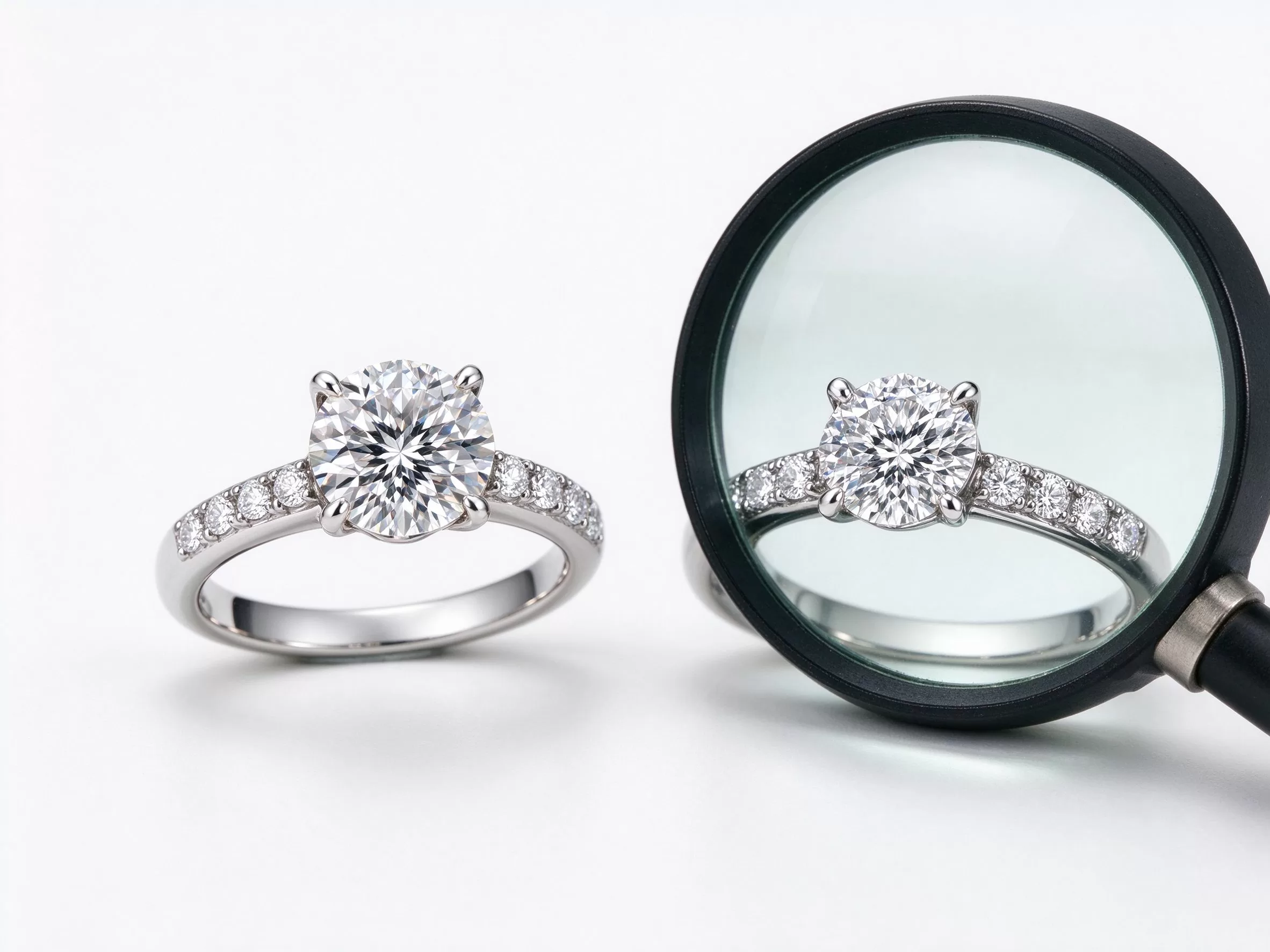
Understanding Our Incoming QC Process When lab‑grown diamonds arrive at Holycome, they first undergo a meticulous incoming QC chec…
Plating Thickness: The First Line of Defense When you hand your design to us, the plating thickness is the first decision that imp…
Why Stone Setting Durability Matters for Wholesale Buyers When you’re buying lab‑grown diamonds in bulk, the setting is as critica…