Lab Grown Gemstones Bulk Supplier: MOQ and SKU planning
Planning Your MOQ with a Lab‑Grown Gemstone Bulk Supplier When you source lab‑grown gems in bulk, the minimum order quantity (MOQ)…

Lab grown gemstones give wholesale buyers a way to stock consistent color and documented quality at a predictable cost, and the two factors that decide whether your inventory sells cleanly are stone grading and color consistency. When a parcel of lab grown sapphires or emeralds arrives with grade papers that match what your retail customers see in person, returns drop and reorder rates climb.
This guide walks through the grading paperwork, color-matching methods, and production controls a US wholesale buyer should confirm before committing to a bulk order.
A grading report is the common language between your supplier, your sales team, and your end customer. For lab grown diamonds and many colored lab grown gemstones, a certificate from an independent laboratory documents carat weight, color grade, clarity grade, and cut details. Our lab grown stones are supplied with GRA or IGI papers, so each stone carries a third-party record rather than only a supplier's own claim.
For a wholesale buyer, the practical value is straightforward. If a retail customer questions a stone's color or clarity grade, the paper answers the question. If you resell to other jewelers, the report speeds up their buying decision. Graded stones are priced per carat, and the grade on the certificate is part of what justifies the per-carat price. Stones sold without papers are typically priced per piece, which works for lower-value accent stones but leaves less documentation for center stones.
Colored stones such as lab grown sapphires, rubies, and emeralds are graded differently from diamonds. Reports typically list species, color description, clarity characteristics, treatment status, and origin type (lab grown versus natural). Train whoever handles receiving on your team to check that the species and color description on the report match the physical stone. A mismatch caught at receiving is a simple swap; a mismatch discovered after you have set the stone into finished jewelry is a costly rework.
Color consistency is the single most common complaint wholesale buyers raise about lab grown colored stones, and it is also the most controllable. Lab growth conditions can be tuned, but crystals grown in different batches, or even at different positions within the same growth run, can show slight shifts in hue or saturation. A parcel that looked uniform in supplier photos can arrive with visible variation when stones are lined up under the same light.
This matters commercially because retail customers comparing two pendants side by side expect the same product name to mean the same color. If your stock of 5mm round lab grown blue sapphires shows a green-leaning stone next to a violet-leaning stone, your retail partner will notice before you do.
Ask any prospective supplier these questions before you order:
A supplier who keeps lot-level color separation and sorts under controlled lighting can hold a bulk order within a tight range. A supplier who mixes lots will show drift across large orders, and the drift becomes visible exactly when order size grows.
One of the most effective practices for repeat wholesale buyers is keeping a small library of approved reference stones. When you approve a sample for a stock style, keep one stone from that sample lot on file. On each reorder, compare incoming stones against the reference under the same lighting. This turns color consistency from a subjective conversation into a side-by-side check, and it gives you a documented basis for requesting replacement stones if a shipment drifts.
Sampling is where you verify both grading accuracy and color consistency at low cost. Our sample orders take 7 to 10 days, and sample orders can be paid through PayPal, which keeps the process low-risk for a first-time buyer. Use the sampling phase to do three things:
Only approve a sample for bulk production after you have completed all three checks. Once you approve, bulk production runs 15 to 25 days, so changes requested after approval extend the timeline.
Lab grown gemstones are priced per piece or per carat depending on the item, and understanding which applies to your order helps you compare quotes accurately. Graded center stones are typically priced per carat, so a certificate-backed 1.2 carat lab grown sapphire costs more than a 0.9 carat stone of similar quality because the price scales with documented weight and grade. Small accent stones and calibrated melee are usually priced per piece, which simplifies costing for high-volume production runs.
When comparing supplier quotes, confirm whether the quoted price includes grading papers. A per-carat price that excludes a GRA or IGI report is not directly comparable to one that includes it, and undocumented stones are harder to resell to quality-focused retail partners.
Grading and color consistency only hold if the supplier enforces them through production. Our quality control runs in three stages: incoming inspection of raw stones, in-process checks during cutting and sorting, and a pre-shipment AQL inspection on the finished lot. The pre-ship AQL inspection is where color drift and grade mismatches are caught before stones leave the workshop, which is far cheaper than correcting them after arrival in the US.
Minimum order quantities are 1 piece for stock styles and 30 pieces for custom work, and loose stones are sold by the carat. For US delivery, we ship DDP, which means duties and delivery are handled through the quoted process, and delivery to the US takes 5 to 8 days. Payment terms are T/T with a 30 percent deposit and 70 percent balance before shipment for bulk orders, while sample orders can be paid through PayPal.
When a bulk shipment arrives, run this checklist before releasing the balance payment:
Completing this check within a day or two of arrival keeps any claims within a workable window and protects both sides of the transaction.
A final practical decision is whether to buy graded loose stones or calibrated stock in standard sizes. Graded loose stones suit custom work and center stones where documentation justifies the per-carat pricing. Calibrated stock in standard millimeter sizes suits production jewelry where speed of setting matters and per-piece pricing keeps costing simple. Many wholesale buyers carry both: graded stones for their signature pieces and calibrated stock for volume lines.
The right mix depends on your customer base, but in both cases the grading and color-consistency checks above apply.
| Item type | Pricing basis | Grading papers | Typical use |
|---|---|---|---|
| Graded loose stones | Per carat | GRA or IGI | Center stones, custom work |
| Calibrated stock | Per piece | Optional | Volume jewelry production |
| Accent stones | Per piece | Usually not | Melee, side stones |
Whichever route you choose, hold your supplier to the same standard: documented grades and lot-level color control from sample approval through pre-ship inspection.
MOQ is 1 piece for stock styles and 30 pieces for custom work, and loose stones are sold by the carat. Sampling takes 7 to 10 days, and bulk production runs 15 to 25 days after the sample is approved. Pricing is quoted per piece or per carat depending on the item. Payment is T/T with a 30% deposit and the 70% balance before shipment, and PayPal is accepted for sample orders.
Lab grown gemstones share the same chemical and optical properties as their natural counterparts but are grown in a controlled laboratory environment rather than mined. They are sold as lab grown and documented as such on grading reports. Reports from laboratories such as GRA and IGI state the growth origin so downstream buyers know exactly what they are purchasing.
Graded stones in our catalog come with GRA or IGI papers, and these are typically the higher-value center stones priced per carat. Small accent stones and calibrated stock are often sold per piece without individual reports, since the cost of certifying each stone outweighs its value. Ask which items include papers when you request a quote.
With single-lot selection and sorting under controlled lighting, stones within one order can be matched to a tight hue range. The practical step is approving a sample first and keeping a reference stone, then comparing the bulk shipment against it on arrival. Confirm the supplier's color tolerance in writing before production begins.
Sampling takes 7 to 10 days, and after you approve the sample, bulk production takes 15 to 25 days. Shipping to the US under DDP terms takes 5 to 8 days after shipment. Plan roughly five to six weeks from first sample request to goods in hand for a custom order.
Bulk orders are paid by T/T with a 30 percent deposit to start production and the 70 percent balance before shipment. Sample orders can be paid through PayPal for lower risk on a first transaction. Release the balance only after your receiving inspection confirms grades and color.
The fastest way to judge a supplier's grading accuracy and color consistency is to order samples and test them against the checklist in this article. Browse our stone categories and buying guides in our wholesale jewelry articles, learn about our production and inspection process on our company overview page, and request a sample quote through our contact page to start with 7 to 10 day sampling on the lab grown gemstones you plan to stock.
Sources: Grading references: GIA gem education and GIA laboratory information.
MOQ is 1 stone for samples. Bulk orders are priced by quantity tier; send your cut, carat, color and clarity requirements and we will return a wholesale quotation.
Sample stones ship within 7-14 days. Bulk production lead time is 15-25 days after deposit confirmation; international delivery after dispatch typically takes 3-10 business days depending on destination.
Prices are quoted per carat in US dollars with tiered wholesale pricing. We accept T/T (30% deposit, balance before shipment), PayPal and Western Union for sample and small orders.
Looking for loose stones or a custom cut? Talk to the factory directly.
Send InquiryWritten by the Holycome manufacturing & quality team. Every figure and claim in this article comes from our own production floor in Wuzhou, China — in-house casting, stone setting and a three-pass quality inspection we have run since 2008.
Materials are tested for nickel, lead and cadmium release by SGS and CTT International; moissanite centre stones ship with their GRA warranty card and report. We also hold an independent SMETA / Sedex ethical-trade audit and a Hong Kong Customs AML registration.
Reviewed for accuracy by our quality team before publication. Last updated .
Written by the Holycome manufacturing & quality team. Every figure and claim in this article comes from our own production floor in Wuzhou, China — in-house casting, stone setting and a three-pass quality inspection we have run since 2008.
Materials are tested for nickel, lead and cadmium release by SGS and CTT International; moissanite centre stones ship with their GRA warranty card and report. We also hold an independent SMETA / Sedex ethical-trade audit and a Hong Kong Customs AML registration.
Reviewed for accuracy by our quality team before publication. Last updated .
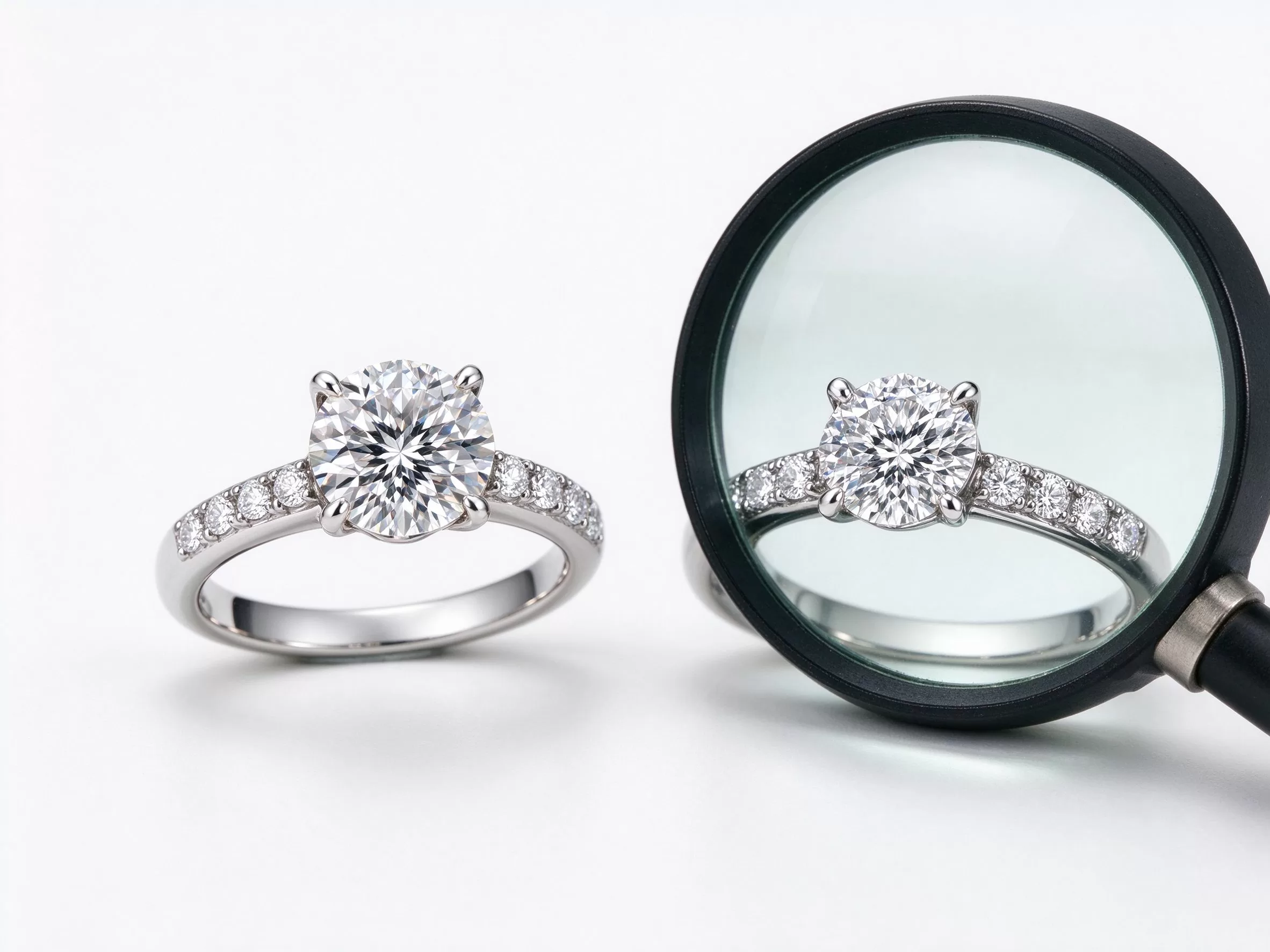
Planning Your MOQ with a Lab‑Grown Gemstone Bulk Supplier When you source lab‑grown gems in bulk, the minimum order quantity (MOQ)…

Why Direct Factory Sourcing Cuts Your Margins When you buy through a trading company, you pay for their overhead, marketing, and t…
Incoming QC: The First Line of Defense When a batch of lab‑grown gemstones arrives from our production line, the first thing we do…
Understanding Our Production Lead Times When you place an order for lab‑grown gemstones at Holycome, the first thing you’ll need t…

Understanding Durability in Stone Settings When you spot a gem in a display case, the setting is what keeps it safe. A robust sett…