Loose Moissanite Bulk Supplier: factory vs trading company margin
Factory‑Trade Margin Insight When you order loose moissanite directly from a manufacturing plant, the price reflects the actual co…
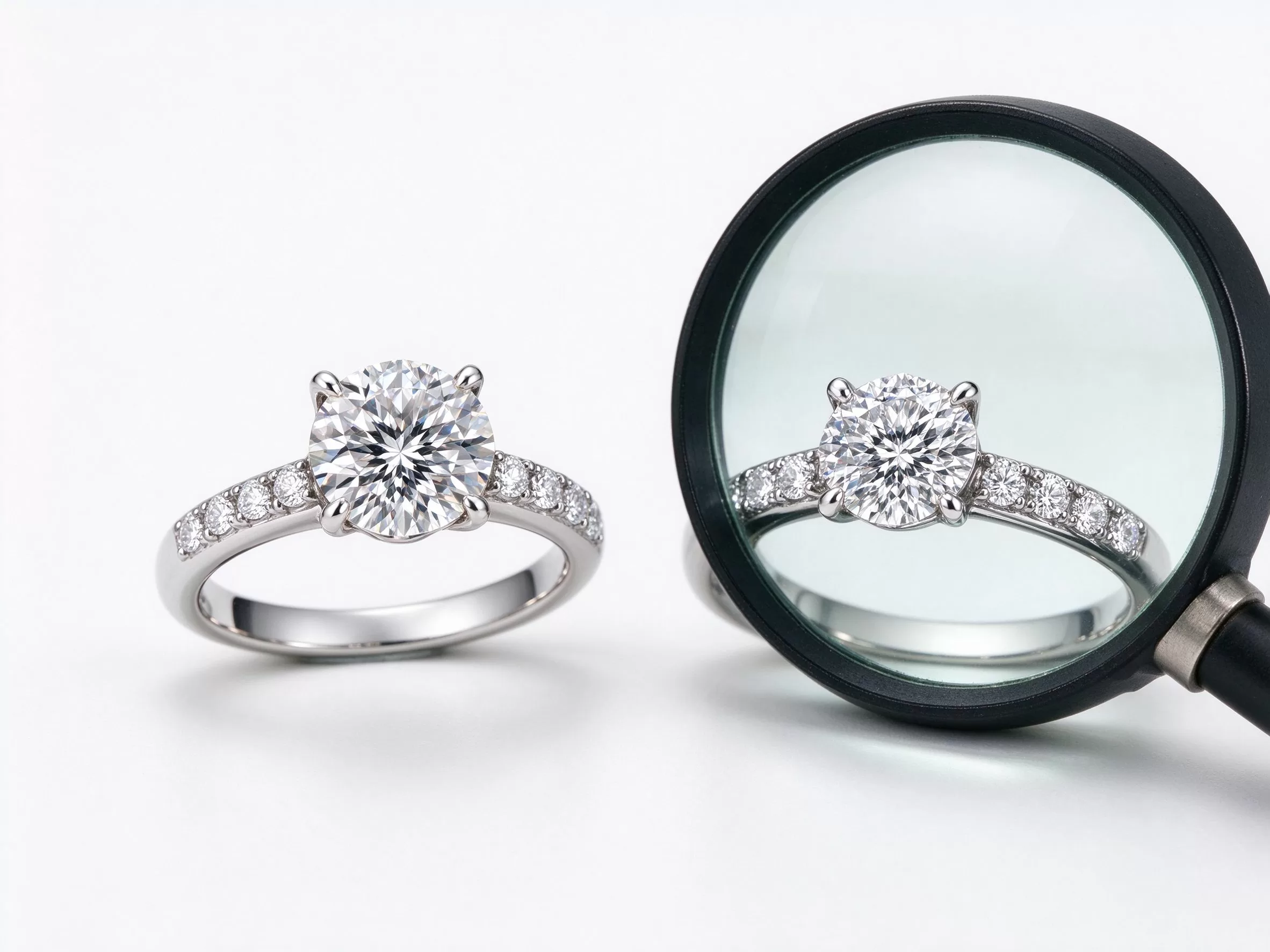
Loose Moissanite is a lab-created gemstone sold by the carat, and how you label it in the US market determines whether your jewelry line passes retailer audits, FTC review, and customer scrutiny. For wholesale buyers, the compliance questions start before the stones even arrive: what paperwork accompanies each lot, what metal marks can appear on the finished mounting, and what wording is legally allowed on your product pages and invoices.
This article walks through the practical decisions US importers face when sourcing loose moissanite, from grading reports to hallmarking rules on 925 sterling silver and solid gold settings.
The Federal Trade Commission's Jewelry Guides require that any product sold as a diamond be a natural or, if disclosed, lab-grown diamond. Moissanite is neither. It is silicon carbide, a distinct gemstone grown in a laboratory, and marketing it as a diamond alternative is acceptable only when the disclosure is clear and conspicuous. Calling it a "real diamond" or implying it is a diamond without qualification is a misrepresentation.
For a wholesale buyer, missteps at the labeling stage create downstream liability. Retail partners increasingly ask for compliance documentation during onboarding, and marketplace platforms can delist products whose titles or descriptions misstate the stone. When you source loose stones by the carat, request written confirmation from your supplier describing the material as lab-created moissanite, and carry that exact wording through to your own labels, hangtags, and product copy.
Disclosure should appear where the buyer will see it before purchase. On a product page, that means the stone type is named in the title or first line of the description, not buried in a spec table. Terms like "diamond simulant" or "diamond alternative" are permissible when paired with the actual gem name.
Avoid implying the stone is natural, and never use grading language borrowed from natural diamond certificates, such as color and clarity scales formatted to look like GIA reports.
Stone disclosure and metal disclosure are handled independently. A mounting described as gold must actually be 10K, 14K, or 18K solid gold; gold vermeil and gold plated silver must be named as such. If your supplier offers the same loose moissanite stone set in 925 sterling silver with a gold plating, the product name needs both facts. This is a common area where importers get flagged, so build the correct metal name into your spec sheet from the start.
Reputable suppliers of loose moissanite issue grading papers with graded stones, typically from GRA or IGI. These reports document carat weight, color grade, cut, and dimensions, giving you a consistent basis for pricing per carat and for verifying that the stones in a bulk lot match the order. Not every stone needs a report; many wholesale buyers order melee and small rounds ungraded and reserve GRA or IGI papers for center stones above a set carat threshold.
Decide your grading policy before you request a quote. If you plan to sell to retail partners who require stone-level documentation, specify that graded stones come with papers and keep copies on file. If you are producing high-volume stock styles where per-piece cost matters more, ungraded stones with in-house QC verification may be the more practical route.
Either way, the supplier's three-stage quality control process, covering incoming stone inspection, in-process checks during setting, and a pre-ship AQL inspection, gives you a documented record you can share with your own customers.
Check that report carat weights reflect moissanite's actual weight, since moissanite weighs less per given size than diamond and some sellers list diamond-equivalent weight. Ask your supplier to state both figures so your invoices and product listings are unambiguous. Confirm the color grade notation matches the scale the report issuer uses, and keep report numbers linked to lot numbers in your purchase records so a retailer audit can be answered with paperwork rather than guesses.
The US has no mandatory national hallmarking law comparable to the UK assay system, but misrepresenting metal content violates FTC rules and various state consumer protection statutes. In practice, US retailers expect standard quality marks: 925 for sterling silver, 10K, 14K, or 18K for solid gold, and 925 with a vermeil designation where appropriate. Stamping a plated item with a karat mark is misrepresentation, plain and simple.
When you order custom work with a 30 piece minimum, tell the factory exactly which mark should appear and where. Common placements include the inside of a ring shank, a pendant bail, or a clasp tag. For stock styles with a 1 piece minimum, confirm the existing hallmarks in the product specification before you list the item, because a stock earring finding stamped 925 can only be sold as sterling silver even if it carries gold color plating.
A compliant listing for a loose stone or a set piece contains four elements: the gem name stated as moissanite with a lab-created or simulant qualifier where needed, the actual carat weight or size, the true metal of the mounting, and any grading report reference. Price is stated per piece or per carat depending on the item, which should match how the supplier quoted it to avoid margin confusion at the accounting stage.
Train anyone who writes your copy to avoid absolutes and borrowed diamond language. Words implying permanence or perfection are both a compliance risk in advertising and a practical risk in reviews. A listing that reads accurately, with a GRA or IGI report number where one exists, tends to reduce returns because the buyer knew exactly what was arriving.
Your payment and shipping terms shape how much documentation you can demand. Standard wholesale terms are T/T with a 30 percent deposit and the 70 percent balance before shipment, with PayPal accepted for sample orders. Sampling takes 7 to 10 days and bulk production runs 15 to 25 days after approval, which gives you a defined window to verify hallmarks and stone paperwork on the sample before committing to a production run.
DDP delivery to the US takes 5 to 8 days, with duties handled by the shipper, which keeps your landed cost predictable. Build inspection time into that window: photograph hallmarks, weigh stones against the reports, and spot-check color before goods move to your customers. The table below summarizes the decisions that most often determine whether a moissanite program stays compliant.
| Decision | Compliant Choice | Risk If Wrong |
|---|---|---|
| Stone wording | Lab-created moissanite named clearly | FTC misrepresentation exposure |
| Metal mark | 925, 10K, 14K, or 18K as actual | Plated item stamped as karat gold |
| Grading | GRA or IGI papers on graded stones | Audit requests without evidence |
| Weight disclosure | Actual carat weight stated | Customer disputes and returns |
Each row maps to a document you should hold before releasing payment or shipping to a retail partner. Treat the sample stage as your compliance checkpoint, since correcting a hallmark or a listing after bulk production is far costlier than fixing it on a 7 to 10 day sample.
MOQ is 1 piece for stock styles and 30 pieces for custom work, and loose stones are sold by the carat. Sampling takes 7 to 10 days, and bulk production runs 15 to 25 days after the sample is approved. Pricing is quoted per piece or per carat depending on the item. Payment is T/T with a 30% deposit and the 70% balance before shipment, and PayPal is accepted for sample orders.
No. Moissanite is a lab-created gemstone and a distinct material from diamond. You may call it a diamond alternative or simulant as long as the name moissanite appears clearly, but implying it is a diamond is misrepresentation under FTC guidance.
No. Graded stones carry GRA or IGI papers, while many buyers order small melee ungraded to control cost. A common approach is to require reports on center stones above a carat threshold you set and rely on the factory's three-stage QC for the rest.
The 925 mark for sterling silver, with the plating described in the product copy. Stamping a karat mark on plated or vermeil items misrepresents the metal. Solid gold mountings in 10K, 14K, or 18K carry their karat mark.
Use the pre-ship AQL inspection as your checkpoint. Request photos of hallmarks, weights against report values, and report copies tied to lot numbers, then release the 70 percent balance before shipment once the checks pass.
DDP to the US takes 5 to 8 days and the shipper handles duties, but your labeling and disclosure obligations are unchanged. Keep the specification sheets, reports, and inspection records on file regardless of shipping terms.
The fastest way to lock down your labeling and hallmarking requirements is to order a sample, review the marks and paperwork, and then scale into production. Browse our wholesale guides on jewelry sourcing and compliance for more detail on stone grading and metal rules, learn about our factory capabilities and quality control process, or request a quote for loose moissanite with sampling in 7 to 10 days and bulk production in 15 to 25 days after approval.
Sources: Grading references: GIA gem education and GIA laboratory information.
MOQ is 1 stone for samples. Bulk orders are priced by quantity tier; send your cut, carat, color and clarity requirements and we will return a wholesale quotation.
Sample stones ship within 7-14 days. Bulk production lead time is 15-25 days after deposit confirmation; international delivery after dispatch typically takes 3-10 business days depending on destination.
Prices are quoted per carat in US dollars with tiered wholesale pricing. We accept T/T (30% deposit, balance before shipment), PayPal and Western Union for sample and small orders.
Looking for loose stones or a custom cut? Talk to the factory directly.
Send InquiryWritten by the Holycome manufacturing & quality team. Every figure and claim in this article comes from our own production floor in Wuzhou, China — in-house casting, stone setting and a three-pass quality inspection we have run since 2008.
Materials are tested for nickel, lead and cadmium release by SGS and CTT International; moissanite centre stones ship with their GRA warranty card and report. We also hold an independent SMETA / Sedex ethical-trade audit and a Hong Kong Customs AML registration.
Reviewed for accuracy by our quality team before publication. Last updated .
Written by the Holycome manufacturing & quality team. Every figure and claim in this article comes from our own production floor in Wuzhou, China — in-house casting, stone setting and a three-pass quality inspection we have run since 2008.
Materials are tested for nickel, lead and cadmium release by SGS and CTT International; moissanite centre stones ship with their GRA warranty card and report. We also hold an independent SMETA / Sedex ethical-trade audit and a Hong Kong Customs AML registration.
Reviewed for accuracy by our quality team before publication. Last updated .

Factory‑Trade Margin Insight When you order loose moissanite directly from a manufacturing plant, the price reflects the actual co…

Why Buy Loose Moissanite Direct from a Factory? When you source loose moissanite from a trading company, the product passes throug…
Understanding Incoming QC for Loose Moissanite When a batch arrives at our production floor, it first undergoes a rigorous incomin…

Understanding Loose Moissanite for Private Label Loose moissanite refers to individual stones not set in jewelry. For private labe…
Understanding Loose Moissanite for Durable Settings Loose moissanite is a single crystal of silicon carbide that arrives in its ra…