A jeweler new to moissanite faces a choice that changes the whole business model: buy loose ovals and set them in your own mountings, or buy finished oval jewelry from a supplier. The first route looks like the higher margin, and it often is, but it hides setup costs that the second route absorbs. This is the comparison in real numbers, so you can pick the model that matches your shop.
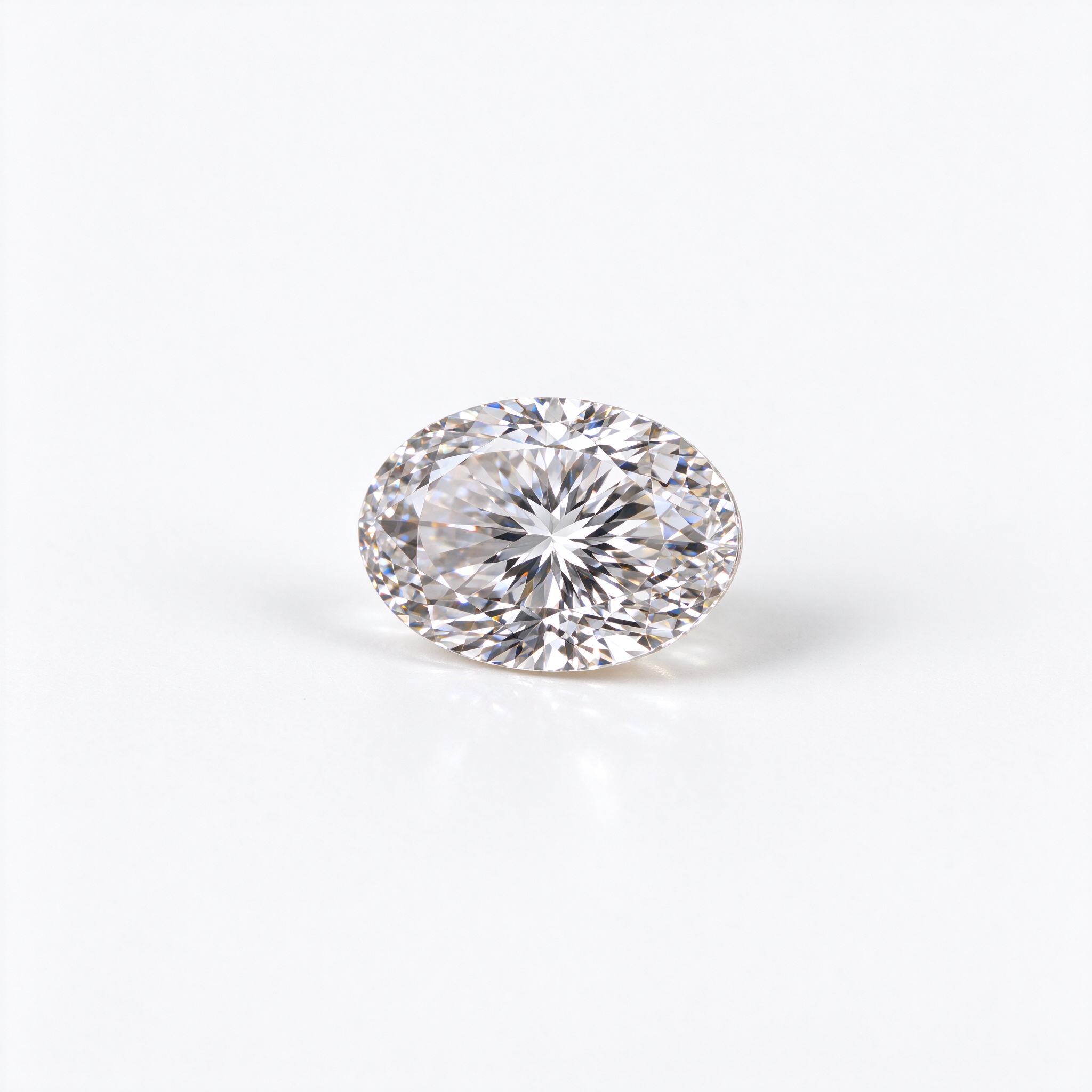
Selling loose stones
Buying an 8x10 oval at $55 to $90 wholesale and selling it loose to a customer who brings their own setting idea gives you a three to four times markup on the stone itself. The customer pays for the setting separately, and you or your bench charge for that. The upside is high margin per stone. The downside is that loose stones sit in a tray until the right customer walks in, and the tray ties up capital. A ten-stone loose oval float sits around $500 to $900 and may turn over a quarter.
Selling finished jewelry
Finished oval rings arrive mounted, priced higher wholesale, and retail for a smaller multiple. A finished 8x10 oval solitaire in 14k gold might cost $180 to $280 wholesale and retail at $400 to $600, which is a lower multiple than the loose model but a faster sale. The upside is that a finished piece sells on the first customer who likes it, without a setting conversation. The downside is less margin per piece and a wider range of SKUs to hold.
| Model | Wholesale outlay (8x10 oval) | Typical retail multiple | Capital tied up | Turnover |
|---|---|---|---|---|
| Loose stone + own setting | $55 - $90 stone, plus mounting | 3 - 4x on stone | lower per piece, slower | weeks to months |
| Finished ring from supplier | $180 - $280 mounted | 2 - 3x landed cost | higher per piece, faster | days to weeks |
Which suits which business
A bench jeweler who can set stones themselves should lean loose. The margin on the stone plus the setting labor adds up, and the customer relationship is built on custom work. A retail shop without an in-house bench usually does better with finished pieces, because the setting conversation is a delay that loses sales. Many shops run both: a small loose float for the custom customer and a finished display for the walk-in. The loose stones fund the margin; the finished pieces fund the cash flow.
The hidden cost of loose stock
Loose oval stock has a cost that finished inventory does not: it ages. Face-up tone drifts between cutting lots, and an oval that sat in a drawer for six months can read slightly different from the new parcel. Rotate the tray, sell the oldest stones first, and do not over-order loose sizes that turn slowly. The margin on paper looks better than the margin in practice if half the tray sits unsold at year end.
The bench cost hidden in loose stock
The loose-stone model looks cheaper on the invoice, but setting labor has a cost that finished jewelry already absorbs. A bench jeweler who sets an oval solitaire spends thirty to forty minutes per ring, plus the cost of the mounting, the prongs and the cleaning. Add that labor to the stone cost and the margin narrows. If you do not have an in-house bench, the loose model stops looking attractive, because you are paying a setter's rate on every piece. The finished model prices that work in, which is why it suits shops without a bench.
The hybrid most shops run
Few jewelers choose one model exclusively. Most run a hybrid: a small loose oval float for the custom customer who wants a specific setting, and a finished display of solitaire and halo rings for the walk-in. The loose float funds the margin on bespoke work; the finished pieces fund the cash flow on standard sales. Start with finished if you are new, add a loose float once the custom demand becomes obvious. Trying to stock both deeply on day one ties up capital in two models at once.
Which oval sizes suit each model
The loose model works best on the 7x9 and 8x10 ovals, where customers come in with a specific setting idea and want to choose the stone. The finished model works best on the same sizes, because those are the engagement-ring diameters that walk-in customers buy. The 9x11 and 10x12 sizes are almost always made to order, because the wholesale cost ties up too much cash to hold finished. For pendants, the 7x9 oval sells well as a finished piece on a chain, because it is a price-impulse purchase rather than a custom commission.
- Loose model: 7x9 and 8x10 for custom rings.
- Finished model: same sizes for walk-in solitaire sales.
- 9x11 and above: made to order, never held in stock.
Loose ovals and finished mounting options are in the loose stone catalog under Oval Cut.