Customers shopping for a white stone on a budget often compare moissanite to white sapphire, and the two look similar in a display case. The wholesale price of white sapphire is lower, which makes it tempting as an entry option. For the retailer, though, the two products have very different after-sales lives. The comparison below is written from the bench, not from the marketing brochure.
Hardness and wear
White sapphire is corundum at 9 on the Mohs scale. Moissanite is 9.25. Both resist scratching well, and both are wearable daily. The difference is not scratch resistance; it is how each stone reads after months of wear. Sapphire has a lower refractive index around 1.77, so it looks quieter and less bright than moissanite to begin with. A slightly worn sapphire can look dull, and customers bring it in asking what is wrong. Moissanite, with its higher refractive index and dispersion, stays bright longer and complains less.
Fire and the look
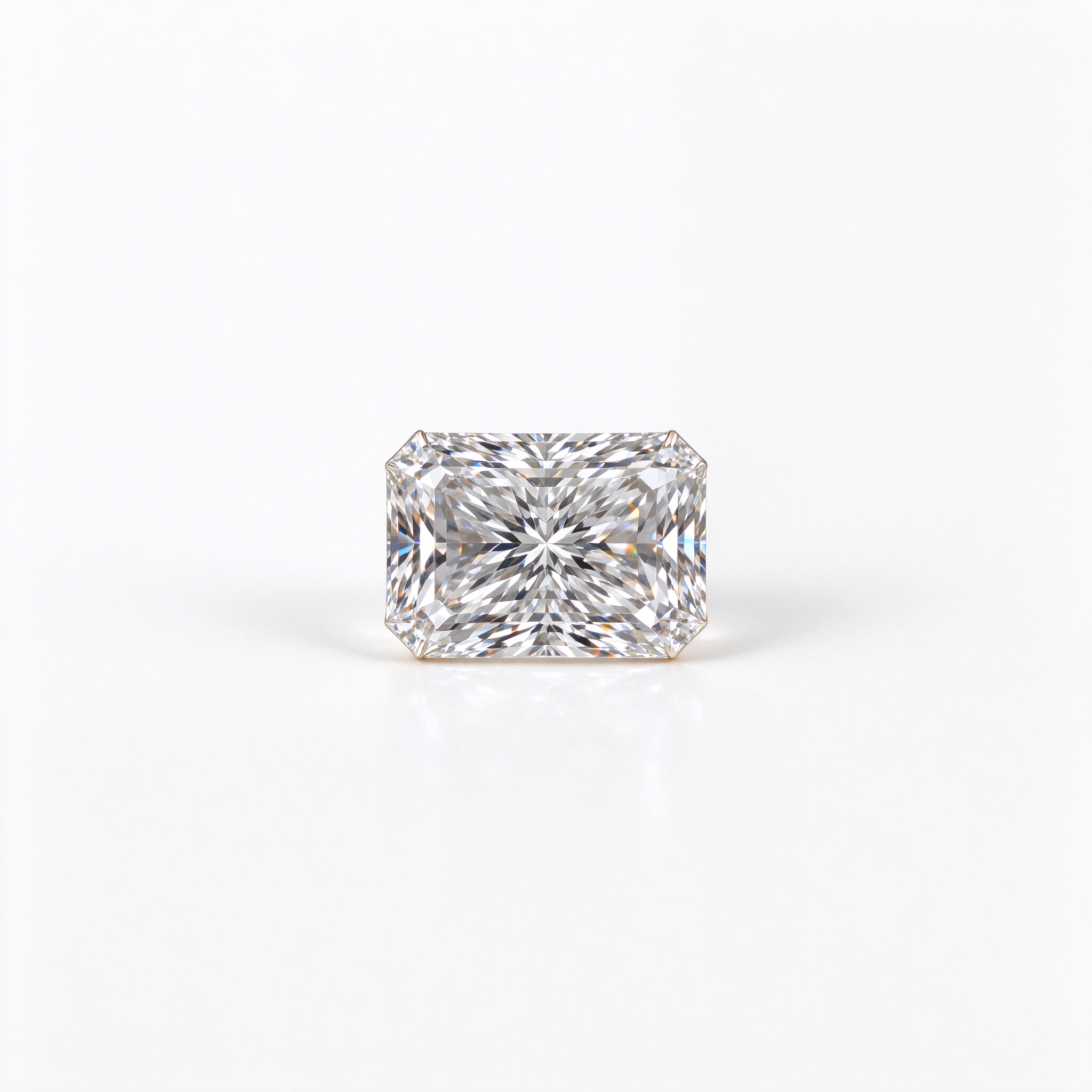
This is the visible difference. Moissanite dispersion sits near 0.104, more than double diamond's 0.044 and far above sapphire's near 0.018. A radiant-cut moissanite throws colored flashes; a same-size white sapphire of the same cut reads as a quiet, glassy white stone. Customers who want the diamond-like sparkle almost always return the sapphire and upgrade. Customers who specifically want a low-key, non-sparkling stone are satisfied by sapphire. Know which customer you are selling to.
| Attribute | Moissanite (radiant) | White sapphire |
|---|---|---|
| Mohs hardness | 9.25 | 9 |
| Refractive index | ~2.65 | ~1.77 |
| Dispersion (fire) | ~0.104 | ~0.018 |
| Wholesale, 7x7 (USD) | $60 - $95 | $15 - $30 |
| Face-up brightness, new | bright, fiery | quiet, glassy |
| Typical warranty returns | low, setting issues | moderate, "looks dull" |
Resale and customer retention
Here is the part retailers care about. A white sapphire sold at a low price point produces fewer upgrade customers, because the stone does not create the emotional pull that brings a buyer back for something larger. A moissanite customer who starts with a 6x6 radiant and likes it will return for a pendant, a pair of earrings, or a larger ring. The lower first sale on sapphire is offset by the higher lifetime value of the moissanite customer. Over a year, a moissanite customer is worth more to the business even though the initial ticket is smaller.
When sapphire is the right answer
Sapphire is not the wrong product. It suits customers who want a quiet, non-sparkling white stone, customers with a very tight budget, and customers who specifically dislike the look of moissanite's heavy fire. It also suits pieces that will not be worn daily, like a pendant kept for evening wear. Stock a small float if your customer base asks for it, but do not anchor your white-stone line on sapphire and wonder why repeat orders are thin.
- Sapphire suits the quiet, non-sparkling buyer.
- It suits the very tight budget.
- It suits evening pieces worn rarely.
- It is not the default for daily engagement wear.
Where cubic zirconia sits in this comparison
Customers sometimes compare moissanite to cubic zirconia as well, and that comparison is easier to settle. CZ looks like moissanite when new, but it scratches and clouds within months because it ranks around 8 on the Mohs scale and has a much softer surface. A CZ ring sold as a budget option will look dull inside a year, while a same-price moissanite will not. If a customer is choosing between CZ and moissanite purely on price, the moissanite is the better long-term value even at a higher ticket, and it produces fewer warranty returns. We mention CZ only because customers ask; we do not stock it, because the after-sales cost outweighs the low entry price.
Stocking both sapphire and moissanite
A small float of white sapphire in the same sizes as your moissanite line gives you a lower entry point for price-sensitive customers. Stock a few 7x7 sapphire stones for the customer who walks in saying they cannot afford moissanite. When they see the difference in fire next to the moissanite sample, a good share will upgrade. The sapphire float pays for itself in upgrade sales, even if the sapphires themselves move slowly. Keep them in a separate tray so the two products are not confused.
When a customer asks outright which stone is better, do not dismiss the sapphire. Explain the trade-off: quieter look, lower price, less after-sales sparkle. The customer who hears the honest comparison trusts you more, and the one who still chooses sapphire is a satisfied customer rather than a returned one. The comparison is a trust-builder, not a contest you have to win on price.
Honest guidance on the cheaper alternative is what makes a customer trust your moissanite recommendation when they do upgrade.
That trust is worth more than the single sale you might lose by being candid.
Radiant moissanite stock is in the loose stone catalog under Radiant Cut.