Other Jewelry Bulk Supplier: MOQ and SKU planning
Understanding MOQ in Bulk Jewelry Orders When you’re planning a new line, MOQ becomes the cornerstone of your budgeting. We set th…
Every week a buyer sends me a quote sheet from another supplier and asks if the number is good. I always say the same thing: the number on that sheet is not your cost. It is one line of eight. Your real cost is what the parcel costs after freight, duty, inspection, payment fees and the dead stock you cannot sell.
I have spent twelve years on the QC floor at a moissanite and lab-grown diamond factory, so I see both sides. I see what we charge, and I see what buyers actually pay to get goods onto a shelf in Los Angeles or Rotterdam. This article is the math I walk first-time buyers through, using our own numbers so you can plug in any supplier and compare.
Most first orders are small: 30 to 120 pieces across rings, pendants, tennis bracelets and studs, mixing moissanite, lab-grown diamond and 925 silver. Here is what sits between the factory gate and your warehouse.
Notice what is missing: marketing, photography, and the cost of sitting on slow SKUs. Those are real, but they are not supplier costs, and mixing them into a supplier comparison hides the thing you are trying to measure.
Say you order 60 pieces. Forty are stock moissanite pieces in 925 silver, and twenty are lab-grown diamond pieces in 14K. Stock moissanite silver averages around 18 USD ex-works; the gold and lab-grown group averages around 210 USD. That is 720 USD plus 4,200 USD, so 4,920 USD in goods.
Now add the rest. Export packing and tagging for 60 pieces runs about 40 USD. Express DDP freight for roughly 3 kg to a US address is around 95 USD, and DDP means the freight quote already covers duty and clearance, so you are not wiring a customs broker separately. Payment: if you pay by T/T, expect 30 to 50 USD in bank charges on both ends. If you are only sampling, PayPal is easier but costs about 4 percent, so keep samples small and pay by card or PayPal, then move to T/T for the bulk order.
| Line | Basis | Amount (USD) | Notes |
|---|---|---|---|
| Goods | 60 pcs, two grades | 4,920 | Ex-works |
| Packing and tags | Per order | 40 | Includes GRA cards |
| Freight DDP | About 3 kg | 95 | 5-8 days door to door |
| Bank charges | T/T both ends | 45 | 30% deposit, 70% before ship |
| Receiving QC | Your time or 3rd party | 60 | Optional but wise |
| Landed total | 5,160 | About 4.9% over goods |
So the true landed cost is roughly 5,160 USD, or 86 USD per piece blended, not 82 USD. On a small express order the add-ons are under 5 percent. On a sea shipment of 500 pieces, freight per piece drops but duty, broker fees and port handling push the percentage back up. The shape changes; the total does not disappear.
Buyers often tell me a trading company quoted less per piece. Sometimes that is true, and sometimes the quote quietly excludes certificates, boxes or stone upgrades. But there is a structural reason our landed numbers beat typical trading companies by about 20 percent on cost, speed and yield, and it is not a discount.
We cut and set in-house. There is no middle layer adding margin, no re-shipping between a trading office and a subcontractor, and no waiting for someone else to answer a QC question. Stone rejection happens at incoming check, before setting, so we do not pay labor on a bad stone. That is the yield side. The speed side is scheduling: 12 to 18 days production on custom work, because the bench and the setter are in the same building.
Ask any supplier one question: who physically checks the stones before setting? If the answer is vague, you are paying for a layer that adds cost and delay but not quality.
Certificates are not free, and they are not all equal. GRA cards ship with moissanite as standard documentation; IGI is the lab report buyers in the US and EU ask for on lab-grown diamond above a certain value. On a first order, put IGI only where it protects resale, usually the higher-value solitaires, and use GRA cards for the rest. Over-certifying a 40 USD pendant destroys your margin.
MOQ is where first orders get stuck. Our rule is simple: 1 piece for stock designs, 30 pieces per design for custom. If you want your own CAD, your own stone layout, or a private label stamp, that is the custom lane and the 30-piece floor applies. Stock means you can test a category with a tiny spend and reorder what sells. Do that before you commit to a mold.
Rework is the hidden cost nobody puts in a spreadsheet. A stone that falls out in transit, a plating that fails, a size that runs half a number off: each one becomes a return, a refund or a write-off, and the freight is on you twice.
We run three gates. Incoming stone check covers color, cut and measurements before anything is set. In-process inspection catches setting height, prong thickness and polishing between stations. Pre-ship inspection is AQL sampling on the finished lot, with photos and a packing list before the carton is sealed. If you are buying from a supplier with one final check, budget 3 to 6 percent of goods value for rework and returns. That line alone often closes the gap between a cheap quote and ours.
Standard terms are T/T with 30 percent deposit and 70 percent before shipment. That means your cash is out before the goods fly, and you need the landed cost in hand at deposit time, not unit price. First-time buyers sometimes forget the 70 percent and get squeezed when the goods are ready.
For samples, PayPal is fine and fast, and it lets you test a supplier without a wire. Keep the sample order to a handful of pieces so the 4 percent fee stays small. Once you have seen the stones, the certificates and the packing, move to T/T for production. DDP delivery runs 5-8 days to most US and EU addresses, which is short enough that you can plan a launch date around it.
One piece per design for stock items, and 30 pieces per design for custom CAD or private label work. Most first orders land between 30 and 120 pieces. Pricing is quoted per piece ex-works, so the landed total depends on the mix of silver, gold, moissanite and lab-grown diamond you choose.
Custom production runs 12 to 18 days after deposit and CAD approval, and stock items ship faster. DDP delivery is 5-8 days door to door. Certificates add a few days when IGI reports are required, so build that into your launch schedule rather than assuming the goods land the week you order.
Price is per piece, based on metal weight, stone grade and setting complexity, quoted ex-works with freight and duty shown separately or folded into a DDP rate. The biggest swing factors are gold karat, lab-grown versus moissanite, and certificate type. Ask for a costed sheet, not a single blended number.
If you want the math run on your actual SKU list, send the styles, quantities and target grades to service@holycome.com or message WhatsApp +86 133 7744 7107. We will return a line-by-line landed cost sheet and can ship stock samples first so you check the stones before committing to a production deposit.
MOQ is 1 stone for samples. Bulk orders are priced by quantity tier; send your cut, carat, color and clarity requirements and we will return a wholesale quotation.
Sample stones ship within 7-14 days. Bulk production lead time is 15-25 days after deposit confirmation; international delivery after dispatch typically takes 3-10 business days depending on destination.
Prices are quoted per carat in US dollars with tiered wholesale pricing. We accept T/T (30% deposit, balance before shipment), PayPal and Western Union for sample and small orders.
Looking for loose stones or a custom cut? Talk to the factory directly.
Send InquiryWritten by the Holycome manufacturing & quality team. Every figure and claim in this article comes from our own production floor in Wuzhou, China — in-house casting, stone setting and a three-pass quality inspection we have run since 2008.
Materials are tested for nickel, lead and cadmium release by SGS and CTT International; moissanite centre stones ship with their GRA warranty card and report. We also hold an independent SMETA / Sedex ethical-trade audit and a Hong Kong Customs AML registration.
Reviewed for accuracy by our quality team before publication. Last updated .
Written by the Holycome manufacturing & quality team. Every figure and claim in this article comes from our own production floor in Wuzhou, China — in-house casting, stone setting and a three-pass quality inspection we have run since 2008.
Materials are tested for nickel, lead and cadmium release by SGS and CTT International; moissanite centre stones ship with their GRA warranty card and report. We also hold an independent SMETA / Sedex ethical-trade audit and a Hong Kong Customs AML registration.
Reviewed for accuracy by our quality team before publication. Last updated .

Understanding MOQ in Bulk Jewelry Orders When you’re planning a new line, MOQ becomes the cornerstone of your budgeting. We set th…

Why Cutting Out Middlemen Saves You Money When you buy directly from a factory, you skip the trading company’s mark‑up. That margi…
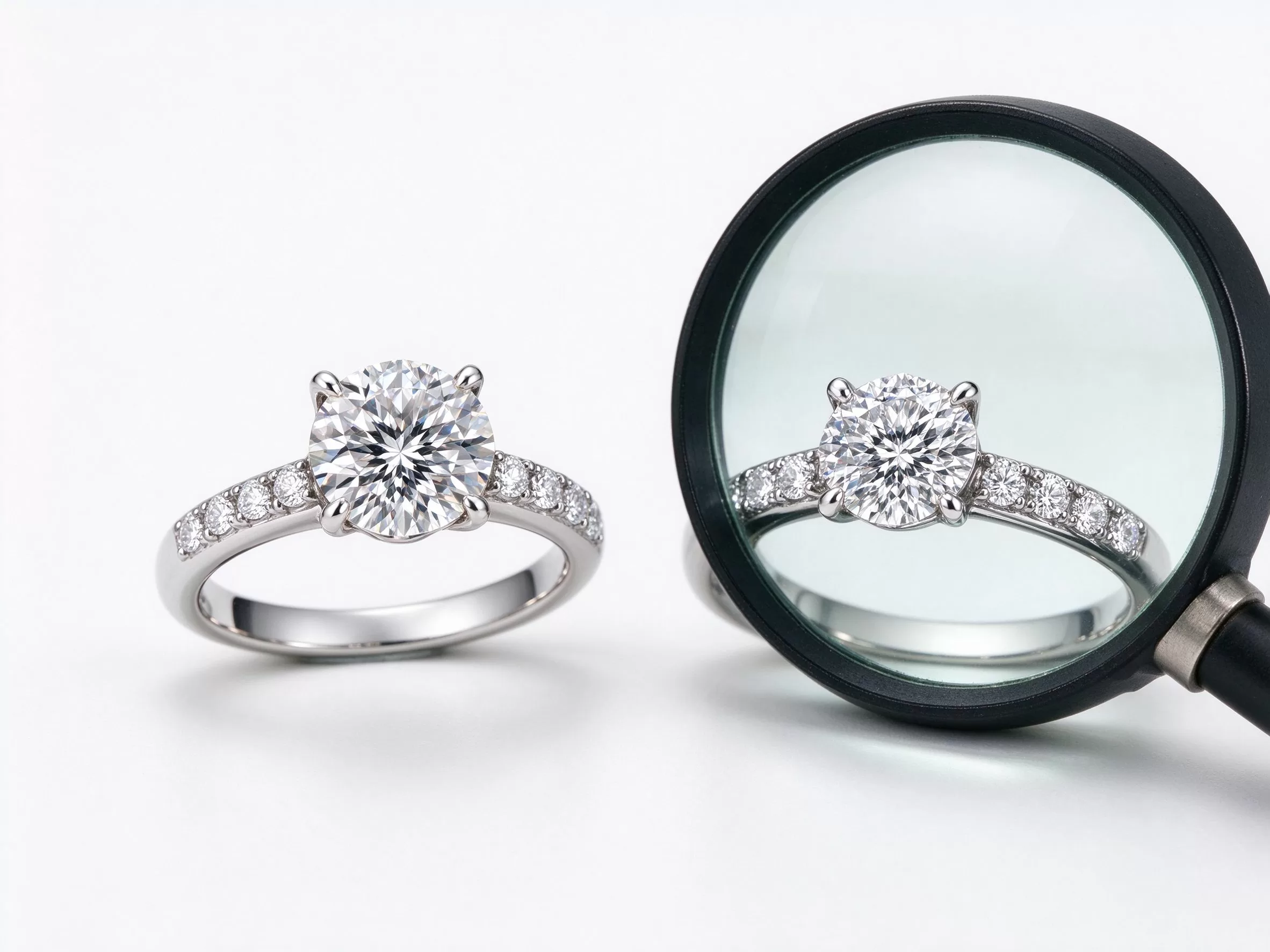
Why Incoming QC Matters for Your Small MOQ Orders When you place a single piece or a handful of custom pieces, the margin for any …

Understanding the Production Lead Time Calendar for Custom OEM and Private Label Jewelry When planning a new catalog or refreshing…
Stone Setting Durability in Wholesale Jewelry When you’re sourcing stone‑setting designs for your line, the first thing you’ll not…