
Walk into any premium jewelry store and the ring that stops traffic is rarely a small round. It is an elongated oval, often 9x11mm or larger, sitting high on the finger. Oval moissanite owns the statement-ring category because it stretches the eye and delivers strong face-up size for the money. For wholesale buyers, that demand is attractive but carries real inventory risk if the ratio, bow-tie and color are not controlled before the order lands.
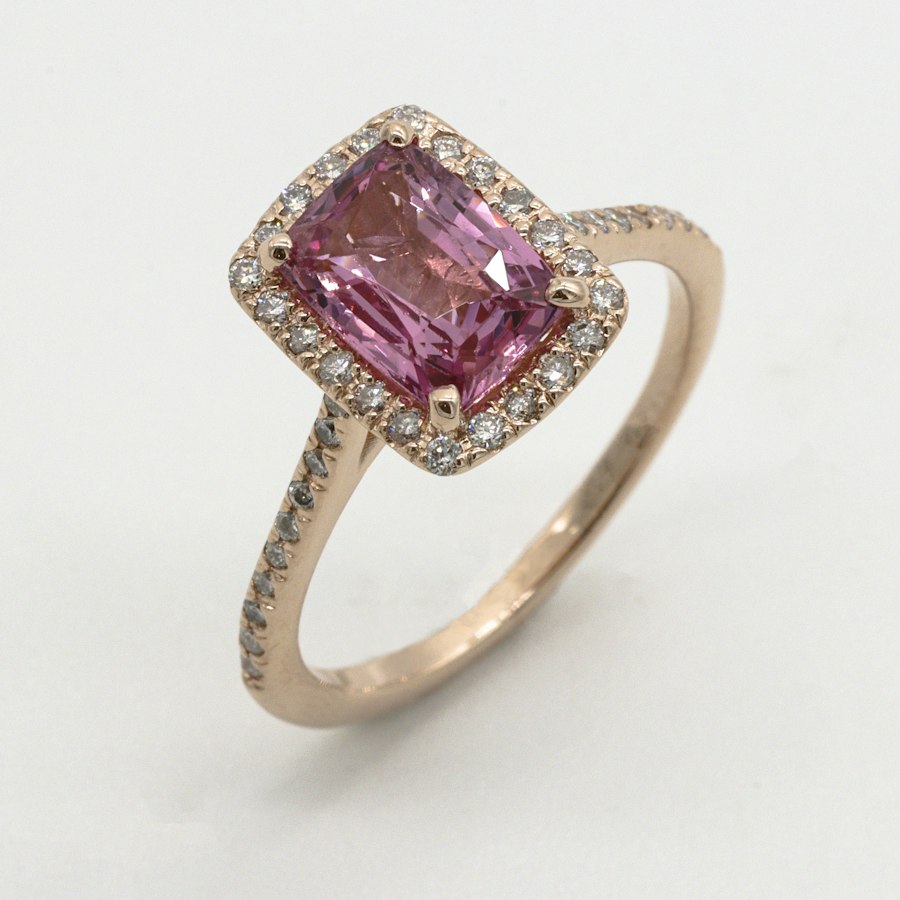
An oval's length-to-width ratio sets its personality. A ratio around 1.30 to 1.45 reads classic and balanced; a 1.50-plus ratio looks sleek and red-carpet. There is no wrong number, but there is a mismatch between what you stock and what your customers sell. Retailers who serve a conservative bridal base want closer to 1.35. Fast fashion and influencer-led stores lean longer. Decide which customer you are buying for before you pick a ratio, because a stone cut for one taste does not sell to the other.
The bow-tie conversation you must have
Ovals, like pears and marquises, can show a horizontal dark band across the center called a bow-tie effect. It is caused by light leakage from the elongated pavilion, and moissanite is not immune. Some bow-tie is normal and even desirable for depth; a heavy, smudged band reads as a defect in a high-magnification product photo. When you source large ovals, ask the supplier for face-up photos on a neutral gray background, not on a white LED lightbox that washes the effect out. For a deeper explanation, our piece on oval moissanite bow-tie effect covers what is acceptable at retail.
Because moissanite's fire is high, a well-cut oval flashes hard in direct light. That is a selling point in marketing but a QC risk: poor symmetry can make the two ends look mismatched when the stone rotates. Inspect every large oval for an even outline, a centered culet, and matching curve on both sides. Wholesale acceptance tolerances are discussed in the loose stone buying guide, but for statement pieces you tighten those tolerances because the stone is the entire product.
Face-up size versus diamond pricing
The commercial argument for large oval moissanite is face-up size per dollar. Moissanite is less dense than diamond, so a 9x11mm oval weighs less than a diamond of the same dimensions yet looks identical on the finger to a customer at arm's length. A retailer can market a "equivalent to 3 carats" oval at a fraction of a diamond's cost, and the buyer feels the value immediately. That is why oversized ovals over-index in social media content, where a single ring fills the frame.
The flip side is inventory commitment. A 9x11 or 10x14 oval is a slow-moving SKU compared with a 7x9. Do not open ten large ovals in ten ratios at once. Start with one best-selling ratio in a near-colorless grade, run it through your top retailer's bestsellers, and reorder only when the first piece moves. Larger emerald-cut buyers face the same math in the guide to large 9x11 inventory risk, and the lesson transfers directly to ovals.
Color, setting and margin
On a large face-up surface, moissanite body tone becomes more visible. Upgrade to D, E or F color for stones over 9x11mm; the small premium protects a high-ticket sale. For settings, large ovals pair best with a thin solitaire, a hidden halo, or east-west on a wider band. Avoid heavy prong baskets that compete with the stone's length. Because the stone carries the design, the setting should get out of its way.
Margin on statement rings is generous because the perceived value is high and the cost of goods is predictable. Price your large ovals against the current wholesale price-per-carat trend and lock a reorder price with your supplier so a spike in cost does not erase a catalog price you already printed. Stock deep on the sizes that photograph well, keep your large ovals selective, and let the shape do the selling.
How to photograph large ovals
Large ovals live or die on product imagery, and that has wholesale implications. A well-cut oval looks elongated and bright in soft studio light, but a heavy bow-tie or a tilted angle makes the same stone look dull. Give your retail customers clean face-up photos and a short video of the stone rotating, so they can show buyers the light return before the ring ships. Because moissanite's fire is high, overexposed product shots wash it out; recommend diffused light rather than direct flash. The easier you make it for a retailer to sell the stone, the faster it reorders.
Start small, watch the data, and scale only on the ratio that sells. A handful of well-chosen large ovals, photographed cleanly and priced against the live trend, will outperform a broad and cautious tray. The statement buyer knows exactly what she wants; your job is to have the right one on hand when she asks.