Most new buyers stock ovals at 6x8 and 7x9, the engagement-ring sweet spot. That is sensible, but it also crowds the fastest-moving and most competitive tier. The more interesting wholesale opportunity sits two steps up: large oval moissanite in 8x10 and 9x11 millimeters. These are statement stones, and they behave differently from everything else in your oval tray.
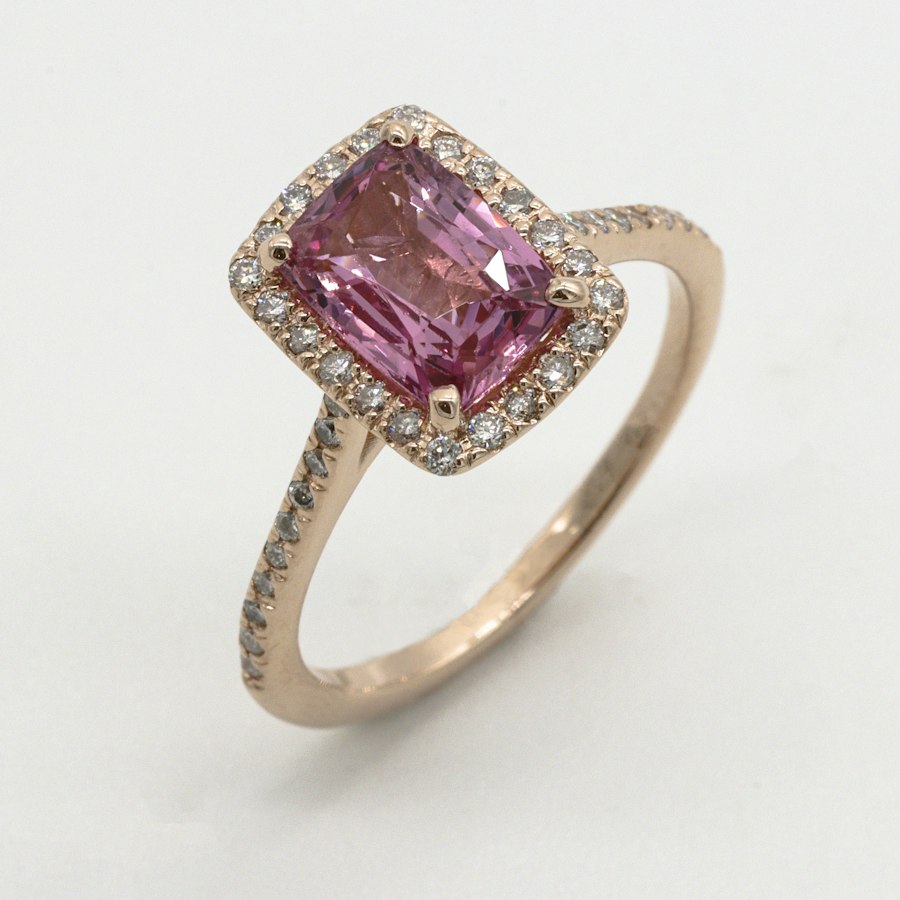
First, understand the price structure. Large ovals cost more per stone but carry a wider retail markup because customers are not comparing them to a familiar "one-carat" price anchor. A 6x8 oval competes against a known diamond equivalent, so shoppers haggle. An 8x10 oval reads as a three-carat-plus look, and buyers treat it as a luxury purchase. That psychological gap is where your margin lives.
The customer who buys a 9x11 oval is usually not your everyday engagement shopper. They skew toward three profiles: the luxury e-commerce buyer chasing a red-carpet look at accessible money; the Middle Eastern and Gulf market, which consistently favors large, brilliant, heavily sized stones; and the custom jeweler building one-of-a-kind right-hand pieces for clients who want visible presence. If any of those segments appear in your order history, large ovals deserve a dedicated slot.
Proportion matters more at this size. On a small oval, a length-to-width ratio between 1.3 and 1.5 is forgiving. On a 9x11, the same range spreads from a soft, rounded oval to a long, slender marquise-cousin. Most retail buyers respond best to 1.35 to 1.45. Too slender and the stone looks stretched; too fat and it reads as a round oval with no signature. When you order, specify your preferred ratio rather than accepting whatever the parcel throws at you. Our guide on length-to-width ratio stocking lays out the common ratios and their retail appeal.
Bow-tie QC becomes non-negotiable at large sizes. A faint dark bow-tie on a 6x8 is invisible at arm's length. On a 9x11, the same effect becomes a noticeable dark band across the table, and a customer photographing the stone in bright sunlight will catch it. Inspect each large oval face-up under direct light before you list it. Reject stones with a heavy, gray bow-tie and keep the mild, shadowy ones for lower price tiers. This single QC step prevents most of your large-size returns.
Face-up size is the selling point, so lean into it. A 9x11 oval covers roughly the same finger real estate as a diamond well above three carats, but the moissanite versus diamond price gap means the retail price stays reachable. Photograph large ovals on a size 6.5 finger so the scale reads honestly. Over-styling the photo to make the stone look even bigger is the fastest way to trigger a "smaller than expected" return, and large-stone buyers are the most sensitive to scale.
Stocking strategy: do not overbuy. Large ovals turn over slower than 6x8, and tying cash into six 9x11 stones that sit for a quarter is a real risk. A sensible start is two or three stones in 8x10 and one or two in 9x11, in D-E color and VVS clarity. Large stones show tint more readily because more material sits in the path of light, so upgrade your color grade expectations. E-F is the floor for white-metal settings; anything warmer reads yellow in platinum or white gold.
Pair them with the right mountings. A large oval wants a slim solitaire band, a hidden halo for extra sparkle, or a bezel for a modern look. Avoid a heavy pave band competing with a nine-millimeter stone; the setting fights the center. If you finish your own jewelry, keep a few plain 14k solitaire heads on hand sized for these ovals so you can deliver fast when a statement order lands.
Large oval moissanite is not a volume play. It is a margin and positioning play. Stock a small, carefully QC'd selection, price it against luxury rather than commodity, and let it pull high-ticket shoppers into your store. When one sells, reorder one. That disciplined rhythm keeps your cash moving while you test how deep demand runs in your own market.
Marketing large ovals is different from marketing engagement stock. Lead with presence and face-up size rather than carat equivalents, because most buyers in this bracket are shopping the look, not the math. Show the stone on a bare hand in natural window light so the bow-tie and proportion read honestly. Pair product shots with a size-reference prop such as a coin or a standard-width band to anchor expectations, and state the exact millimeter measurements clearly in the listing. Customers who buy large stones online are the most returns-sensitive to scale, so the more specific you are up front, the fewer pieces come back. For retailers new to this tier, our ecommerce product selection notes cover how to price and present statement SKUs without eroding margin.