A few years ago, a jeweler who wanted a price-friendly oval engagement ring almost always reached for a lab-grown diamond. The math made sense: lab-grown had become cheap enough to undercut mined diamond, and it carried the same "real diamond" language customers already trusted. That math has shifted. Lab-grown prices have deflated hard, but so has consumer confidence in resale value, and a new buyer walking into a store today is as likely to ask "what happens to this if I ever sell it?" as she is to ask "how big is it?" Oval moissanite has moved into that gap, and smart wholesalers are rebuilding their oval program around it rather than against it.
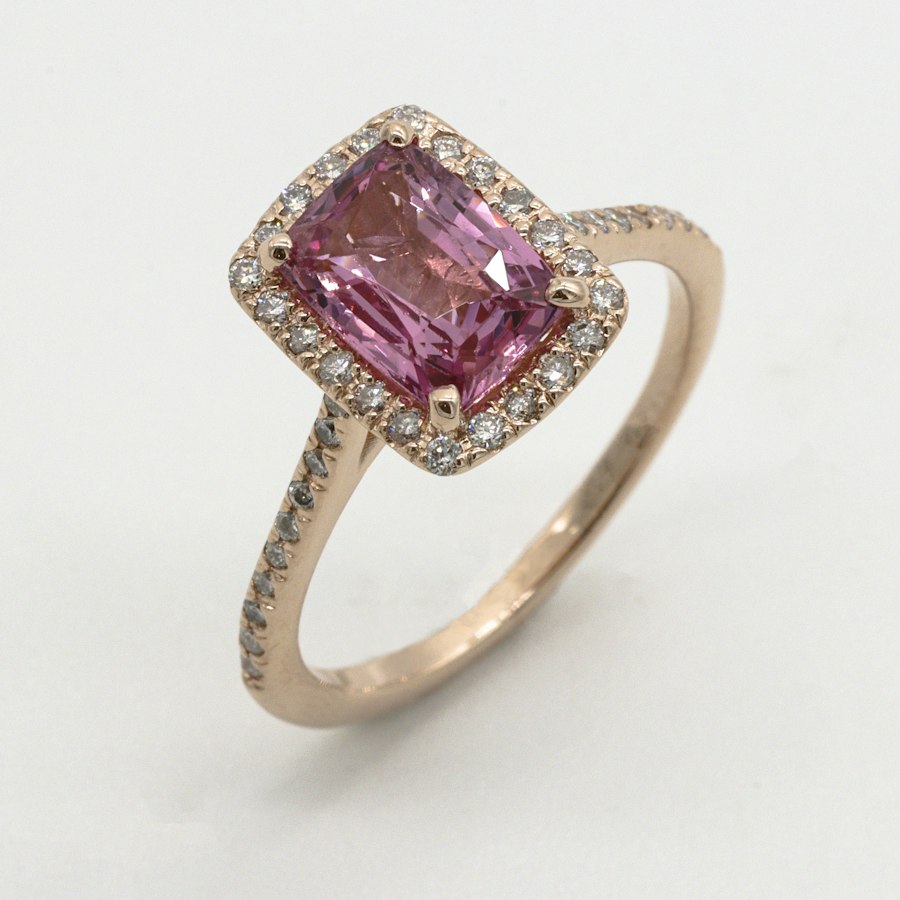
Why the oval shape is the easiest swap
Not every moissanite shape converts a diamond buyer cleanly. Some, like the emerald cut, carry visible step-cut windowing that shoppers compare directly to diamond and notice immediately. The oval brilliant does not. It is a faceted brilliant shape, so fire and dispersion read as "sparkly" to a customer, not as "different." The biggest tell between an oval moissanite and an oval diamond is the bow-tie effect, and a well-selected oval moissanite from a consistent parcel has a bow-tie no heavier than what a natural oval diamond shows. For a buyer looking down at a ring in a tray, the swap is nearly invisible.
The cost comparison that drives the decision
A loose oval lab-grown diamond at 8x10mm, the most-requested oval size for engagement work, still costs a retailer several hundred dollars at wholesale, depending on color and clarity. A loose oval moissanite in the same 8x10mm, D-F color equivalent, VVS clarity equivalent, ships for a small fraction of that. The end retail price difference widens because the jeweler also carries less inventory risk: a moissanite oval can sit in stock for 18 months without losing perceived value, while a lab-grown diamond sitting that long has likely lost wholesale value twice over.
For a small or mid-sized jeweler, the decision is less about which stone is "better" and more about which inventory they can afford to be wrong on. Moissanite wins that argument most months.
What customers actually ask when you tell them
The retailers who make the switch successfully do not hide the material. They lead with it. The three questions they hear are consistent: Is it real? How does it hold up? What does it look like next to my friend's diamond? The answers are straightforward. Moissanite is a real gemstone, silicon carbide, 9.25 on the Mohs scale. It is harder than sapphire and ruby and nearly as hard as diamond, so daily wear is not a concern. It scratches less and wears more cleanly than the cubic zirconia that shoppers remember from mall kiosks twenty years ago. On the hand, it is brighter and has more fire than a diamond of the same size, which is usually the first thing a customer notices once she stops comparing labels.
How to stage the switch without cannibalizing
The mistake wholesalers see most often is dumping the lab-grown oval entirely and confusing repeat customers who trusted the diamond story. The smoother move is to keep a small lab-grown diamond line for the 20 percent of buyers who will not move, and build the oval moissanite line as the visible, market-facing option. Price the moissanite oval at roughly half to two-thirds of the diamond equivalent so the value gap is obvious but not embarrassing. Display them side by side. Most shoppers will choose the bigger, brighter stone at the lower price once they understand the durability story.
If you are sizing the oval line, stock the lengths buyers actually order: 7x9mm, 8x10mm, 9x11mm, and 10x12mm are the workhorses. Keep a small cushion of length-to-width ratios around 1.35 to 1.50, because ovals that are too round look fat and ovals that are too narrow look like a pear without the point.
Long-term margin and reorder behavior
Oval moissanite reorders tend to come in waves. A retailer who sells one oval engagement ring well will come back for three more in the same month, because the customer brings a friend. That referral pattern is stronger with moissanite than with lab-grown diamond, because the price point allows the friend to actually buy. For a wholesaler, that means an oval program pays back in repeat orders faster than a one-and-done diamond order, and it justifies holding more oval stock than your first-year forecast suggests.
Watch the color story as you scale
One trap to avoid as the oval line grows is drifting into lower color grades to save cost. The oval's open pavilion shows body tone more readily than a round, and a stone that looks faintly off-white under a display light will read warm on a customer's hand in natural daylight. Stick to D-F equivalent parcels, and reject any stone that shows a yellow or gray cast when rotated on a white tray. The small per-stone savings on a G-H grade oval are not worth the returns they generate.