The pear shape has lived in engagement rings for decades, but a new demand lane opened up over the last two years: right-hand statement and cocktail rings. Women who already wear a wedding set are buying a second, larger ring for the right hand, and the pear silhouette is one of the shapes showing up most often. For wholesale buyers, this means stocking pears larger than bridal sizes, with an eye on symmetry rather than just price per carat.
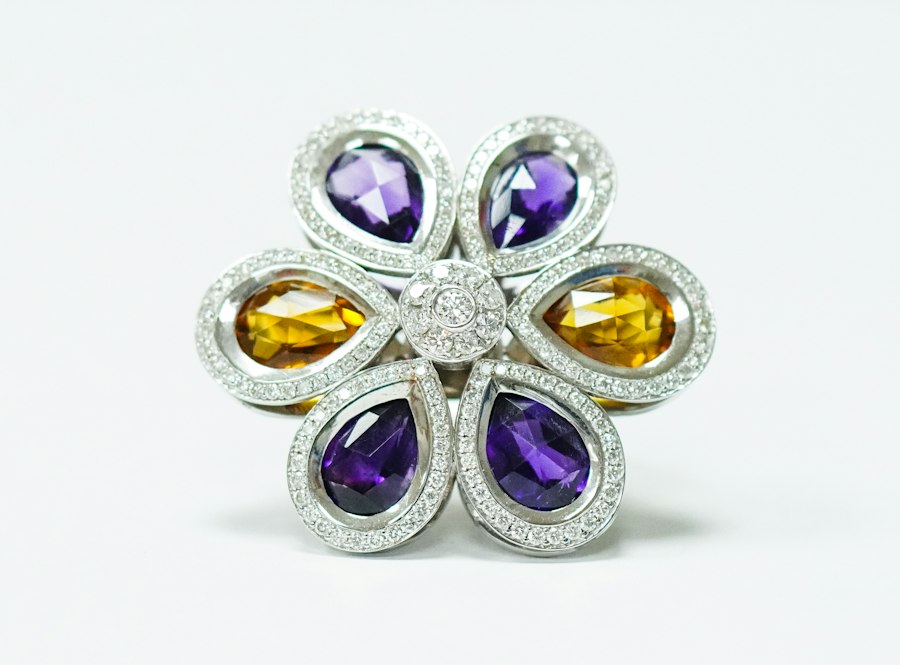
A right-hand pear is usually worn alone on a finger that is not occupied by a wedding band. It has to look deliberate from across a table. That means a pear at 10x7mm and up, ideally with a clean pointed tip and a rounded shoulder that does not dip asymmetrically. Smaller pears under 8x5mm belong in the bridal and pendant lane; the statement-ring buyer is looking for presence.
Symmetry is the QC filter
Pear is the easiest shape for asymmetry to slip through. One shoulder heavier than the other, a tip that leans, or a curved center line all become obvious at statement size. Inspect every piece face-up before it goes out. Our asymmetry QC tolerance guide sets practical B2B thresholds so you are not rejecting every parcel on cosmetic grounds that customers would never notice. At statement sizes, though, a stricter eye pays off: returns on a $400 cocktail ring sting more than returns on a $40 stud.
Setting direction and finger shape
A north-south pear lengthens the finger; an east-west pear reads modern and bold. Most right-hand statements are set north-south in a bezel or a slim four-prong, because the prong tip protects the point. Because the tip is the most chip-prone part of a pear, bezel and V-tip settings are safer for rings that get worn daily. Our setting direction guide covers how to advise customers on orientation.
Metal trends driving the category
Yellow gold and mixed-metal settings are pushing the right-hand pear forward. White gold and platinum still dominate bridal, but statement rings are where shoppers experiment. Stock pears that photograph well against both warm and cool metal; D-to-F color moissanite reads clean on yellow gold without looking icy, which is exactly the look buyers want.
Bypass and modern settings
Beyond the classic north-south solitaire, the right-hand pear is showing up in bypass settings where two bands cross under the stone. Those settings read fashion-forward and appeal to shoppers who already own a simple wedding set and want something that does not match it. A pear in a bypass is usually set east-west, which shows off the width rather than the length. If your retail partner wants to chase that look, stock slightly wider pears near a 1.3 length-to-width ratio so the east-west set does not look skinny.
Matched pairs versus singles
Not every statement-ring buyer wants a pair. Many shops sell one pear at a time to a customer who wants a single bold ring. This is good news for wholesalers: you can sell singles without holding matched pairs. If you also want to cover the earring-and-jacket subcategory, our matching pairs guide explains how to pull matched stones from a parcel. For statement work, singles are the easier first purchase.
Pricing and margin
Larger pears carry a higher per-stone cost but also a much higher retail ticket. A 12x8mm pear set in a hand-finished mounting retails at a price point where customers expect a conversation, not a transaction. That conversation favors small designers and boutique stores, which is exactly who buys loose moissanite wholesale. Position the SKU as a made-to-order center with a two-to-four week lead time, and you avoid carrying finished inventory that only fits one finger size.
What to watch next
Two trends are worth tracking: pear-accented bypass rings and pear-topped pendants that match a statement ring. If a retailer starts selling the ring, they will often upsell a pendant in the same shape six months later. Keeping a few extra pears in stock lets you fulfill that follow-on order without re-sourcing.
How to display pears for statement sales
Do not file a statement pear under engagement. Display it on a bust or a ring stand next to a chain, so the customer sees it as a self-purchase rather than a proposal piece. That mental shift raises the acceptable price point, because the buyer is treating herself. Pair the display with a shorter price tag than you would use for bridal; statement buyers want to know the number immediately, not through a sales pitch. A clean on-finger photo next to a wristwatch or a handbag helps customers picture the ring in their own life.
The right-hand statement ring is not a flash-in-the-pan category. It draws from the same "buy something for myself" shopper that drives cocktail jewelry sales in every cycle, and the pear shape is well suited to it because the elongated silhouette makes a modest carat weight look substantial.