Princess Cut Bulk Supplier: MOQ and SKU planning
Understanding MOQ for Princess Cut Bulk Orders When you first approach a bulk supplier, MOQ is key. For standard stock our MOQ is …
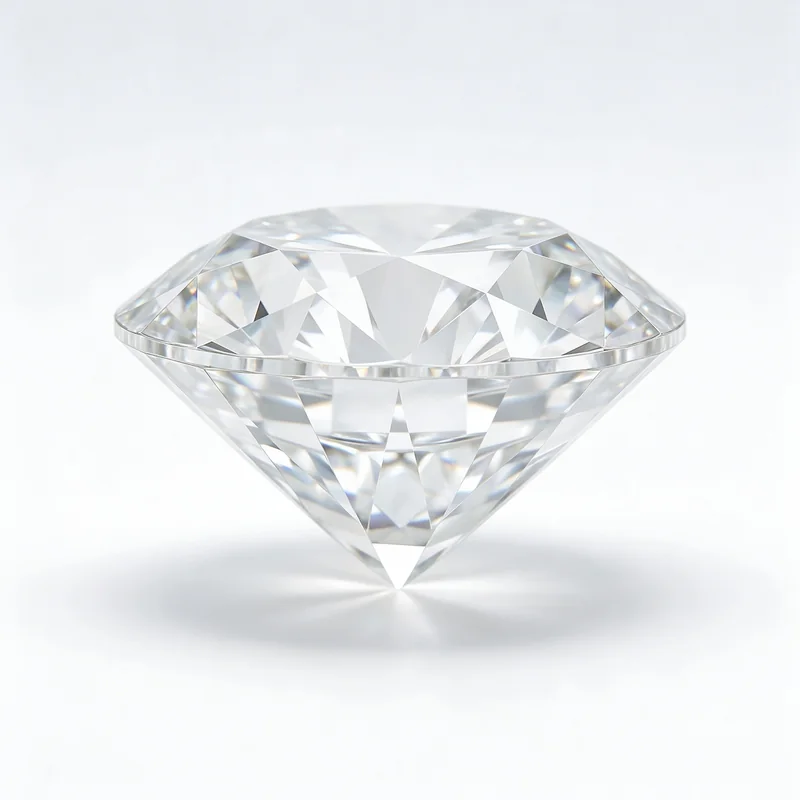
Princess Cut moissanite is priced on a per-carat basis for loose stones and a per-piece basis for finished jewelry, and your wholesale price list will separate these two categories clearly. Understanding which basis applies to each SKU is the first step in building a profitable buy plan, because the same stone set into a ring on 925 sterling silver moves from carat pricing into finished-goods pricing that includes metal, setting labor, and finishing.
This guide walks through how a US wholesale buyer should read a Princess Cut price list, what drives the numbers on it, and how to structure an order so the quoted price holds from sampling through bulk production.
Loose Princess Cut moissanite is sold by the carat. The price list is built around size brackets rather than a single flat rate, because cutting yield and rough consumption change as the stone gets larger. A 1.0 carat stone and a 3.0 carat stone do not carry the same per-carat cost, so the list will show tiered per-carat pricing by size range.
When you request a quote, you will specify the size bracket, the color grade, and the cut grade you want, and the supplier returns a per-carat figure you can multiply out.
Three factors matter most. First, size bracket, since larger stones consume more material and more cutting time per carat. Second, color grade, because colorless and near-colorless grades are graded and documented differently. Third, certification: stones accompanied by GRA or IGI papers carry documentation that is reflected in the quoted price, while stones shipped without papers price lower.
Every one of these choices is a line you control on the quote request, which means you can trade specification against budget deliberately instead of guessing.
A well-built price list quotes per-carat pricing that applies within a stated size bracket, not across all sizes. If a buyer assumes one per-carat rate across the board, the landed cost projection will drift as the order mixes sizes. Request the list with the brackets spelled out, confirm whether the rate assumes GRA or IGI papers, and ask whether the per-carat price assumes a specific color grade.
Those three confirmations take minutes and prevent the most common quoting errors we see from new wholesale accounts.
Once a stone is mounted, pricing shifts to a per-piece basis. The per-piece quote bundles the stone, the metal, the setting labor, and the finishing into one number per SKU. A Princess Cut solitaire on 925 sterling silver quotes differently than the same design in 14K solid gold, and a gold vermeil piece prices differently again.
The price list will typically show one row per finished SKU, with the metal and stone size stated so there is no ambiguity about what the per-piece figure covers.
Name the metal exactly on every RFQ. The legitimate options are 925 sterling silver, 10K solid gold, 14K solid gold, 18K solid gold, gold vermeil, and gold plated. Each carries a different material cost and a different production process, and the per-piece price reflects whichever metal you specify. Being precise here also protects your product copy: a gold plated band is priced and described as gold plated, a vermeil band as vermeil, and solid gold as 10K, 14K, or 18K.
Mixing those labels up in an RFQ is the fastest way to get a quote that does not match what you intended to buy.
Stock Princess Cut styles are available at an MOQ of 1 piece, which makes them ideal for testing a design before committing. Custom work, meaning modifications to an existing style or a new build to your specification, carries an MOQ of 30 pieces. That threshold shapes how you use the price list: stock SKUs let you sample and validate at single-piece quantities, while custom pricing only becomes relevant once you are ready to commit at 30 pieces per style.
Plan your assortment so that validated winners move into custom runs and new ideas stay at stock quantities until they prove out.
The table below summarizes how the two pricing bases differ across the decisions a wholesale buyer makes most often. Use it as a checklist when you review any supplier quote.
| Factor | Loose Stones | Finished Jewelry |
|---|---|---|
| Pricing basis | Per carat | Per piece |
| MOQ | Sold by the carat | 1 piece stock, 30 custom |
| Cost drivers | Size, color, certification | Metal, stone size, setting labor |
| Documentation | GRA or IGI papers | Papers with stone per item |
| Best use | Size and spec testing | Ready-to-sell SKUs |
Keeping these two bases separate in your own costing sheet prevents the single most frequent pricing mistake: blending carat math into finished-good comparisons. A loose stone quote and a mounted piece quote answer different questions, and each should be evaluated against its own alternatives.
Sampling runs 7 to 10 days, and sample orders can be paid through PayPal, which keeps the evaluation stage low-friction. Because stock styles carry a 1-piece MOQ, you can order individual Princess Cut SKUs at list price, inspect the setting quality on 925 sterling silver or your chosen metal, and verify the stone documentation before any bulk commitment.
Bulk production then runs 15 to 25 days after approval of the approved sample, so your full lead time from first sample to finished bulk is roughly four to five weeks on a straightforward program.
Order samples across both pricing bases. Take a few loose stones in the size brackets you intend to sell so you can compare color grade and cut quality directly, and take finished pieces in at least two metals so you can see how the same Princess Cut reads on 925 sterling silver versus 14K solid gold.
This gives you a concrete basis for choosing which rows of the price list to activate at volume, and it means your bulk quote is built on SKUs you have physically handled rather than on spec sheets alone.
Bulk orders are paid by T/T with a 30 percent deposit and the 70 percent balance before shipment. Sample orders, by contrast, run on PayPal, so your cash exposure during evaluation is limited to the sample invoice. Quality control runs in three stages: incoming inspection of materials, in-process inspection during production, and a pre-ship AQL inspection before goods leave the factory.
That final stage is where you should focus any specific AQL requirements you want applied, since it is the checkpoint that determines what ships.
Delivery to the US is DDP and takes 5 to 8 days. DDP terms mean the quoted price covers delivery to your door with duties handled, which simplifies landed-cost math considerably: the per-piece or per-carat price plus freight as quoted is the number you plan against. When you build your wholesale price list comparison across suppliers, confirm that competing quotes are also DDP, because quotes on FOB or CIF terms will look cheaper on paper and cost more to land.
Because US delivery is DDP within 5 to 8 days, you can model landed cost as quote plus shipping with no separate duty calculation. Multiply the per-carat rate by total carats for loose programs, or sum per-piece prices by SKU for finished programs, then add the freight line from the quote. This gives you a defensible landed unit cost to feed into your retail pricing model, and it makes the supplier price list directly comparable line by line.
A practical first program looks like this: request the price list with size brackets, color grades, and certification status stated per row; order samples at 1-piece MOQ across your shortlist of stock styles and two metal options; approve a sample within the 7 to 10 day window; then place a bulk order on the approved SKUs with a 30 percent T/T deposit.
For custom modifications, plan the 30-piece MOQ into the program and confirm custom pricing before sample approval, since custom quotes are built for that volume.
Keep the two pricing bases distinct throughout. Loose stones stay on per-carat math with GRA or IGI documentation noted per bracket, and finished jewelry stays on per-piece math with the metal named exactly. That discipline carries through sampling, bulk production, QC, and DDP delivery, and it is what makes a wholesale price list usable rather than just readable.
MOQ is 1 piece for stock styles and 30 pieces for custom work, and loose stones are sold by the carat. Sampling takes 7 to 10 days, and bulk production runs 15 to 25 days after the sample is approved. Pricing is quoted per piece or per carat depending on the item. Payment is T/T with a 30% deposit and the 70% balance before shipment, and PayPal is accepted for sample orders.
Loose stones are sold by the carat, with per-carat rates set by size bracket, color grade, and certification. Finished jewelry is quoted per piece, covering the stone, metal, setting, and finishing together.
Stock styles carry an MOQ of 1 piece, so you can sample any catalog SKU individually. Custom work requires 30 pieces per style, and custom pricing is quoted at that volume.
Graded stones are accompanied by GRA or IGI papers. Confirm on your RFQ whether the quoted price includes documentation, since it is reflected in the per-carat or per-piece figure.
Sample orders can be paid via PayPal, keeping the evaluation stage simple. Bulk orders run on T/T with a 30 percent deposit and the 70 percent balance due before shipment.
Sampling takes 7 to 10 days and bulk production takes 15 to 25 days after sample approval. DDP delivery to the US then takes 5 to 8 days.
If you are ready to put per-carat and per-piece pricing to work, request a quote with your size brackets, metal specifications, and certification requirements stated up front, and we will return a price list you can cost line by line.
Review our wholesale buying guides for more detail on sampling and order planning, read about our factory and quality control process to see how the three-stage inspection works, or contact our sales team to get samples moving on your shortlist of Princess Cut styles.
Moissanite is a lab-created diamond alternative, not a natural diamond; listings and customer-facing copy should describe it that way.
Sources: Grading references: GIA gem education and GIA laboratory information.
MOQ is 1 stone for samples. Bulk orders are priced by quantity tier; send your cut, carat, color and clarity requirements and we will return a wholesale quotation.
Sample stones ship within 7-14 days. Bulk production lead time is 15-25 days after deposit confirmation; international delivery after dispatch typically takes 3-10 business days depending on destination.
Prices are quoted per carat in US dollars with tiered wholesale pricing. We accept T/T (30% deposit, balance before shipment), PayPal and Western Union for sample and small orders.
Looking for loose stones or a custom cut? Talk to the factory directly.
Send InquiryWritten by the Holycome manufacturing & quality team. Every figure and claim in this article comes from our own production floor in Wuzhou, China — in-house casting, stone setting and a three-pass quality inspection we have run since 2008.
Materials are tested for nickel, lead and cadmium release by SGS and CTT International; moissanite centre stones ship with their GRA warranty card and report. We also hold an independent SMETA / Sedex ethical-trade audit and a Hong Kong Customs AML registration.
Reviewed for accuracy by our quality team before publication. Last updated .
Written by the Holycome manufacturing & quality team. Every figure and claim in this article comes from our own production floor in Wuzhou, China — in-house casting, stone setting and a three-pass quality inspection we have run since 2008.
Materials are tested for nickel, lead and cadmium release by SGS and CTT International; moissanite centre stones ship with their GRA warranty card and report. We also hold an independent SMETA / Sedex ethical-trade audit and a Hong Kong Customs AML registration.
Reviewed for accuracy by our quality team before publication. Last updated .

Understanding MOQ for Princess Cut Bulk Orders When you first approach a bulk supplier, MOQ is key. For standard stock our MOQ is …

Why Direct Factory Supply Cuts Costs When you buy a princess cut stone directly from a factory, you skip the middleman. That means…
Incoming Stone Quality Check Every princess cut stone arrives on our floor for a rigorous inspection. We verify shape accuracy, fa…
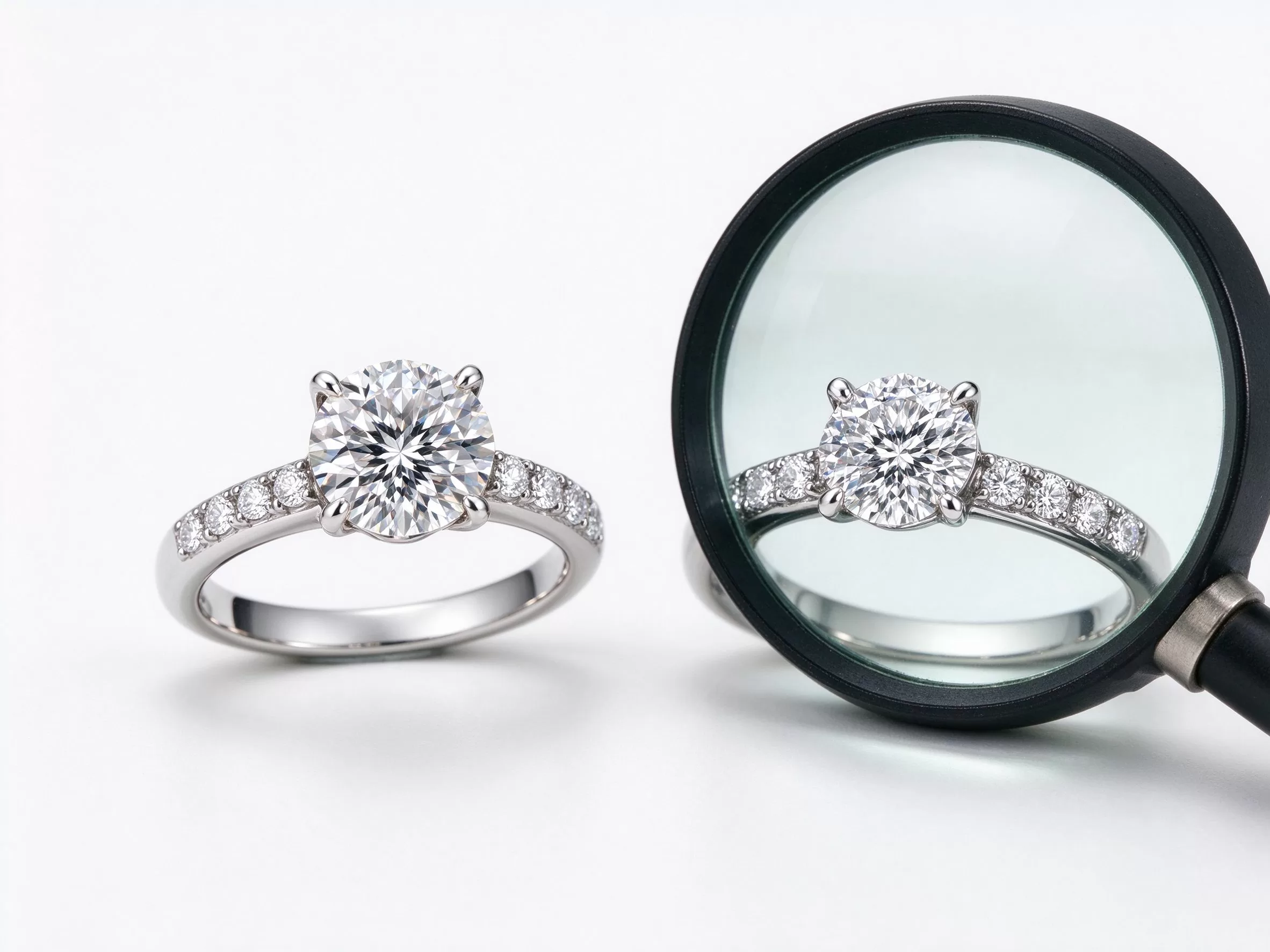
Production Calendar Overview When you place an order for princess cut custom OEM or private label pieces, the first checkpoint is …

Understanding Princess Cut Durability in Wholesale Jewelry The princess cut's brilliant geometry demands precise cutting and polis…