Radiant Cut Bulk Supplier: returns and repair data
Understanding Return Statistics for Bulk Radiant Cuts When you order radiant cut stones in bulk, you expect high consistency. Our …

Radiant Cut stones sit at the intersection of two cutting traditions: the trimmed-corner outline of an emerald shape and the brilliant faceting pattern of a round. That hybrid structure is exactly why a Radiant Cut demands a stricter quality control process than most other shapes.
The cut carries 70 facets on the crown and pavilion in a standard layout, and any deviation in facet symmetry, corner trim, or pavilion depth shows up immediately as a dark bow-tie or a lopsided silhouette. For a wholesale buyer, the question is not whether a supplier inspects, but how and at which stages.
A three-stage QC system, covering incoming materials, in-process checks, and a pre-ship AQL inspection, is the practical answer, and this article walks through what each stage means for Radiant Cut inventory in moissanite and natural-stone-alternative programs.
The Radiant Cut is also unforgiving at the loose stone stage. Because the shape mixes step-cut corners with brilliant facets, misalignment during rough layout compounds through polishing. A stone that passes a casual visual check can still fail under a loupe or a proportion scan. Buyers who source Radiant Cut moissanite for solitaire pendants, engagement rings, and tennis bracelets should treat QC documentation as part of the product itself, not an afterthought.
The sections below break down the decisions you will face: what to verify at incoming inspection, what to watch during production, how pre-ship AQL sampling works, and which paperwork should travel with the goods.
Everything starts before cutting. Incoming QC means the stones or rough material entering the facility are checked against the specification you agreed to, not against a generic factory standard. For Radiant Cut moissanite sold by the carat, incoming inspection typically covers three things: the identity of the material, the condition of the rough or preform, and the match between the ordered size range and what physically arrived.
Moissanite is a lab-created diamond alternative with its own optical signature, and incoming QC should confirm that identity with a tester rather than an assumption. Silicon carbide reads differently from corundum, cubic zirconia, or diamond on standard thermal and electrical testers, so a documented test at receiving protects you from substitution. For graded lots, the stones should already carry GRA or IGI papers, and the incoming step is where the certificate numbers are matched against the physical goods.
If a certificate describes a 2.10 carat Radiant Cut and the parcel contains a stone at 2.02, that discrepancy is caught here, while it is still cheap to fix.
For custom Radiant Cut work, the preform stage matters more than buyers realize. The defining feature of the shape is the trimmed corner, usually set between a 1:1 and a 1:1.2 length-to-width ratio. If the preform cuts the corners unevenly, the polished stone will lean or show unequal facet fans at opposing ends. Incoming QC that measures corner symmetry on a gauge, rather than eyeballing it, prevents a whole batch from inheriting the same defect.
This is one of those checks that costs minutes at receiving and saves an entire production run later.
Between incoming receipt and final packing sits the longest stretch of risk. In-process inspection is the factory checking work while it is being done, so defects are caught on the bench instead of at the packing table. For a Radiant Cut program, there are two moments where this matters most: after faceting of the loose stone, and after setting into the mount.
The Radiant Cut's brilliant-style pavilion can produce a bow-tie shadow across the center if the pavilion mains are cut too shallow or unevenly. In-process inspection at the faceting bench should screen every stone, or in large lots a defined sample, against a symmetry standard. The inspector looks for even facet junctions where the crown meets the girdle, matching corner fans, and a centered table.
A stone that shows a visible bow-tie under normal diffuse light is returned for re-polish or rejected before it ever reaches a setting. Buyers should ask suppliers to describe this screen in writing, because "our cutters check their own work" is not an inspection protocol.
Once the stone enters a 925 sterling silver, 10K, 14K, or 18K solid gold mount, a new set of risks appears. The prongs on a Radiant Cut must grip the trimmed corners without covering the facet fans, and the stone must sit level in the seat. In-process checks after setting include a stone-tightness test, a visual level check on the girdle plane, and confirmation that the metal is what the order specifies.
A gold plated or gold vermeil piece must be described as such in the work order; a solid gold specification must be matched with solid gold stock. Confusing these at the setting stage is one of the most expensive errors in the trade, and in-process inspection is the stage designed to stop it.
The final gate before your goods leave the factory is the pre-ship inspection, typically run to AQL sampling standards. AQL, or Acceptable Quality Limit, is a statistical sampling method: instead of inspecting every unit in a large order, the inspector pulls a defined random sample, inspects it against a defect classification list, and the lot passes or fails based on how many defects appear.
For a wholesale buyer of Radiant Cut jewelry, this is the last chance to catch problems before goods are boxed, and it deserves the same seriousness as the money decision itself.
A pre-ship AQL inspection on a Radiant Cut order generally covers the following, and you should insist on a written report with photos:
If the sampled lot fails AQL, the order is reworked and re-inspected before shipment. That process costs the supplier time, which is exactly why a factory that runs genuine three-stage QC is worth qualifying over one that only claims it.
Quality control stages are tied directly to the calendar you plan your buying around. Sampling for a Radiant Cut style takes 7 to 10 days, which includes cutting the sample stone and finishing the sample mount for your approval. Once the sample is approved, bulk production runs 15 to 25 days.
The three QC stages map onto that timeline: incoming checks at material receipt, in-process checks during cutting and setting, and the pre-ship AQL inspection in the final days before packing. A buyer who understands this sequencing can schedule reorder points realistically instead of assuming every production run is identical.
The table below summarizes how the three stages align with what gets checked and what document you should receive.
| QC Stage | Timing | Focus for Radiant Cut | Document to Expect |
|---|---|---|---|
| Incoming QC | At material receipt | Material identity, corner symmetry, weight match | Receiving report with certificate matching |
| In-process QC | During cutting and setting | Facet symmetry, bow-tie, stone level in mount | Bench check records |
| Pre-ship AQL | Before packing | Stone security, optics, metal verification | AQL report with photos |
After the pre-ship inspection passes, goods move into the delivery phase. DDP delivery to the US takes 5 to 8 days, meaning the supplier handles freight, clearance, and duties to your door. That window is a good moment to schedule your own receiving check, because a second look on arrival closes the loop that the factory's three-stage QC opened.
For graded loose stones, GRA or IGI papers are the traceability backbone of your order. Each report records the cut shape, dimensions, carat weight, and color and clarity grades, and it allows you to match the stone in a finished piece back to a documented lot. For Radiant Cut moissanite specifically, the certificate confirms the shape is a true radiant outline with trimmed corners rather than a cushion or a modified emerald sold under the wrong name.
Buyers consolidating multi-stone orders, such as Radiant Cut eternity bands or matched pairs for studs, should request that certificate numbers be listed on the packing invoice so receiving can verify piece by piece.
When stones are set into mounts, the paperwork question changes. The certificate covers the loose stone; the finished jewelry needs its own verification of metal content. A 14K solid gold mounting should be stamped and documented as 14K, while a gold vermeil piece, which is a thick gold layer over 925 sterling silver, should be described as vermeil, and a gold plated piece as plated.
The pre-ship AQL inspection is where metal verification belongs on the checklist, because it is the final documented look at the physical goods before they ship. Keeping the stone certificate and the metal declaration together in your order file gives you a complete traceability record from loose stone to boxed product.
A practical buyer checklist shortens supplier qualification and prevents disputes. Before committing to a Radiant Cut program, ask each prospective supplier these questions and compare answers in writing:
The answers reveal whether quality control is a documented system or a sales line. A supplier with a real incoming, in-process, and pre-ship structure will answer with specifics; one without it will answer with reassurance.
MOQ is 1 piece for stock styles and 30 pieces for custom work, and loose stones are sold by the carat. Sampling takes 7 to 10 days, and bulk production runs 15 to 25 days after the sample is approved. Pricing is quoted per piece or per carat depending on the item. Payment is T/T with a 30% deposit and the 70% balance before shipment, and PayPal is accepted for sample orders.
Sampling takes 7 to 10 days. That window covers cutting the sample stone to your chosen ratio and finishing it in the sample mount so you can evaluate symmetry and light performance before bulk production begins.
The lot is flagged, the defects are documented with photos, and the goods go back for rework. A re-inspection follows before shipment, so nothing is packed until the sampled lot passes the agreed AQL level.
Yes, graded stones use GRA or IGI papers. The report records shape, dimensions, weight, and grades, and you should ask for certificate numbers to be listed on the packing invoice for easy matching at receiving.
Bulk orders run on T/T with a 30 percent deposit and the 70 percent balance before shipment. Sample orders can be paid through PayPal, which keeps the sampling stage low risk while you evaluate quality.
DDP delivery to the US takes 5 to 8 days after the pre-ship inspection passes and goods are released. The supplier manages freight, clearance, and duties to your door under DDP terms.
A Radiant Cut is one of the most rewarding shapes to wholesale when the quality control behind it is real: incoming checks that confirm material and corner symmetry, in-process screens for bow-tie and setting level, and a pre-ship AQL inspection backed by photos and paperwork.
Those three stages, combined with 7 to 10 day sampling, 15 to 25 day bulk production, and DDP delivery to the US in 5 to 8 days, give you a supply chain you can plan around rather than hope for. To see how our QC system works in detail, read our recent quality control articles, learn more about our factory and inspection process on the about page, or request a sampling quote and pre-ship report sample through our contact page.
Sources: Grading references: GIA gem education and GIA laboratory information.
MOQ is 1 stone for samples. Bulk orders are priced by quantity tier; send your cut, carat, color and clarity requirements and we will return a wholesale quotation.
Sample stones ship within 7-14 days. Bulk production lead time is 15-25 days after deposit confirmation; international delivery after dispatch typically takes 3-10 business days depending on destination.
Prices are quoted per carat in US dollars with tiered wholesale pricing. We accept T/T (30% deposit, balance before shipment), PayPal and Western Union for sample and small orders.
Looking for loose stones or a custom cut? Talk to the factory directly.
Send InquiryWritten by the Holycome manufacturing & quality team. Every figure and claim in this article comes from our own production floor in Wuzhou, China — in-house casting, stone setting and a three-pass quality inspection we have run since 2008.
Materials are tested for nickel, lead and cadmium release by SGS and CTT International; moissanite centre stones ship with their GRA warranty card and report. We also hold an independent SMETA / Sedex ethical-trade audit and a Hong Kong Customs AML registration.
Reviewed for accuracy by our quality team before publication. Last updated .
Written by the Holycome manufacturing & quality team. Every figure and claim in this article comes from our own production floor in Wuzhou, China — in-house casting, stone setting and a three-pass quality inspection we have run since 2008.
Materials are tested for nickel, lead and cadmium release by SGS and CTT International; moissanite centre stones ship with their GRA warranty card and report. We also hold an independent SMETA / Sedex ethical-trade audit and a Hong Kong Customs AML registration.
Reviewed for accuracy by our quality team before publication. Last updated .

Understanding Return Statistics for Bulk Radiant Cuts When you order radiant cut stones in bulk, you expect high consistency. Our …
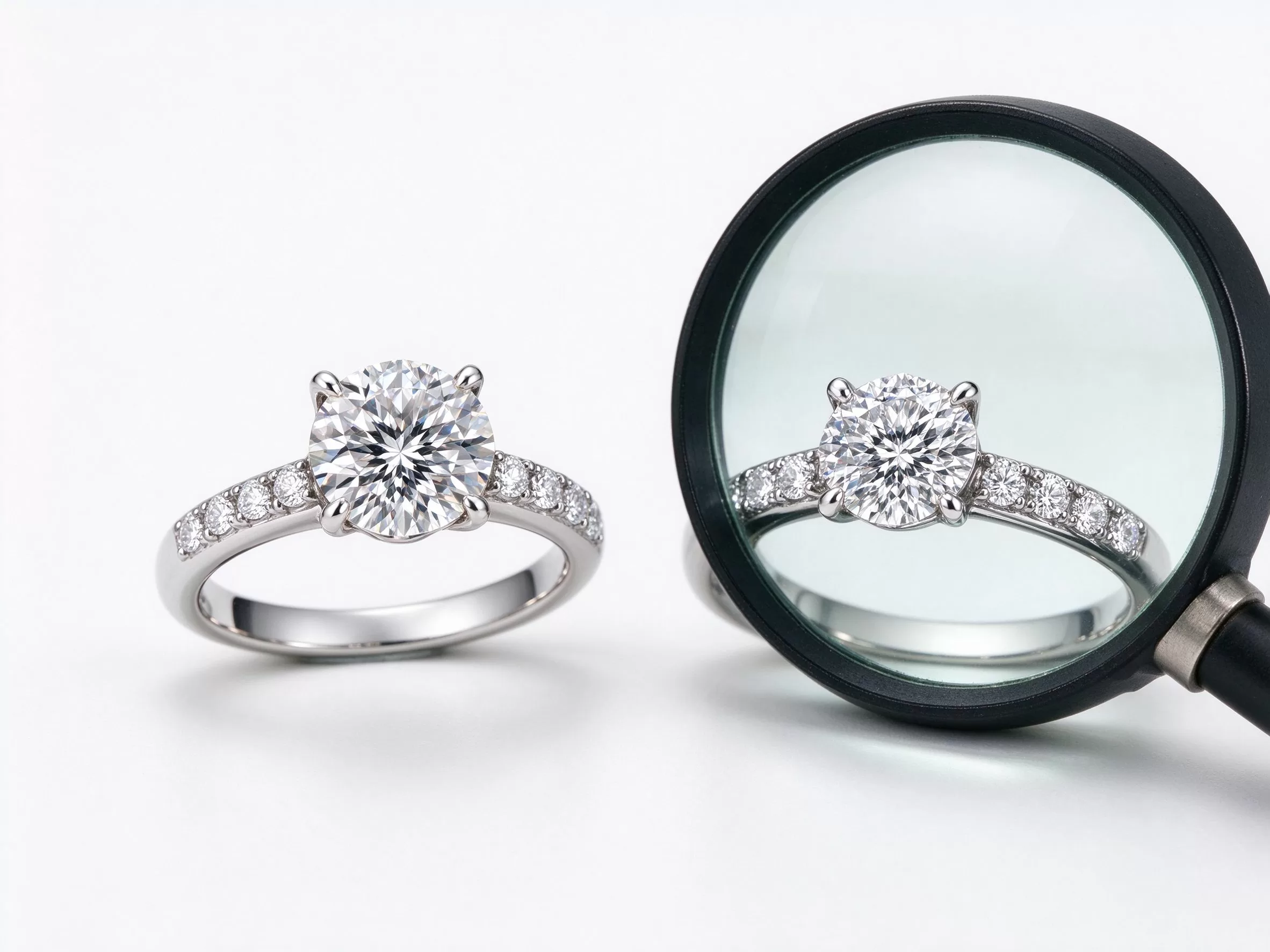
Understanding Return Statistics for Bulk Radiant Cuts When you order radiant cut stones in bulk, you expect high consistency. Our …
Understanding Return Statistics for Bulk Radiant Cuts When you order radiant cut stones in bulk, you expect high consistency. Our …

Understanding Return Statistics for Bulk Radiant Cuts When you order radiant cut stones in bulk, you expect high consistency. Our …

Understanding Return Statistics for Bulk Radiant Cuts When you order radiant cut stones in bulk, you expect high consistency. Our …