Rings for Online Store Owners: certificate verification
Why Certificate Verification Matters for Your Online Jewelers When you source rings from overseas, buyers expect proof that each b…
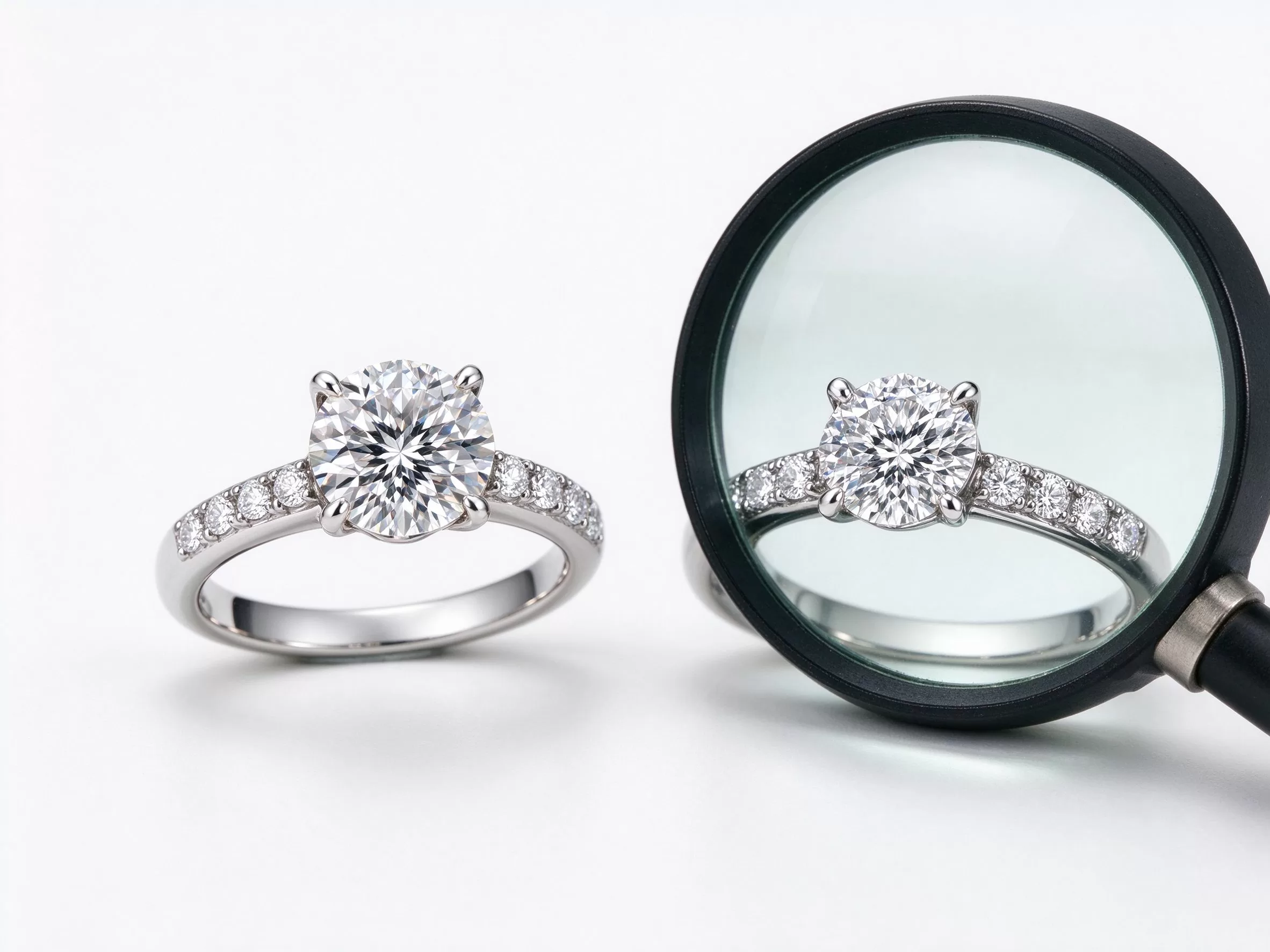
When you source moissanite rings for wholesale, the certificate attached to each graded stone is your primary proof of what you are actually paying for, and verifying GRA or IGI paperwork before committing to a bulk order protects both your margin and your reputation with retail customers. Rings are the category where this matters most, because the center stone usually represents the largest share of the unit cost and the certificate is what your buyers will ask to see.
This guide walks through how certificate verification works, what to check on a GRA or IGI report, and how to build verification into your ordering process so that every shipment arrives matching the paperwork.
Not all lab-created diamond alternatives come with the same documentation. At our factory, graded stones are issued either a GRA paper or an IGI paper, and each serves a different purpose in your sourcing workflow. Understanding the difference helps you decide which certification level fits each ring style in your catalog.
GRA reports are issued for moissanite and focus on the core grading details a wholesale buyer needs: carat weight, color grade, cut, and clarity. The report ties the stone to a laser-inscribed serial number where applicable, which lets you match the physical stone to the paper. For stock ring styles sold at one piece minimum order quantity, a GRA paper gives your retail customers confidence without adding significant cost to the unit price.
IGI is an independent gemological institute whose reports are widely recognized across the jewelry trade. For rings that will be positioned at a higher retail price point, an IGI paper adds a level of third-party credibility that many US retailers expect. IGI reports include detailed grading of the stone along with its measurements, which makes them useful when your customers plan to insure or resell the piece.
The practical decision comes down to your sales channel. Fast-moving fashion rings at lower price points generally perform well with GRA papers. Bridal and engagement-style rings, where the customer comparison-shops and reads the paperwork closely, tend to justify the IGI option. Custom work at 30 pieces minimum order quantity is where you should decide the certificate type up front, because it affects both the stone selection and the production timeline.
Verification is a process you can run in under ten minutes per reference, and doing it before you approve a sample saves weeks of back-and-forth later. Follow the same sequence for every supplier, not just for new ones.
Check the carat weight, dimensions, and color grade listed on the report against the actual stone in the sample ring. A calibrated scale and a set of master stones for color comparison are enough for a basic match. If the report lists a serial number inscribed on the girdle, confirm it under magnification. Any mismatch between the paper and the stone is a reason to pause the order, not to negotiate a discount.
A legitimate report shows grading details that make sense together: the cut style should match the shape described, the measurements should fall in line with the stated carat weight, and the issue date should precede your sample approval. Look for consistency in formatting and grading terminology. Reports with vague descriptions, missing measurements, or grading scales that mix terminology are a warning sign.
Build certificate verification into your sampling stage. Request a copy of the GRA or IGI report with your 7 to 10 day sample, then reference that same report number in your purchase order. When bulk production runs 15 to 25 days after your approval, your contract should state that every graded stone shipped must carry a report matching the approved sample. This single clause prevents most certificate disputes.
The table below summarizes the practical differences buyers weigh when choosing certification for their ring programs. Use it as a starting reference when you plan your assortment.
| Feature | GRA Report | IGI Report |
|---|---|---|
| Issuing body | GRA gemological lab | Independent institute |
| Typical stone type | Moissanite | Lab-grown and natural stones |
| Grading details | Carat, color, cut, clarity | Full grading with measurements |
| Best suited for | Fashion and stock rings | Bridal and premium rings |
Both report types serve wholesale buyers well, and many successful retailers carry a mix: GRA-certified stones on volume styles and IGI-certified stones on flagship pieces. The key is that whichever paper you choose, the stone and the report must match exactly when the shipment reaches your warehouse.
Certificate verification should not be a one-time check at sampling. It works best as a documented workflow that runs from your first inquiry through delivery, especially for custom ring orders where you are specifying stones per carat.
Ask for certificate samples with your first quote request. Whether pricing is quoted per piece or per carat, the quote should state which certification is included and which is optional. This is also the stage to confirm minimums: one piece for stock ring styles, 30 pieces for custom work, and loose stones sold by the carat. Getting these terms in writing early prevents confusion when you scale up.
During the 7 to 10 day sampling window, verify the report against the physical sample using the steps above. Photograph the report and the stone together and keep the file linked to the sample reference number. If anything fails verification, resolve it before approving bulk production, because changes after approval reset the 15 to 25 day production clock.
Our three-stage quality control process covers incoming materials, in-process checks, and a pre-shipment AQL inspection. Certificate verification belongs in all three stages: confirm graded stones match their reports on arrival, spot-check during setting, and confirm every report number against the packing list before shipment. Ask your supplier to include a report list with the pre-ship inspection results so you can audit remotely if you cannot attend in person.
Your verification workflow should align with your payment terms so you never release funds before the paperwork checks out. For sample orders, PayPal works well because you can inspect the sample and its report before the transaction closes. For bulk production, standard terms are T/T with a 30 percent deposit and the 70 percent balance before shipment; schedule your certificate audit alongside the pre-shipment AQL inspection, then release the balance once the reports match the approved samples.
After shipment, DDP delivery to the US takes 5 to 8 days, and your report list should travel with the commercial documents so customs clearance and your receiving inspection both go smoothly.
Keep a certificate archive on your side as well. Photograph or scan every GRA and IGI report you receive and file it against the purchase order. If a retail customer ever questions a stone, or if you need to reorder a style months later, the archive lets you match the new production to the original specification without resampling from scratch.
Avoiding these errors will save you both money and time across your ring program.
Each of these mistakes is avoidable with the workflow described above, and most suppliers will cooperate readily once they see that verification is a standard part of how you buy.
MOQ is 1 piece for stock styles and 30 pieces for custom work, and loose stones are sold by the carat. Sampling takes 7 to 10 days, and bulk production runs 15 to 25 days after the sample is approved. Pricing is quoted per piece or per carat depending on the item. Payment is T/T with a 30% deposit and the 70% balance before shipment, and PayPal is accepted for sample orders.
Graded stones come with a GRA or IGI paper, while some stock styles use uncertified stones to keep unit pricing low. Confirm with your supplier which certification is included in the quoted price and whether upgrading to IGI is available for specific styles. Loose stones sold by the carat are typically graded, but it should be stated in the quote.
Sampling runs 7 to 10 days and bulk production takes 15 to 25 days after you approve the sample. Requiring certificates on every stone does not usually extend these timelines if the requirement is stated before sampling begins. Adding certification after approval can add delay, so specify it early.
Yes. Stock ring styles are available at a minimum order quantity of one piece, so you can test certified styles with minimal commitment. Custom ring designs require a 30 piece minimum, which is better suited to a style you have already validated through samples.
Sample orders are paid through PayPal, which gives you a chance to verify the sample and its report before completing the transaction. Bulk orders use T/T with a 30 percent deposit upfront and the 70 percent balance before shipment. Verify certificates against the pre-shipment inspection before releasing the balance.
Shipments to the US move by DDP delivery and arrive in 5 to 8 days, with duties handled so you receive the goods ready to sell. The report list should be included with the shipping documents. Check reports against your packing list when goods arrive at your warehouse.
Verifying GRA and IGI certificates is one of the simplest ways to protect the quality and credibility of your ring assortment, and it takes just a few minutes per style once you have a workflow in place.
Browse our ring collection and related product guides on wholesale jewelry articles, learn more about our factory, quality control process, and company background on our about page, and reach out with your certificate requirements and target styles through our contact form to request samples and quotes. Our team will confirm certification options, minimum order quantities, and timelines for your program so you can move from sampling to bulk production with confidence.
Sources: Grading references: GIA gem education and GIA laboratory information.
MOQ is 1 stone for samples. Bulk orders are priced by quantity tier; send your cut, carat, color and clarity requirements and we will return a wholesale quotation.
Sample stones ship within 7-14 days. Bulk production lead time is 15-25 days after deposit confirmation; international delivery after dispatch typically takes 3-10 business days depending on destination.
Prices are quoted per carat in US dollars with tiered wholesale pricing. We accept T/T (30% deposit, balance before shipment), PayPal and Western Union for sample and small orders.
Looking for loose stones or a custom cut? Talk to the factory directly.
Send InquiryWritten by the Holycome manufacturing & quality team. Every figure and claim in this article comes from our own production floor in Wuzhou, China — in-house casting, stone setting and a three-pass quality inspection we have run since 2008.
Materials are tested for nickel, lead and cadmium release by SGS and CTT International; moissanite centre stones ship with their GRA warranty card and report. We also hold an independent SMETA / Sedex ethical-trade audit and a Hong Kong Customs AML registration.
Reviewed for accuracy by our quality team before publication. Last updated .
Written by the Holycome manufacturing & quality team. Every figure and claim in this article comes from our own production floor in Wuzhou, China — in-house casting, stone setting and a three-pass quality inspection we have run since 2008.
Materials are tested for nickel, lead and cadmium release by SGS and CTT International; moissanite centre stones ship with their GRA warranty card and report. We also hold an independent SMETA / Sedex ethical-trade audit and a Hong Kong Customs AML registration.
Reviewed for accuracy by our quality team before publication. Last updated .

Why Certificate Verification Matters for Your Online Jewelers When you source rings from overseas, buyers expect proof that each b…

Why Certificate Verification Matters for Your Online Jewelers When you source rings from overseas, buyers expect proof that each b…
Why Return Rates Matter for Your Online Store When you stock rings from a lab‑grown diamond supplier, every return or repair inqui…
Why Certificate Verification Matters for Your Online Jewelers When you source rings from overseas, buyers expect proof that each b…
Why Certificate Verification Matters for Your Online Jewelers When you source rings from overseas, buyers expect proof that each b…