925 Sterling Silver for Online Store Owners: shipping mode compari
Understanding 925 Sterling Silver and Its Impact on Shipping Choices When you look at a label that reads “925” on a piece of jewel…
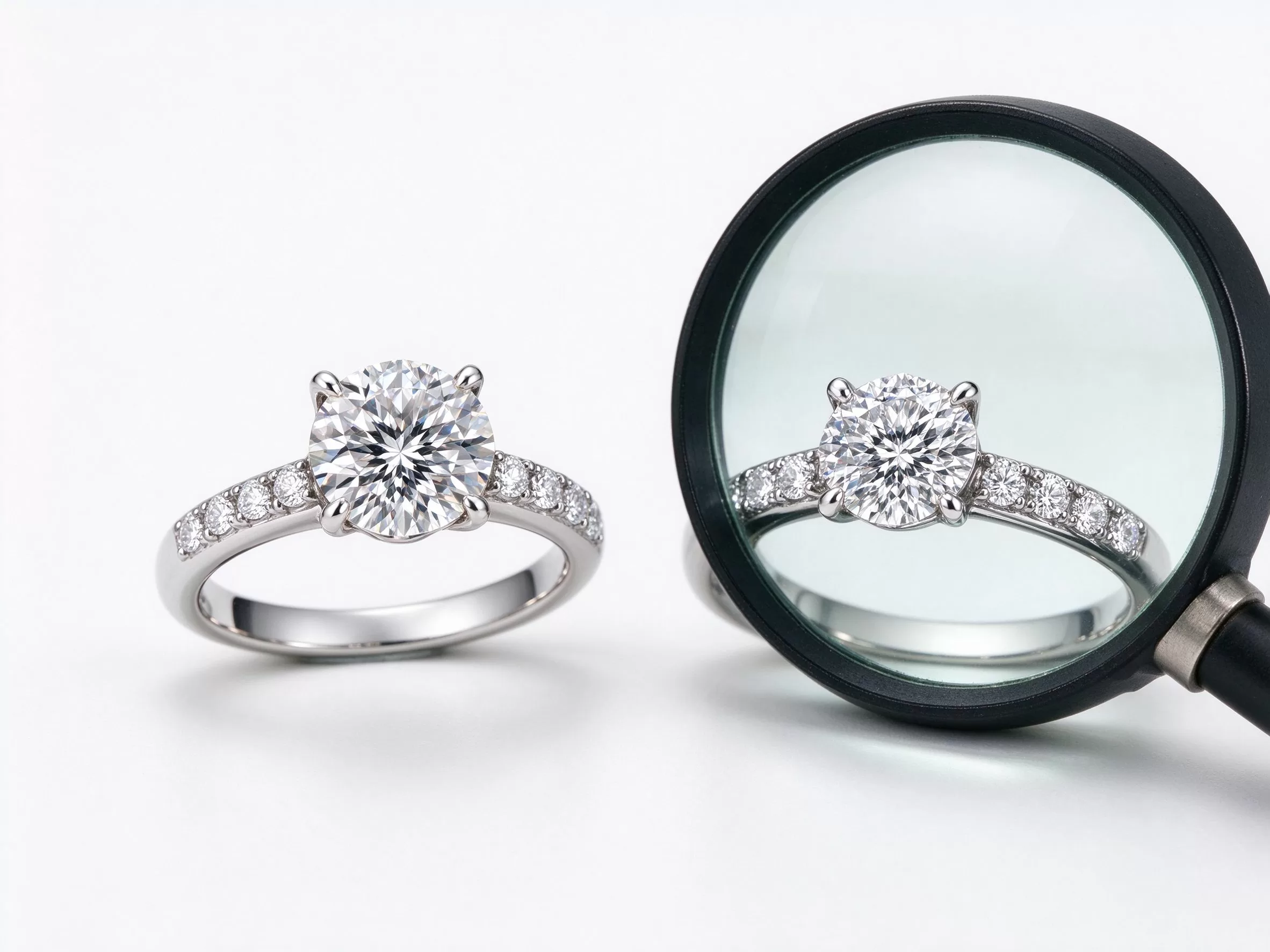
When you buy 925 Sterling Silver jewelry at wholesale, the return policy, repair terms, and warranty coverage you negotiate upfront will determine how much of your margin survives a bad batch or a customer complaint.
This guide walks through the practical decisions US wholesale buyers face on returns, repair, and warranty when sourcing sterling silver: what to clarify before you place a deposit, what defects qualify for return versus repair, how sampling protects you, and how to structure terms that keep both sides accountable.
925 Sterling Silver is an alloy of 92.5 percent silver and 7.5 percent other metals, usually copper. That composition gives it the durability buyers expect, but it also introduces specific failure modes: tarnish accelerated by humidity, plating wear on gold vermeil or gold plated finishes, solder joint failures on chains and clasps, and stone setting issues on pieces set with moissanite or other lab-created stones.
None of these make silver a risky category, but they mean your supplier terms should distinguish clearly between manufacturing defects and wear that happens after the product reaches the end consumer.
For a wholesale buyer, the difference between a vague policy and a written one shows up in two places: your cash flow and your relationship with your own retail customers. A distributor who accepts returns on defective units within a defined window, and who states repair responsibilities in writing, lets you honor your own customer service commitments without absorbing the full cost of a supplier-side problem.
Most disputes between buyers and manufacturers trace back to assumptions that were never put in writing. Before committing a deposit, cover these points explicitly with your supplier.
Ask the supplier to list what qualifies as a manufacturing defect: missing or loose stones, broken clasps, open solder joints, misstamped or missing 925 hallmarks, plating that fails within a defined period under normal wear, and dimensional errors beyond an agreed tolerance. Anything outside that list — tarnish from storage, scratches from handling, discoloration from contact with chemicals — typically falls outside return eligibility.
Getting this list in writing prevents the most common argument, which is whether a stone setting issue was present at shipment or developed later.
A workable structure for most wholesale relationships looks like this: a defined inspection window after receipt (often 7 to 15 days depending on order size), during which you report and return defective units for credit or replacement, and a longer defect claim period for latent issues such as joint failures discovered after you have shipped to retailers.
Confirm whether returns require the original packaging, whether you ship back the defective pieces or only photo documentation, and who covers freight on confirmed defects.
Repairs occupy the middle ground between full returns and no recourse. Ask which repairs the supplier performs at no charge (typically re-setting a stone or re-soldering a joint on a piece still within the defect window) and which are billable (refinishing, replating, or work on pieces that were altered after delivery).
If you sell into the bridal or gifting segment, where a single returned ring can cost you a customer, knowing the supplier's repair turnaround — for us, typically quoted alongside our 15 to 25 day bulk production window — helps you set realistic promises with your own buyers.
The most effective warranty is one you rarely need to use. Sampling exists to catch problems before they scale.
Our sampling process takes 7 to 10 days and produces a physical reference piece you approve before bulk production begins. On 925 Sterling Silver items, use that sample to check the weight, the clasp action, the plating tone on vermeil finishes, and the security of stone settings. Photograph the approved sample and keep it as your quality benchmark.
If a bulk order deviates from the approved sample, that deviation is the clearest possible basis for a return or credit claim — far clearer than a general quality complaint.
Sample orders can be paid through PayPal, which adds a layer of protection on small transactions, while bulk orders run on T/T with a 30 percent deposit and the 70 percent balance before shipment. That structure means your strongest protection on a bulk order is the approval process, not the payment method — another reason to treat sampling as a warranty tool, not just a design step.
A supplier's warranty terms only matter if the supplier can actually detect problems before shipment. Our three-stage QC process is built for that purpose:
For you as a buyer, the practical takeaway is to ask for the pre-shipment AQL report with your bulk order. If a defect later appears in quantities that the AQL sampling should have flagged, the report becomes evidence in a return claim. Suppliers who run genuine pre-ship inspections are usually the ones comfortable standing behind a written defect policy.
Not every piece in a sterling silver category carries the same warranty exposure. Compliant product descriptions matter here too: a gold plated piece over 925 silver is not solid gold, and gold vermeil carries its own thickness expectations. Your warranty terms should match the finish type, because failure modes differ.
The table below summarizes how warranty and return considerations vary across the common finishes in a 925 Sterling Silver range.
| Finish type | Common failure point | Typical warranty response |
|---|---|---|
| Polished 925 silver | Tarnish in storage | Care guidance, not return |
| Gold vermeil over silver | Plating wear at contact points | Replate or credit in window |
| Gold plated over silver | Faster plating wear | Defined wear-period coverage |
| Moissanite set pieces | Loose stone settings | Re-set free within window |
Use this table as a checklist when negotiating terms rather than as a fixed standard. A supplier with strong in-process QC can extend coverage on settings; a buyer with harsh shipping conditions may need to tighten the return inspection window. The point is that the finish type drives the risk, and the terms should say so explicitly.
If your range includes pieces set with graded stones, documentation does double duty: it supports your retail sales and it anchors any dispute. Graded stones in our inventory carry GRA or IGI papers, which identify the stone and its graded characteristics. If a stone in a returned piece is questioned — for example, a claim that the stone shipped is not the stone graded — matching the paper to the piece is the fastest path to resolution.
On the metal side, insist on clear 925 stamping on every piece, and verify stamping accuracy during your own receiving inspection. A missing or incorrect hallmark is a straightforward defect, and suppliers who control their alloy sourcing through incoming inspection rarely have arguments against crediting those units.
The most durable wholesale relationships treat returns and warranty as shared quality systems, not adversarial clauses. A few structures we see work well with US buyers:
Requiring photos and a short defect report before physical returns cuts freight costs on both sides and speeds up credit decisions. Reserve physical return for cases where the supplier needs the piece for analysis — repeated failures of the same component, for instance.
Instead of refunding in cash, some buyers prefer credit applied against the next bulk order. This keeps cash in the relationship, simplifies accounting on both sides, and gives the supplier an incentive to resolve claims quickly. Confirm the mechanics in writing so a credit does not expire or get lost between orders.
Agree that the supplier covers freight on defects confirmed to be manufacturing faults, while the buyer covers freight on returns that turn out to be user damage. This split encourages honest claims on both sides. With DDP delivery to the US taking 5 to 8 days, your total cycle from claim to resolution stays short when terms are clear.
MOQ is 1 piece for stock styles and 30 pieces for custom work, and loose stones are sold by the carat. Sampling takes 7 to 10 days, and bulk production runs 15 to 25 days after the sample is approved. Pricing is quoted per piece or per carat depending on the item. Payment is T/T with a 30% deposit and the 70% balance before shipment, and PayPal is accepted for sample orders.
Stock styles carry a minimum order of 1 piece, so you can order a single unit, inspect the finishing and hallmarking, and evaluate the supplier's responsiveness before committing to volume. Custom work requires a 30 piece minimum. Loose stones are sold by the carat and priced accordingly.
Tarnish on 925 Sterling Silver is a natural reaction to air and moisture, not a manufacturing defect, so it generally falls outside return eligibility. What suppliers should cover is plating that fails prematurely under normal wear or finishing defects present at shipment. Clarify the distinction and the covered wear period in writing before ordering.
If the piece is still within the agreed defect window and the setting failure appears to be a manufacturing fault, the supplier typically re-sets the stone at no charge. If the damage resulted from handling after delivery, repair would be billable. Sampling and the pre-shipment AQL inspection report are your evidence for establishing when the fault originated.
Claim review happens quickly once photos or returned pieces arrive. Replacements drawn from stock can ship promptly, with DDP delivery to the US in 5 to 8 days. If a repair requires production work, expect timelines similar to bulk production, generally 15 to 25 days after approval.
Keep the approved sample photos, the pre-shipment AQL report, GRA or IGI papers for any graded stones, and your receiving inspection notes. Together these establish the condition at shipment, the agreed quality standard, and the identity of the stones, which covers nearly every element of a return or repair claim.
Returns, repair, and warranty terms are not fine print — they are the operating system of your supplier relationship. Start with a sample order to establish your quality benchmark, confirm defect definitions and return windows in writing, and use the pre-shipment AQL report as your reference point on every bulk order.
When those pieces are in place, a 925 Sterling Silver program becomes predictable: 1 piece minimums on stock styles let you test the relationship, 30 piece minimums support custom work, and payment terms of T/T with a 30 percent deposit and 70 percent balance before shipment give you a defined checkpoint at which your inspection findings carry weight.
If you are ready to review sample terms or start with a trial order, browse our wholesale buying guides and articles, learn more about our company and quality process, or contact our sales team to discuss returns, repair, and warranty terms for your sterling silver program.
Sources: Grading references: GIA gem education and GIA laboratory information.
MOQ is 1 stone for samples. Bulk orders are priced by quantity tier; send your cut, carat, color and clarity requirements and we will return a wholesale quotation.
Sample stones ship within 7-14 days. Bulk production lead time is 15-25 days after deposit confirmation; international delivery after dispatch typically takes 3-10 business days depending on destination.
Prices are quoted per carat in US dollars with tiered wholesale pricing. We accept T/T (30% deposit, balance before shipment), PayPal and Western Union for sample and small orders.
Looking for loose stones or a custom cut? Talk to the factory directly.
Send InquiryWritten by the Holycome manufacturing & quality team. Every figure and claim in this article comes from our own production floor in Wuzhou, China — in-house casting, stone setting and a three-pass quality inspection we have run since 2008.
Materials are tested for nickel, lead and cadmium release by SGS and CTT International; moissanite centre stones ship with their GRA warranty card and report. We also hold an independent SMETA / Sedex ethical-trade audit and a Hong Kong Customs AML registration.
Reviewed for accuracy by our quality team before publication. Last updated .
Written by the Holycome manufacturing & quality team. Every figure and claim in this article comes from our own production floor in Wuzhou, China — in-house casting, stone setting and a three-pass quality inspection we have run since 2008.
Materials are tested for nickel, lead and cadmium release by SGS and CTT International; moissanite centre stones ship with their GRA warranty card and report. We also hold an independent SMETA / Sedex ethical-trade audit and a Hong Kong Customs AML registration.
Reviewed for accuracy by our quality team before publication. Last updated .

Understanding 925 Sterling Silver and Its Impact on Shipping Choices When you look at a label that reads “925” on a piece of jewel…

Understanding MOQ and SKU Planning for 925 Sterling Silver Bulk Orders When sourcing sterling silver, the first thing every buyer …
Direct Factory Pricing vs. Trading Company Margins When you buy directly from a 925 sterling silver factory, you cut out the middl…

Why 925 Sterling Silver Matters to Stone Settings When you see the stamp “925” on a piece of jewelry or a production order, you’re…
Understanding the 925 Stamp and Its Role in Your Order The 925 stamp indicates sterling silver, a blend of 92.5% pure silver and 7…