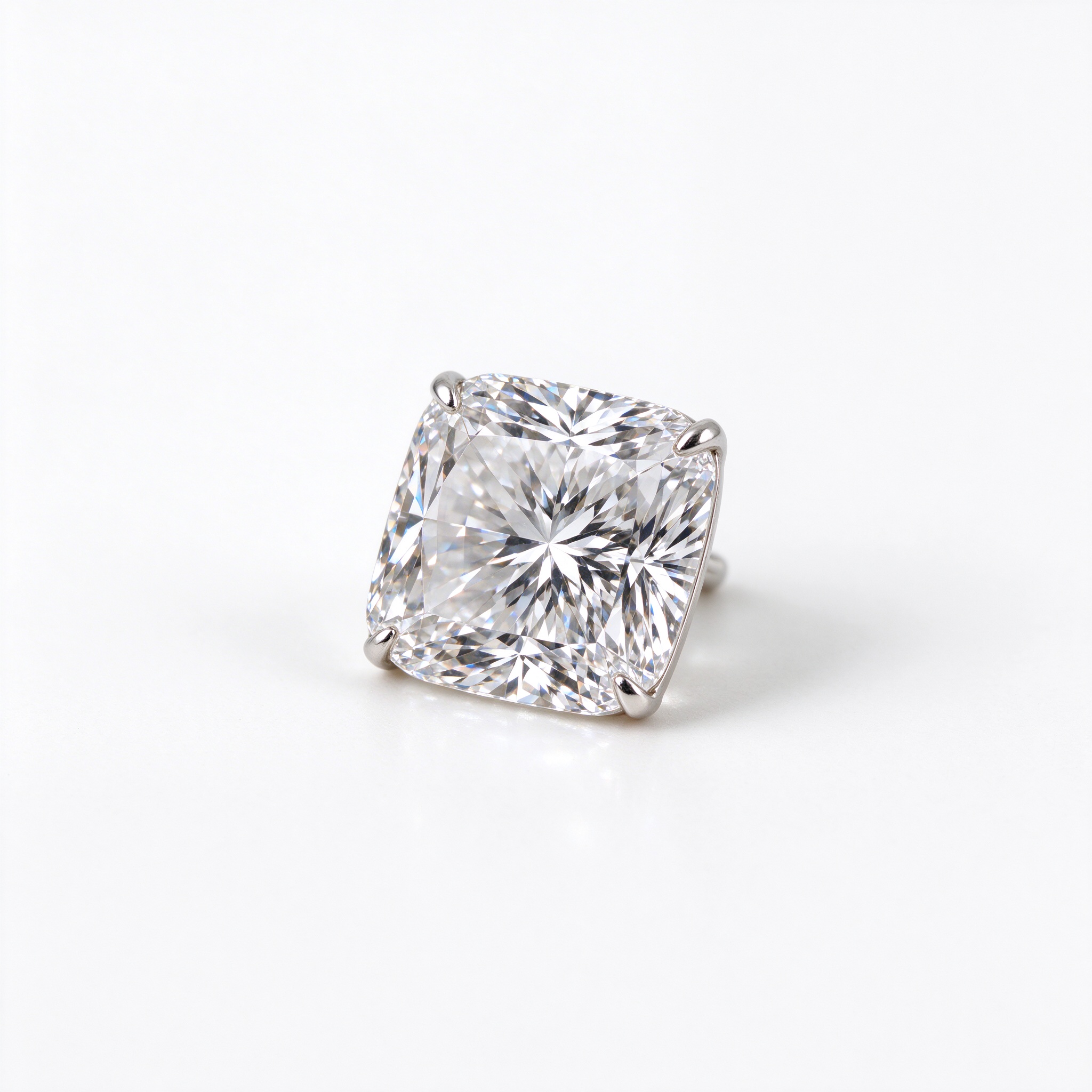
A new wholesaler priced a round parcel 30% below market, expecting volume. The volume never came. Retailers knew the price was too tight to leave them a workable margin, so they bought from the supplier whose price was higher but who left room to actually sell. In B2B gems, your price is not just your margin; it is the retailer's margin too, and pricing the chain wrong loses the account.
This article maps the margin chain from factory to customer, shows where each layer earns its cut, and sets wholesale prices that protect both sides.
The margin chain from factory to finger
A loose moissanite stone passes through several hands, and each layer adds cost and margin:
- Factory / cutter: sells the polished stone at a price tied to carat, color and cut. This is the lowest price in the chain.
- Wholesaler (you): adds QC, certification, sorting, stock and account service. A workable wholesale gross margin runs 25–35% over factory cost on certified, sorted parcels.
- Retailer: adds the setting, the storefront, the sales staff, the warranty and the return buffer. Retail markup on a loose-set stone typically lands at 2.0–2.5x wholesale cost—a 50–60% gross margin—before overhead.
- End customer: pays the retail price, anchored against natural and lab-grown diamond pricing.
The point for a wholesaler: if your price leaves the retailer less than a 2.0x markup, they cannot cover rent, staff and returns and still profit. That is why the "too cheap" parcel failed. Pricing reference points: the cut-vs-price breakdown and the retail margin analysis show how margins shift by shape.
Where wholesalers actually earn long-term
Wholesalers who chase one-off low-price deals compete on the same number as every trader online. Wholesalers who win repeat accounts earn by reducing the retailer's hidden costs: certified and pre-sorted parcels that need no QC, matched pairs that do not come back, consistent color grading that matches the listing. Those services justify a margin and lock in reorders.
Two pricing levers protect the chain:
- Tier by volume. A boutique opening 20 stones pays a higher unit price than a chain ordering 200. This lets you serve small accounts without undercutting large ones, and it rewards growth.
- Protect the 2.0x floor. Quote so the retailer can still double their money. If a price compresses the retailer below 2.0x, the account will churn to a competitor who leaves them room.
Fancy shapes widen margin. Rounds move fastest at the thinnest percentage; step cuts and cushions carry better percentage margin because there is less direct price comparison. The cushion pricing by cut grade shows that effect in numbers.
Reading your own margin correctly
Wholesalers often confuse gross margin with gross profit. A 30% gross margin on a stone that turns in 6 weeks beats a 55% margin on a stone that sits 10 months. Annualize: multiply gross margin by turnover. The fast mid-tier round usually wins on annualized profit even though its per-stone margin is smaller. That is the same logic behind the carat tier analysis—volume beats margin-per-stone when turnover is high.
Truthful pricing also keeps the channel compliant. The FTC Jewelry Guides require that stones be sold under their correct names and that wholesale claims not be used to mislead retail customers. Keeping your quotations accurate and briefing your accounts on the naming rules protects everyone, and it costs nothing beyond a clear product label.
Frequently Asked Questions
What is a healthy wholesale margin on moissanite?
About 25–35% over factory cost on certified, sorted parcels. Below that you absorb QC and service costs you cannot recover; above that you compress the retailer's markup and risk churn.
What markup should a retailer expect from wholesale?
Roughly 2.0–2.5x wholesale cost on a finished, set stone. Quote with that floor in mind; if your price leaves them below 2.0x, the account will not reorder.
Should I price cheaper to win more accounts?
No. Price too low and retailers assume the stock cannot leave them a workable margin, or that QC is weak. Compete on certified, consistent stock rather than the lowest number.
Which shapes carry the best wholesaler margin?
Step cuts and cushions, where direct price comparison is thinner. Rounds win on turnover and annualized profit; fancy shapes win on percentage margin.
How do I compare a 30% fast margin to a 55% slow one?
Annualize it. Multiply gross margin by how many times the stock turns per year. A 30% stone turning 8 times beats a 55% stone turning once on profit per dollar invested.
Finally, revisit your margin math each quarter. Costs for certified, sorted parcels drift as color grades and carat brackets move, and a margin that looked healthy in January can thin by autumn if you do not reprice. A short quarterly review keeps your prices in step with your suppliers and protects the retail floor that keeps your accounts ordering.
Request a tiered wholesale price sheet showing volume breaks and a suggested retail floor that protects your accounts' markup, quoted DDP in 5 business days. Open a wholesale account for tiered terms, or review the bulk round pricing guide before your next buy.