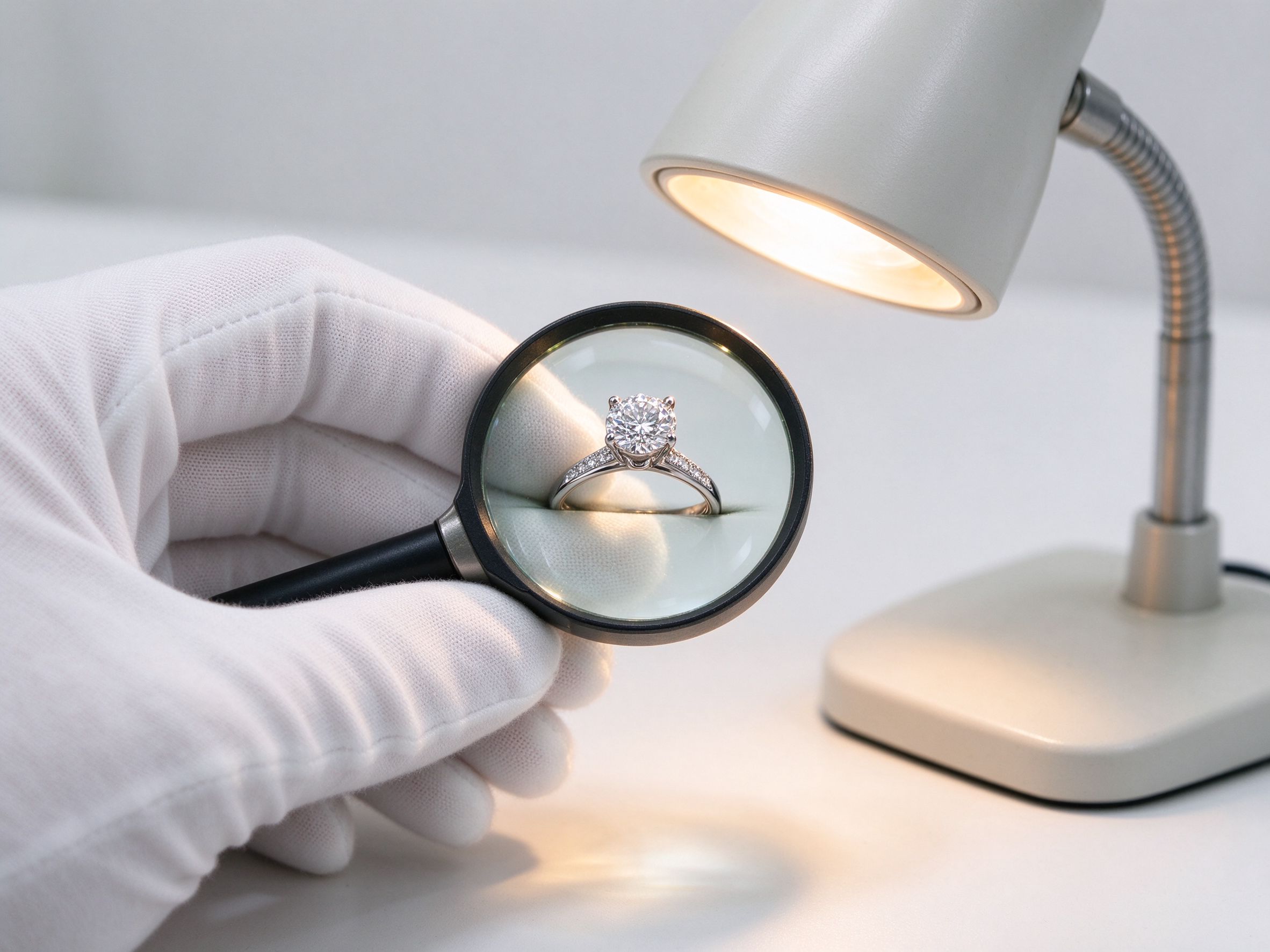
We cut and pack loose moissanite every day, so here is the checklist we give new buyers before they place a trial order. You can skip the marketing and focus on what actually matters when the stone arrives at your bench.
1. Decide the use first, then the cut
A solitaire ring wants an ideal-proportion round or oval. A pendant or drop earring wants a pear, marquise or heart. A halo or vintage ring wants cushion or emerald. Tell us the setting and we will confirm the depth and table suit it - a deep stone will not sit right in a low bezel.
2. Color: D, E, F, G explained for moissanite
- D-E: colorless, bright white face-up, best for white gold and platinum.
- F-G: near-colorless, only slightly warm near the culet, a great margin choice.
- H and below: warm body color, usually only used on request for vintage or yellow-gold work.
For white-metal bridal, we recommend D-F. For everyday silver or gold line work, F-G is perfectly eye-clean and costs less.
3. Clarity: VVS1 down to VS2
Moissanite is lab-grown and our standard stock runs VVS1 to VS2, all eye-clean face-up. VS1-VS2 are fine unless your client will inspect under 10x loupe - then go VVS.
4. Always order with a GRA certificate
Every stone ships with a GRA certificate matched by laser inscription on the girdle. Keep the certificate number (like GRA-HC-1002) so you can re-order the exact same spec later.
5. Order a sample before volume
MOQ is 1 on every stone in our catalog. We always suggest one sample first: check the size on your mandrel, test the setting, then order at tier pricing. Most of our repeat customers start this way.
What to ask us when you inquire
- Target size in millimeters (not just carat - mm is what your setting needs).
- Quantity and which cuts.
- Gold or platinum setting (drives our color recommendation).
- Whether you need matched pairs for earrings.
Send the specs to sales@holycome.com and we will quote within one workday.