Pear Cut Bulk Supplier: MOQ and SKU planning
Understanding MOQ Flexibility for Pear Cut Bulk Orders When you’re building a catalog that features pear‑cut stones, the minimum o…
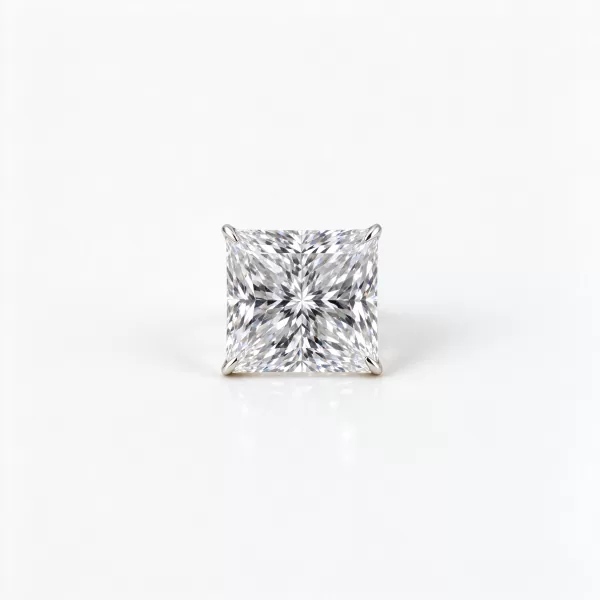
Princess and radiant are the two square-ish brilliant cuts, and they are easy to confuse at first glance. Both are square or rectangular, both fire hard, and both are modern alternatives to a round. But they differ in one important way that changes everything: the princess has sharp corners, the radiant crops them. That single difference drives durability, setting ease and customer fit. This is the princess vs radiant showdown for wholesale buyers.
A princess cut is a true square with four sharp 90-degree corners. A radiant cut looks like a square or rectangle brilliant, but its corners are cropped (cut off) like an emerald cut. So the radiant has eight outline points instead of four sharp corners. That means the radiant inherits the brilliance of a round with the safer corners of a step cut. The princess inherits maximum sparkle but carries the corner-chip risk.
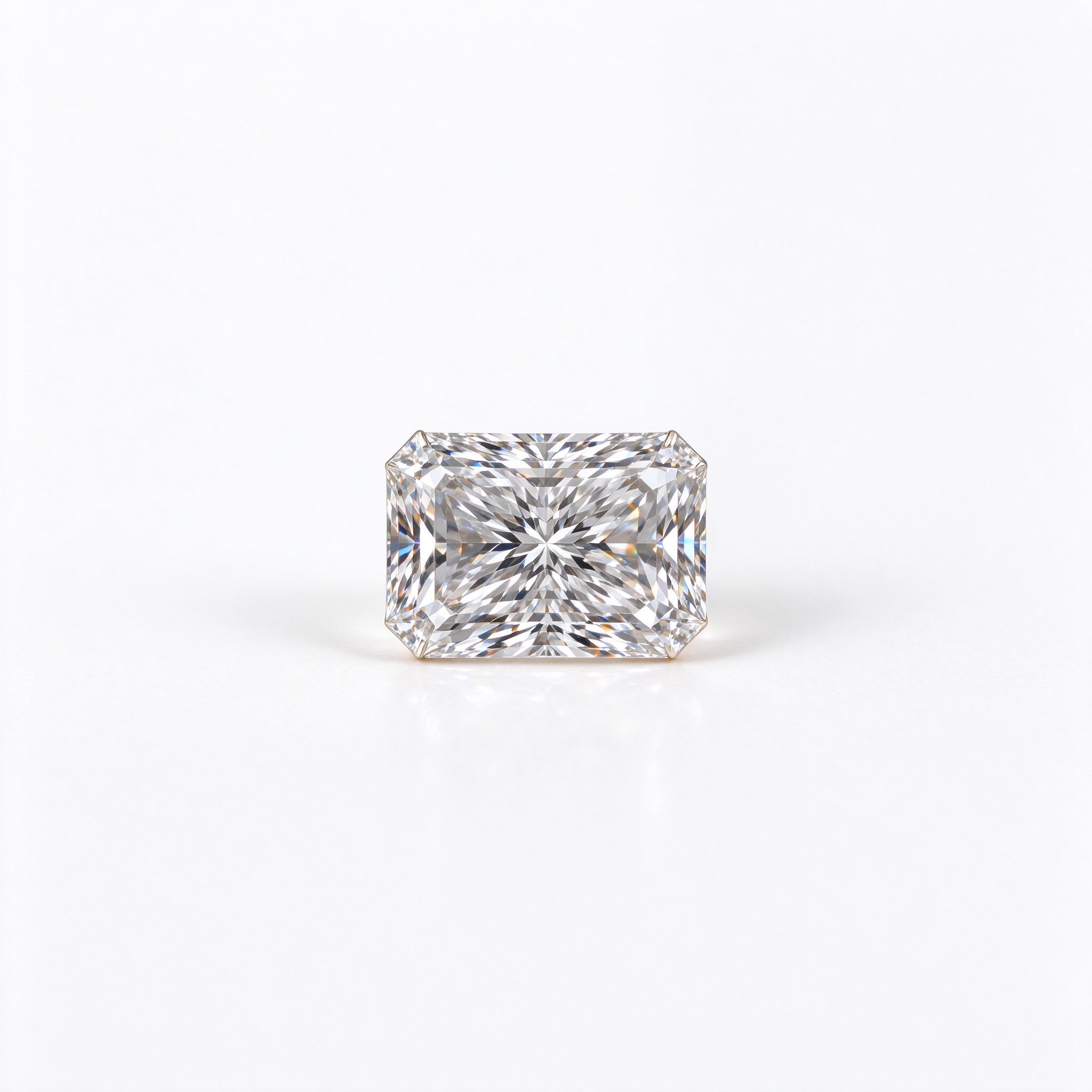
If a customer wants a square shape for an active lifestyle, the radiant is usually the safer recommendation. Our princess corner guide details the princess risk.
Both are brilliant cuts, so both fire strongly. The princess tends to look sharper and more geometric; the radiant looks softer and more versatile, because it blends an emerald outline with a round-like pavilion. Many buyers describe the radiant as "a square that sparkles like a round," which is exactly why it is a workhorse. The princess reads more strictly modern and angular.
The princess is typically the most affordable square shape per carat, which makes it great for budget-conscious square buyers. The radiant sits at a small premium because cutting it well requires blending two cut styles. For a margin play, the princess wins on entry price; the radiant wins on perceived versatility and lower return rate. Compare the ranges: princess and radiant.
Princess buyers want a sharp, modern, affordable square, often in a clean solitaire. Radiant buyers want a square look that sparkles like a round, with the peace of mind of cropped corners; they often choose it for three-stone rings, eternity bands and everyday pieces. We stock both, including the 1ct princess and 1ct radiant.
If you carry only one square brilliant, the radiant is the more forgiving all-rounder: it sells across rings, earrings and bands with fewer setting issues. Add princess as the budget and modern option. For how radiant compares with cushion, read radiant vs cushion.
Which looks more modern? Princess reads sharper; radiant reads softer and more versatile.
Which is safer for daily wear? Radiant, thanks to cropped corners.
Can they be matched as side stones? Yes, matched princess or radiant pairs flank a round or oval center.
When customers ask which square they can "just wear every day," the radiant wins. Its cropped corners chip far less than the princess's sharp points. A princess needs mindful wear; a radiant handles an active lifestyle. This is worth stating plainly, because it is the difference between a ring that lasts and a ring that comes back chipped. Our corner guide details the princess risk.
Both are brilliant cuts, but the princess tends to fire harder and sharper, while the radiant spreads light more evenly across its cropped-corner outline. Under indoor light the radiant stays bright from more angles; the princess can look darker from certain side views. For a ring worn at work under office lighting, the radiant is the safer bet. For a statement piece that pops in photos, the princess delivers.
Smart boutiques carry both. The princess captures the budget, modern customer; the radiant captures the versatile, everyday customer. They are close in price but serve slightly different needs. We stock the princess range and the radiant range, including the 1ct princess and 1ct radiant. For the broader shape map, the cut guide ties it together.
If a customer cannot choose between princess and radiant, ask two questions. Do you want sharp and modern, or soft and versatile? And do you wear your ring for active work, or dress it up? Usually the princess for the first answer and radiant for the second. This resolves it without overthinking. We stock both on the princess and radiant pages.
Carry both if your space allows. The princess captures the entry square buyer; the radiant captures the everyday versatile buyer. They complement rather than cannibalize. For value positioning of the princess, read our value guide.
When a customer faces princess and radiant side by side, the deciding questions are usually lifestyle and look. If they want sharp and modern and accept prong care, the princess. If they want versatile and low-maintenance, the radiant. Your job is to describe both honestly. Customers appreciate the guidance, and they choose with confidence. Stocking both means you never send someone away empty-handed.
Order one of each as display pieces. The princess captures the budget modern buyer; the radiant captures the everyday versatile buyer. They complement rather than compete. We cut both to ideal proportions and ship GRA-certified. See the princess and radiant ranges.
Order one princess and one radiant as display pieces and watch which customers prefer. The princess captures the sharp modern buyer; the radiant captures the versatile everyday buyer. We cut both to ideal proportions and ship GRA-certified. Start small and reorder the winner. See the princess and radiant pages.
The International Gem Society moissanite guide explains how moissanite performs in daily wear compared with diamond.
Yes for price-sensitive customers who want brilliance and hardness. Moissanite ranks 9.25 on the Mohs scale, holds up to daily wear and costs a fraction of a natural diamond of the same size, so it resells fast in bridal and fashion lines.
MOQ starts at 50 pieces per design for stock items. Custom cuts and private-label settings usually start at 100–300 pieces depending on the mold.
Yes. Every parcel ships with GRA or IGI documentation listing carat weight, color grade and cut. We recommend passing the certificate to your end customer for trust.
Samples ship in 3–5 days. Bulk runs take 15–20 days under 500 pieces, and 25–30 days for custom work.
MOQ is 1 stone for samples. Bulk orders are priced by quantity tier; send your cut, carat, color and clarity requirements and we will return a wholesale quotation.
Sample stones ship within 7-14 days. Bulk production lead time is 15-25 days after deposit confirmation; international delivery after dispatch typically takes 3-10 business days depending on destination.
Prices are quoted per carat in US dollars with tiered wholesale pricing. We accept T/T (30% deposit, balance before shipment), PayPal and Western Union for sample and small orders.
Looking for loose stones or a custom cut? Talk to the factory directly.
Send InquiryWritten by the Holycome manufacturing & quality team. Every figure and claim in this article comes from our own production floor in Wuzhou, China — in-house casting, stone setting and a three-pass quality inspection we have run since 2008.
Materials are tested for nickel, lead and cadmium release by SGS and CTT International; moissanite centre stones ship with their GRA warranty card and report. We also hold an independent SMETA / Sedex ethical-trade audit and a Hong Kong Customs AML registration.
Reviewed for accuracy by our quality team before publication. Last updated .
Written by the Holycome manufacturing & quality team. Every figure and claim in this article comes from our own production floor in Wuzhou, China — in-house casting, stone setting and a three-pass quality inspection we have run since 2008.
Materials are tested for nickel, lead and cadmium release by SGS and CTT International; moissanite centre stones ship with their GRA warranty card and report. We also hold an independent SMETA / Sedex ethical-trade audit and a Hong Kong Customs AML registration.
Reviewed for accuracy by our quality team before publication. Last updated .

Understanding MOQ Flexibility for Pear Cut Bulk Orders When you’re building a catalog that features pear‑cut stones, the minimum o…
Why Going Direct to the Factory Matters for Pear Cut Jewelry When buyers compare factory direct orders to trading company purchase…

Daily Incoming QC – What You’ll See First The first line of defense on our floor is the incoming stone check. Every piece arrives …

Understanding the Pear Cut Custom OEM Process The pear cut, with its graceful teardrop shape, is a favorite for private label coll…
Pear Cut Overview & Setting Fundamentals Pear cut stones are prized for their elegant profile and cap-like shape. In our factory, …