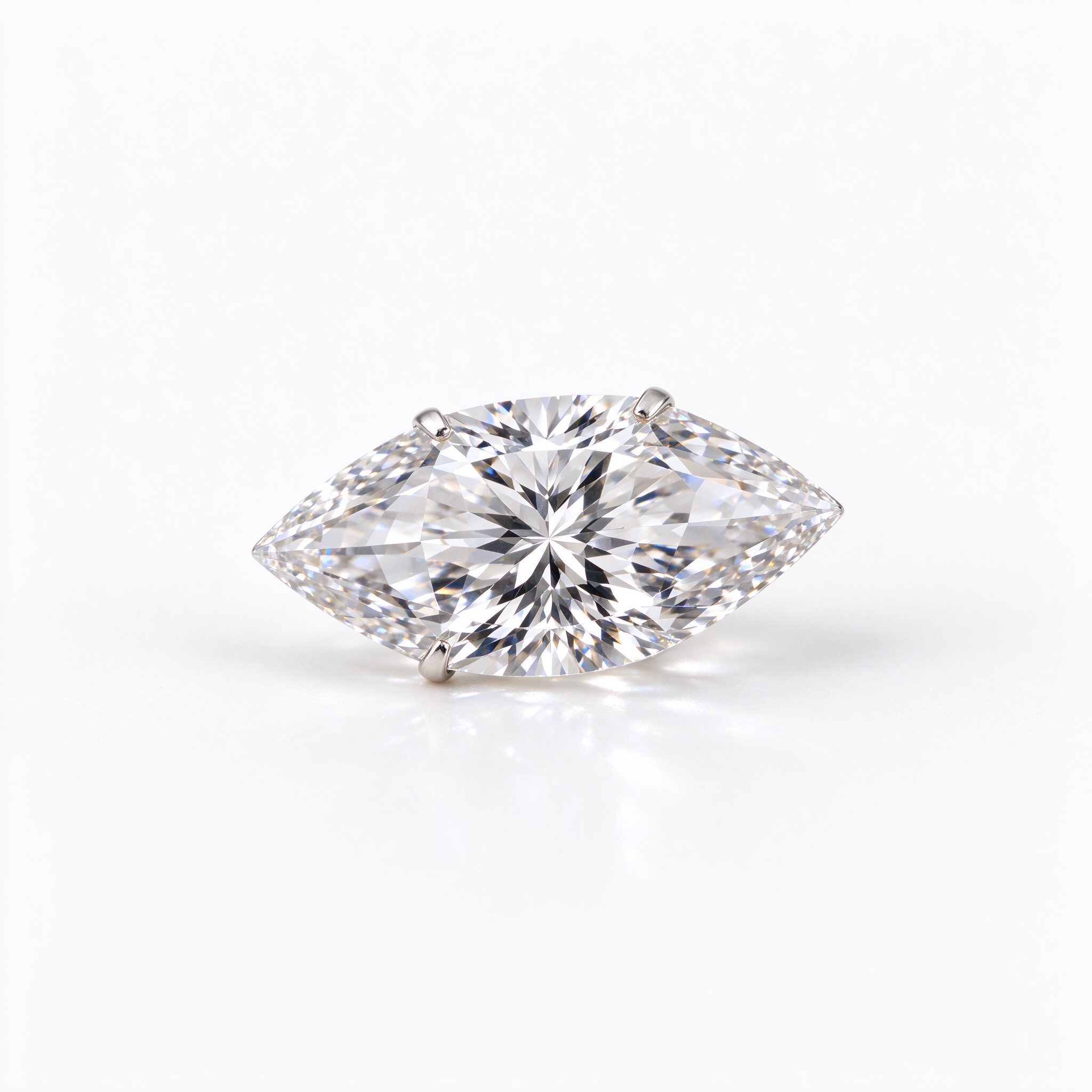
The marquise is one of the most dramatic shapes we cut, and it is also the one that goes wrong most often at the bench. Not because the stone is delicate, but because the two pointed ends are easy to set wrong. A poorly set marquise develops a chipped tip within months; a well-set one lasts for decades. This guide is for jewelers who want to set marquise moissanite correctly the first time.
Why the tips are the weak point
A marquise tapers to two sharp points. Those points have the least material and the most exposure. They catch on sweaters, seatbelts and door frames. If a single round prong sits on a point, it acts like a lever and can chip the tip on impact. The whole rest of the stone may be perfect, but a chipped tip ruins the piece.
V-prongs: the standard fix
At each pointed end, use a V-shaped prong that cradles the point from both sides instead of pressing down on it. The V distributes the force of a knock across two shoulders of the stone rather than concentrating it on the tip. Four regular prongs hold the curved sides. This is the configuration we recommend for every marquise ring and it is what most high-quality settings use.
Bezel and halo protection
A full or partial bezel around the marquise adds even more security, especially for an everyday-wear piece. A halo setting, where small stones ring the center, also protects the tips by raising them off the impact line. Both options look intentional and vintage, and both solve the tip problem without making the ring look bulky.
Choose the right stone for the setting
Tell us how you will set the stone. For a V-prong setting we select a marquise with a slightly thicker girdle so the tips have material to grip. For a bezel we can supply a stone with a clean outline. When you order, reference the marquise stones and mention your setting type; we match the girdle and tip accordingly.
Common setting mistakes
- One naked prong on a tip: the most common cause of chipped marquise points.
- Setting too deep: a marquise that sits low can rock on its tips.
- Ignoring orientation: the long axis must align with the finger or the ring looks skewed.
- Overheating the tip: moissanite tolerates heat well, but good bench technique avoids prolonged flame near the points.
Side-stone marquise pairs
Marquise stones also sell in pairs flanking a round or emerald center. When ordering pairs, ask for matched color and size from the same batch so the two sides look identical. We cut matched pairs for exactly this purpose. For context on how marquise compares with other elongated shapes, read our pear vs marquise comparison.
After setting: check and clean
Once set, inspect the two tips under magnification. Confirm the V-prongs touch the stone on both shoulders and that nothing presses directly on the point. Clean under the stone before delivery, and advise the customer to check the prongs every six months. Our broader care and education guides cover the ongoing routine.
Quick FAQ
Can I set a marquise in a solitaire? Yes, with V-prongs on both tips and regular prongs on the sides.
Do bezels hide the sparkle? A thin bezel barely covers the girdle and does not dim the face-up fire.
What if a tip chips after setting? It can often be re-polished, but prevention with V-prongs is far cheaper.
Choosing prongs vs bezel for marquise
Both prong and bezel settings protect marquise tips, but they suit different customers. V-prongs are the standard: they leave most of the stone visible and are easy to inspect. A full bezel is more protective and reads more vintage, but it covers a little of the outline. For an everyday-wear marquise, we lean toward a bezel or a cathedral with V-prongs. For a statement piece that needs maximum sparkle, V-prongs are better. Tell us the intended use when you order and we will match the girdle strength.
Setting tips for the bench
When a bench sets a marquise, the two tips must be level. If one tip sits higher than the other, the ring rocks. The long axis must align with the finger. Heat should be applied gently near the points, and the stone should be seated in wax or clay before soldering to protect the tips. These basics prevent most returns. We include setting guidance with wholesale orders; if your bench is new to marquise, ask us for a one-page checklist. Our broader marquise buying guide and the marquise stones cover the rest.
After-sales: checking tip security
Advise marquise customers to look at the two tips under a bright light twice a year. If a prong lifts or a tip looks cloudy, bring the ring in. A re-tip is cheap; a chipped point is not. Because moissanite is hard, the tips rarely chip on their own, but they chip if a prong fails. This small habit keeps marquise rings wearable for decades. For the general care routine, our education index has more.
Why we choose girdle thickness for the setting
When you tell us a marquise will be V-pronged, we select a stone with a sturdy girdle so the prongs have solid material to grip. If it will be bezelled, we supply a cleaner outline. This small coordination prevents the common problem of a stone that looks great loose but seats poorly. Our QC measures girdle thickness before packing. See our standards in the QC process guide.
After-setting inspection routine
Once a marquise is set, inspect both tips under magnification. Confirm the V-prongs touch the stone on both shoulders and that nothing presses directly on the point. Advise the customer to check the tips twice a year. This habit prevents chipped points. For the broader care routine, browse the education index.
Sending your setting specs
When you order marquise stones, send us the mounting design. V-prong, bezel, or halo changes which girdle we select. This coordination happens before cutting, not after. It prevents stones that look great loose but seat poorly. Include a sketch or reference if you have one. Start the conversation on custom cut and see the stones on the marquise page.