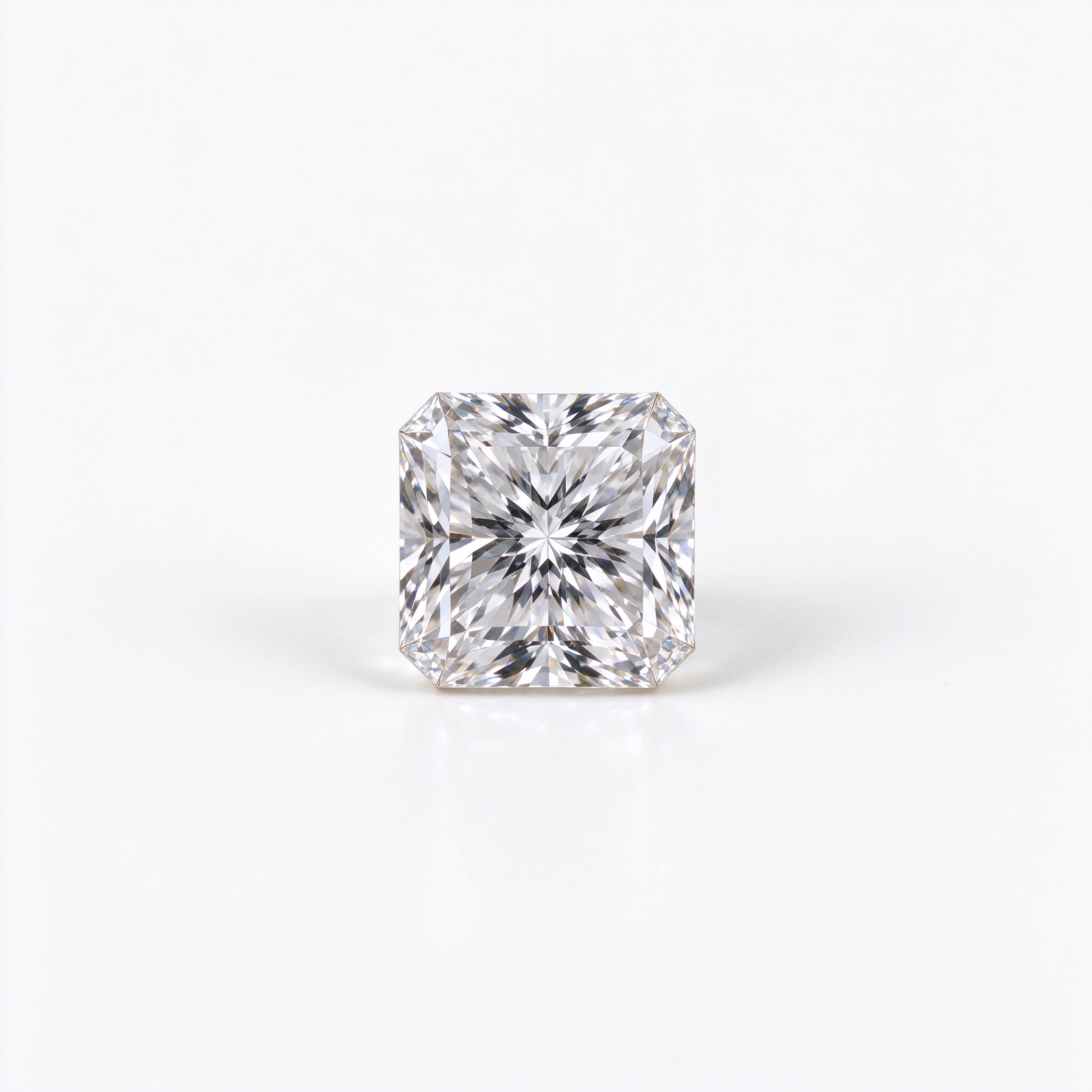
A round brilliant can usually be pulled off the shelf. An asscher cut, more often than not, cannot. The square step cut is produced in smaller volumes and to tighter proportion specs, which means wholesale buyers running custom bridal programs are usually ordering asscher moissanite to order rather than off inventory. That changes the timeline, the cash flow, and what you tell your client.
Why Asscher Is Cut-to-Order
The asscher is a square step cut with a cropped corner and a high crown. Its look depends on precise proportions: the table size, the step facet depth, the crown height. A standard-sized round can be cut from standard rough with a predictable yield. An asscher of a specific size and proportion, cut to a vintage or modern spec, requires selecting rough by hand and cutting to that order. Few suppliers hold deep inventory across the full range of asscher sizes because demand is narrower than rounds, and holding speculative stock ties up capital.
The result is that most asscher wholesale supply is built to order, with a production lead time rather than an off-the-shelf wait.
What Lead Times Actually Look Like
For a standard asscher order, expect roughly 3 to 4 weeks from rough selection through cutting and certification. Tighter proportion requirements (a specific table percentage, a vintage crown height) add time because the cutter has less room for error. Large stones - above 2ct - add another week because the rough selection is harder. Custom proportions with a design brief can run 5 to 6 weeks.
Compare that with a round brilliant, which often ships within days from stock. The asscher program is therefore a made-to-order program, and buyers should quote it that way to clients.
Plan the Timeline Backwards
When a client orders an asscher engagement ring, work backward from the event date:
- Production and cutting: 3 to 4 weeks (5 to 6 for custom proportions).
- Certification and QC: 3 to 5 days.
- Setting and mounting: 1 to 2 weeks depending on the head.
- Sizing and final check: a few days.
A realistic asscher engagement ring, from order to handoff, is 6 to 8 weeks. Buyers who promise a client a two-week turnaround on an asscher solitaire are promising something the supply chain cannot deliver. Setting the expectation early prevents the panic rush.
Managing Client Expectations
Custom clients often understand a wait if it is framed as a bespoke process. Tell them the asscher is cut to their size and proportion, that the step-cut design needs careful cutting, and that the wait is why the stone has the clean step-facet look. Most clients choosing an asscher are buying the vintage architectural look and will accept a longer timeline for it. The problem comes when the buyer quotes a stock-store timeline and misses.
QC on Cut-to-Order Stones
Because asschers are made to order, the QC step matters more than for stock rounds. When the stone arrives, check:
- Proportion match to the order - table percentage, crown height, step depth.
- Cropped corners even on all four corners.
- No visible window or dark pavilion through the table.
- Face-up color consistent with the grade (step cuts reveal color, as with emeralds).
Rejecting a cut-to-order stone means restarting the production clock, so getting the QC right on arrival protects the timeline.
Stocking vs Cut-to-Order
A small asscher stock in one or two popular sizes (1.0 to 1.5ct, modern proportion) is reasonable for boutiques that want an in-store option. Beyond that, cut to order. Holding deep speculative asscher stock ties up capital in a slow-turning cut. The hybrid model - a couple of in-stock pieces for immediate sale, everything else to order - is the most capital-efficient.
Cash flow on cut-to-order asschers also differs from stock rounds. Because production takes weeks, buyers typically place a deposit or pay in full at order, rather than buying against ready inventory. Plan purchasing terms accordingly; a supplier running made-to-order asschers will usually require a commitment upfront, which means buyers should confirm the client's order is firm before placing the production order. A cancelled asscher production run leaves the supplier holding a custom stone, and that cost usually lands on the buyer.
What to Ask the Supplier
When setting up an asscher program, ask the supplier: their standard cut-to-order lead time, whether they hold any in-stock sizes, how custom proportions are quoted, and their QC and recut policy if proportions miss. A supplier running a serious step-cut line will give clear lead times and will not promise stock they do not hold. Buyers pairing this with custom design services should treat the asscher as the anchor SKU of their bespoke step-cut offering.
The asscher is a made-to-order cut. Plan the wait, quote the wait to the client up front, and the stone delivers the architectural look the client actually ordered.