Open any wholesale moissanite price sheet and the asscher cut sits near the top of the per-carat column, above the round brilliant, above the oval, usually level with or slightly above the emerald. New buyers often assume that premium is marketing. It is not. The asscher is a harder cut to produce, a slower-moving cut in the market, and a cut where visible quality differences between parcels are larger than in the round. Understanding why the asscher prices where it does is the difference between paying a fair premium and paying twice for the same stone.
What the asscher is, technically
The asscher is a square step cut with a flat table, stepped crown and pavilion facets, and — in the modern version — a higher facet count than the original 1902 design. It is essentially a square emerald cut with a stronger corner and a deeper pavilion. The visual signature is the concentric square "hall of mirrors" pattern that appears down through the table. Because it is a step cut, it returns less white light than a brilliant and more contrast between the open table and the stepped facets. It is bought for that look, not for sparkle.
Why the per-carat price is higher
Three factors drive the asscher premium. First, yield. Squared step cuts waste more rough than round brilliants do; the cutter has to remove material to get the concentric square geometry to line up, and any misalignment of the pavilion facets shows immediately in the hall-of-mirrors pattern. Rough that would have yielded a 1.2ct round might yield a 0.9ct asscher. The cost of that lost yield shows up on the price sheet.
Second, labor. Asschers are cut and checked by hand more than rounds are. The facet alignment has to be verified under magnification step by step, because a single misaligned step facet breaks the concentric look. Cutters who can do this consistently are a smaller pool than cutters who can round-brilliant, and their time costs more.
Third, demand risk. The asscher is a niche shape. Fewer buyers order it, so a factory that stocks asscher inventory is tying up capital in a SKU that turns slower than a round. That carrying cost is priced in. Buyers who order asscher to spec rather than off the shelf usually pay less per carat than buyers who pull from pre-cut stock, because the factory is not carrying the inventory risk.
When the premium holds and when it erodes
The premium holds for asschers cut to a clean hall-of-mirrors pattern with a flat, well-aligned table and no visible window through the pavilion. It erodes for asschers cut too deep, which look small face-up, or cut too shallow, which show a gray window through the table and kill the contrast that makes the cut worth buying. A bad asscher is not a value asscher; it is a stone that will sit in your case for two years. When comparing two asscher parcels, always ask for the pavilion depth percentage and a straight-down photo of the table. A table that looks like a window is a discount you do not want.
How buyers should price it
When you set retail on an asscher, price it against the emerald cut, not against the round. The customer who is shopping asscher is cross-shopping emeralds and cushions, not rounds. If you price the asscher as if it were a premium round, it looks overpriced. If you price it as a step-cut specialty with a clear quality story (concentric pattern, hand-aligned facets), it sells. The margin per carat on a well-presented asscher is usually better than on a round, because the customer who wants one is not comparison-shopping the big-box chain. Stock it in smaller quantities — one or two calibrated stones per carat band — and rotate rather than over-ordering. The asscher is a slow-turning, high-margin SKU, not a volume SKU.
Regional demand for asscher
Asscher demand concentrates in buyers who gravitate to art-deco and vintage-revival settings, which means it moves better in markets where that aesthetic is currently in fashion. In North American and Western European boutiques, the asscher sits in the "vintage bridal" case and pairs cleanly with milgrain and filigree settings. In markets where modern geometric settings dominate, the asscher underperforms and is better left to cut-to-order rather than shelf stock. Ask your supplier which regions they ship the most asscher inventory to; that tells you where the comparable retail pricing is anchored, and it tells you whether the shape will move in your market without needing to be discounted.
What to ask the supplier
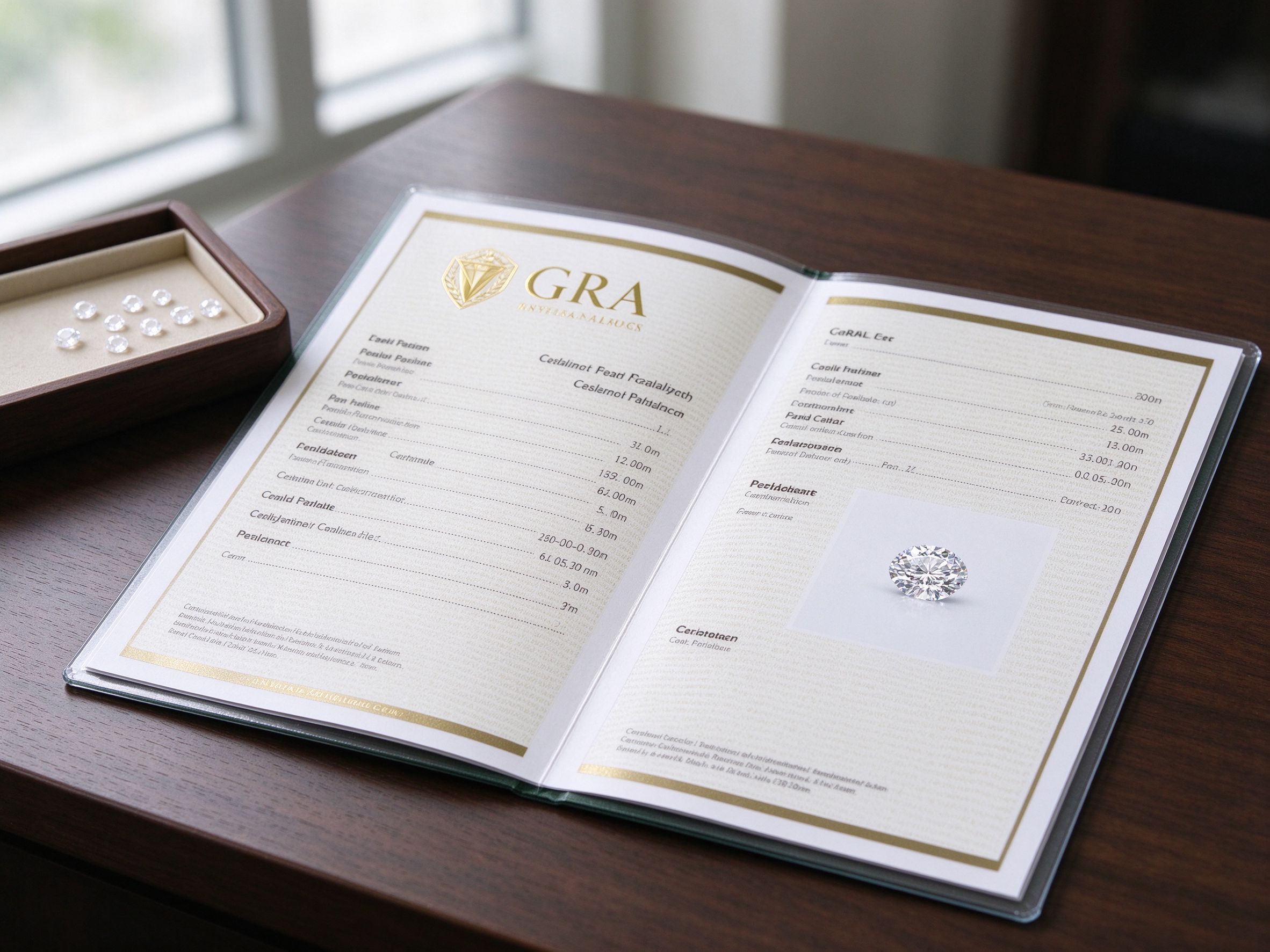
Ask for the depth percentage, the table percentage, and a top-down photo for every asscher parcel. Ask whether the stone is GRA-certified and whether the certificate notes cut grade. Ask whether cut-to-order is available at a lower per-carat price than off-the-shelf stock, because for a niche shape that is where the real savings are. Finally, ask for a sample stone so you can see the hall-of-mirrors pattern in person; it is the single feature that justifies the premium, and it is impossible to judge from a spec sheet.
Buyers comparing step cuts across the board should also review our moissanite rings line, where the asscher and emerald are shown side by side in the same settings, which makes the price-per-carat difference easier to explain to customers.