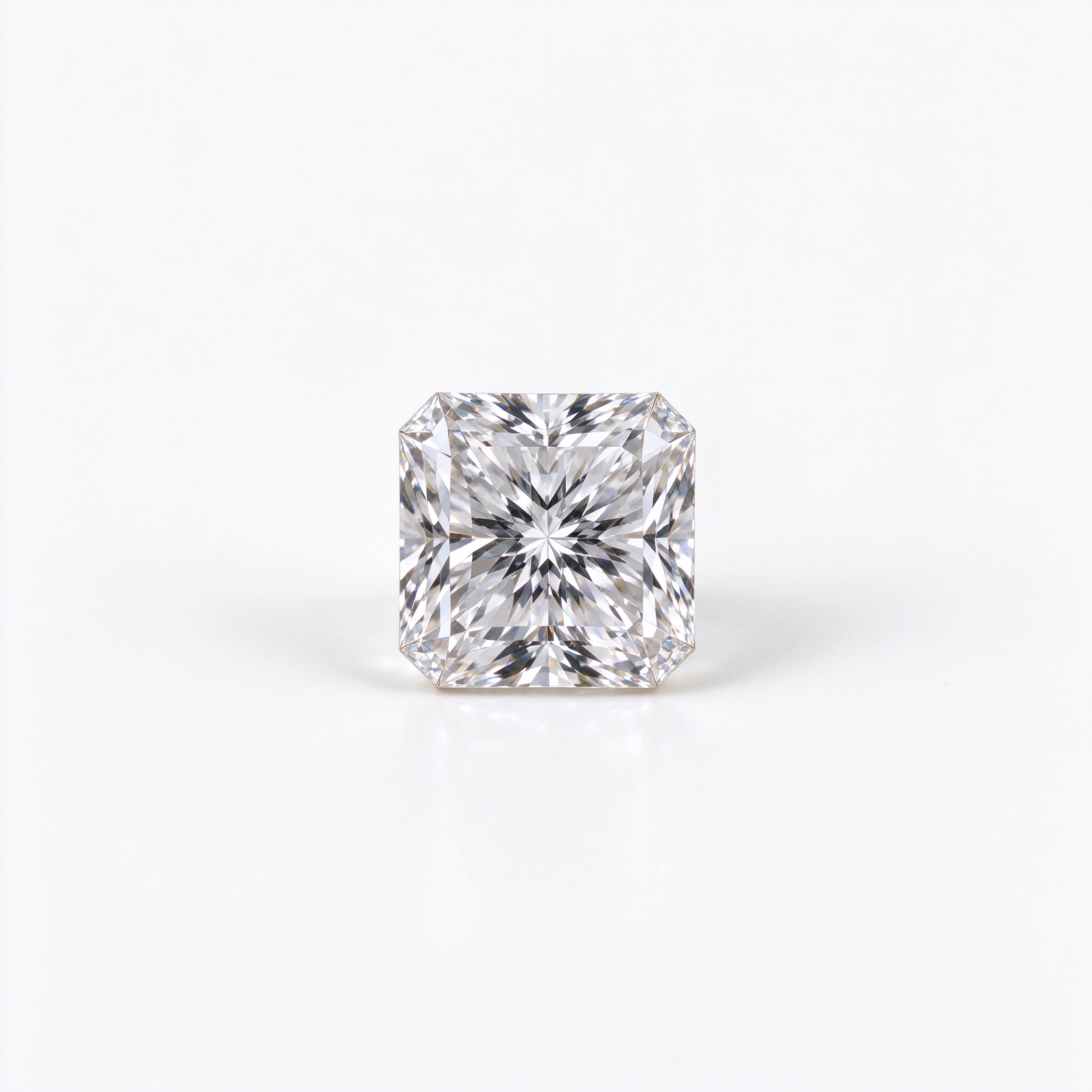
Once a customer decides they want a step cut, the next question is almost always: square or rectangular? That is the asscher vs emerald decision. Both are quiet, mirror-like, clarity-demanding stones. But the two shapes wear differently and attract different clients. This comparison lays out the differences so you can guide the choice without hesitation.
The outline difference
The emerald cut is rectangular, longer than it is wide, with cropped corners. The asscher is the square cousin: equal length and width, also cropped corners, but with a steeper pyramidal crown. If the customer wants elongated and slimming, the emerald is the answer. If they want compact and architectural, it is the asscher.
The crown and optical feel
An emerald cut has a larger table and open, linear steps, so it looks clean, broad and modern. An asscher has a smaller table and a steep, concentric crown, so it looks deep, tunnel-like and deco. The emerald feels like a sleek modernist building; the asscher feels like a 1920s skyscraper. Neither is "better"—they express different aesthetics.
Finger and hand flattery
- Emerald: the rectangle lengthens shorter or wider fingers and reads elegant on slender hands.
- Asscher: the square sits compact and geometric; it suits clients who want a deliberate, almost architectural look rather than a lengthening one.
Clarity and color: the same high bar
Because both are step cuts with open facets, both demand VVS clarity and D-F color for white metal. There is no shortcut on either. Our step-cut clarity guide applies to both shapes. We stock each clean: the emerald range and the asscher range.
Settings and styling
Emerald cuts shine in modern solitaires, east-west rings, and with tapered baguette sides. Asscher cuts lean deco: millgrain, filigree, geometric halos. If your customer is drawn to vintage, the asscher usually wins. If they want sleek and current, the emerald does. Both have cropped corners, so chip risk is low compared with a princess.
Pricing and stocking
Both are premium, low-volume, high-margin shapes for design-driven clients. We suggest carrying one of each in 1ct to cover the step-cut segment. If a customer cannot choose, ask: "rectangular and modern, or square and vintage?" That single question usually decides it. For the full shape landscape, see the complete cut guide.
Quick FAQ
Which looks bigger on the finger? The elongated emerald reads larger; the asscher reads more compact.
Which is more vintage? The asscher, historically a 1920s deco design.
Can either be a fashion ring? Yes, both make statement cocktail rings.
The optical difference in real light
Look at both stones under a lamp and the difference is immediate. The emerald throws a broad, open light across a long rectangle. The asscher throws a deep, concentric glow down a square. The emerald feels like a window; the asscher feels like a doorway. This is why the two shapes, despite being step cuts, attract different customers. Display both side by side and the choice usually becomes obvious.
Sizing the step cut
Step cuts are quoted in mm as much as carat. An emerald 1ct is around 7x5mm; an asscher 1ct is around 5.5mm square. Tell your bench the mm dimensions. Because step cuts look smaller face-up than brilliants of the same weight, customers sometimes go a size up; expect that conversation. See the conversions in the size chart.
Stocking both step cuts
You do not need deep inventory. One 1ct emerald and one 1ct asscher cover the step-cut segment. Customers who love either will ask for more. These are high-margin, low-volume pieces, so even one of each works. Browse the emerald and asscher ranges, and request custom sizes through custom cut.
How to decide in one question
When a customer is torn, ask: "Do you want a rectangle that lengthens the finger, or a square that reads deco?" Rectangle points to emerald; square points to asscher. That single question settles it most of the time. Let them hold both. The shape they keep looking at is the one. See the emerald and asscher ranges.
Stocking step cuts on a budget
You do not need many. One 1ct of each covers the step-cut demand. These are low-volume, high-margin pieces. Add more only if customers ask. This keeps inventory lean. For the full shape map, read the cut guide.
Placing the step-cut order
Once the customer picks square or rectangle, order one 1ct of that shape. VVS clarity, D-F color. It is a low-volume, high-margin piece, so a small display is enough. Compare the emerald and asscher ranges and begin on custom cut.
Stocking step cuts lean
You do not need much step-cut inventory. One 1ct emerald and one 1ct asscher cover the demand. These are low-volume, high-margin pieces. Add more only when customers ask. This keeps your investment small while opening the design-buyer segment. Merchandise the two together as a quiet-luxury corner.
When a customer chooses, the rectangle-versus-square question settles it. Supply VVS stones, because open facets show any cloud. We QC each step cut under a loupe. See the emerald and asscher pages and start on custom cut.
Placing your step-cut order
Once the customer chooses square or rectangle, order one 1ct in VVS and D-F. These are low-volume, high-margin pieces, so a small display covers demand. We QC each step cut under a loupe. Compare the emerald and asscher ranges and begin on custom cut.
Your next step
Decide rectangle versus square, then order one 1ct sample of that step cut. VVS and D-F keep the open facets clear. These pieces reward a curated display rather than volume. We QC every step cut under a loupe before packing. Compare the emerald and asscher collections and start on custom cut.
The long-term value of step cuts
Step cuts age well. A well-made emerald or asscher ring will not look out of style in a decade. That makes them pieces customers keep and pass down, which builds your reputation as a curator rather than a fast-fashion seller. Stock them as timeless heirlooms. We cut both to ideal, VVS standards and ship GRA-certified from our Wuzhou factory.
Whichever step cut your customer chooses, the key is VVS clarity and D-F color. We ship both shapes GRA-certified from our Wuzhou workshop and can supply matched sizes for custom mountings on request.