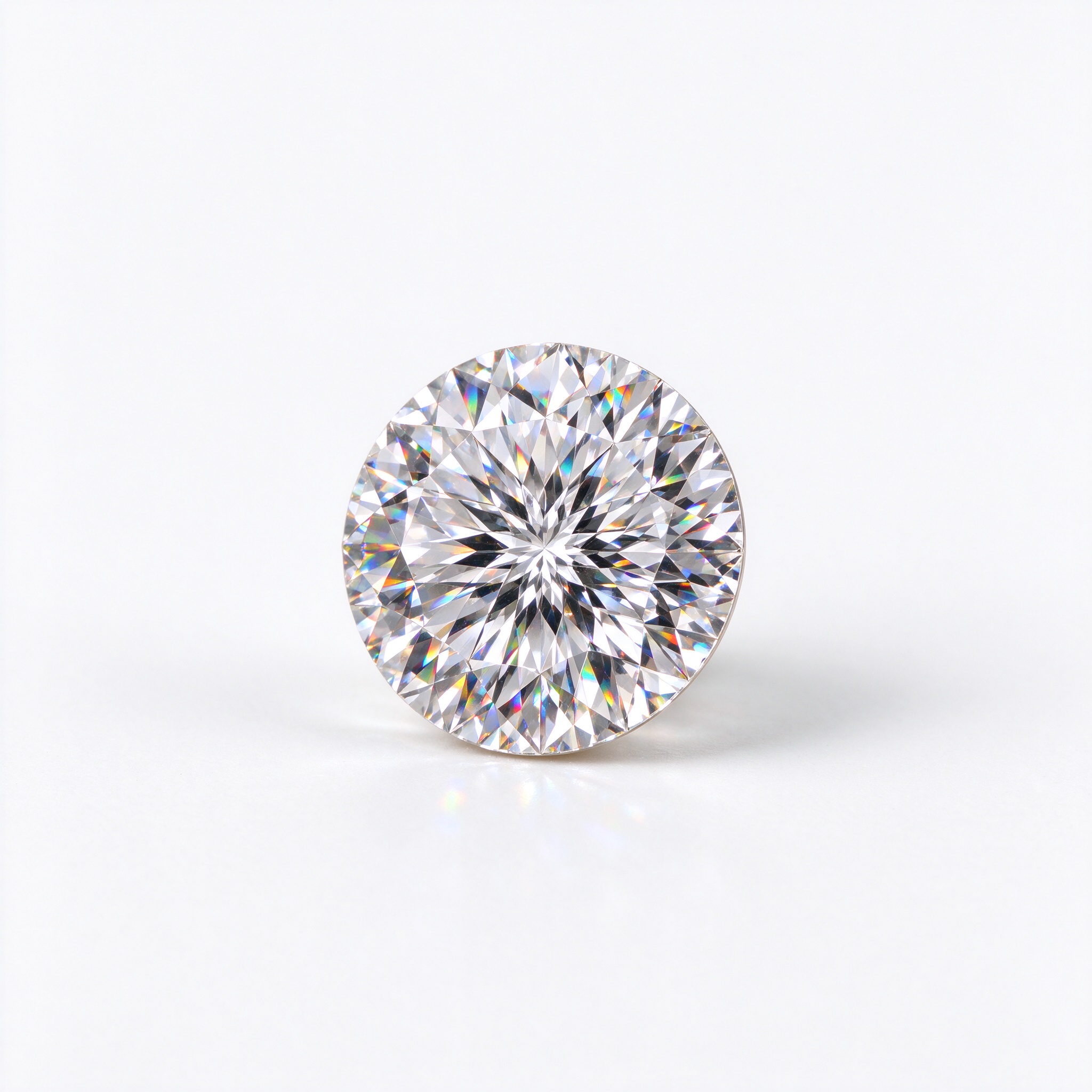
A Minneapolis bridal boutique switched suppliers after a bulk round brilliant parcel arrived where one in four stones looked noticeably deeper than the rest. Set into shared four-prong mounts, they sat at slightly different heights on the same display tray. The fix was not a refund—it was re-cutting the mount seats, which cost the boutique more in labor than the whole order. Here is how we grade round brilliants before they leave, and the tolerance numbers you should demand from any supplier.
The cost of loose cut tolerances
Round brilliant is the most forgiving cut visually, which is exactly why lazy suppliers let tolerance drift. The stone still looks bright to a retail eye, but the setter feels the problem immediately. The table below compares what an average parcel looks like against a controlled one.
| Parameter | Average supplier | Our standard |
|---|---|---|
| Table percentage | 55–65% wide spread | 56–60% tight band |
| Girdle thickness | Not measured per stone | Thin–slightly thick, documented |
| Cut grade on cert | ‘Excellent’ claimed | Premium, verified by eye & loupe |
| Height vs diameter | Variable ±6% | Held within ±3% |
That tighter height band is what keeps the display tray even and the prong length uniform—the detail that saved that Minneapolis boutique hours of bench work.
Inside our round brilliant inspection
Every round brilliant we ship is 57 facets with an 8-fold symmetry check under the loupe. We grade color D–F (near-colorless) as the default bridal tier and VS–VVS clarity. Moissanite’s 9.25 Mohs hardness means the polish stays sharp through setting and wear, but it also means we inspect facet edges for chipping before plating and mounting—a chipped star facet shows up badly in a solitaire.
- Sort by carat weight to 0.01ct increments.
- Measure table, crown angle and pavilion depth on callipers.
- Check culet size (none to very small) and girdle finish.
- Pair stones for studs using matched-weight and matched-color lots.
- Attach GRA certificate and lot number to every stone above 3mm.
Our lot-locking means a reorder six months later comes from the same cutting batch, so a reorder ring matches the one you sold in spring.
Buying by your operation size
New boutique, first bulk order: Start at 20–50 stones across 1ct and 1.5ct, the two fastest-selling bridal weights. Our MOQ is 10 pieces per carat tier. Ask for a sample of five stones first so you can bench-test the seat in your own mounts.
Established store, steady reorders: Move to a reserved lot program. We hold a cutting batch under your account so reorders stay identical. Boutiques doing this typically reorder 100–200 stones per quarter.
Private label / OEM: We supply blank mounts or set finished rings under your brand, with DDP shipping to the US and EU, full commercial invoices and GIA/GRA documentation support. Our facility has a third-party audit and has exported consistently since 2016.
Frequently Asked Questions
What is the MOQ for bulk round brilliant moissanite?
Our MOQ is 10 loose stones per carat tier, with no tooling or setup fee. Finished rings start at 20 pieces per design.
Do you supply matched round brilliant pairs for studs?
Yes. Pairs are matched by weight, color and clarity from the same lot, and the matching sheet ships with the parcel. Pair rejection runs under 1% on our controlled lots.
Can I get a sample before committing to a bulk order?
We ship sample parcels of 2–5 stones within five business days. Sample cost is credited against your first bulk order.
What certification comes with the stones?
Every stone above 3mm ships with a GRA certificate confirming carat, cut, color and clarity. We can also coordinate IGI documentation for specific high-jewelry accounts.
How fast can a bulk order ship?
Stock lots ship in 5–10 business days. Custom-set finished rings take 15–25 days depending on complexity and plating.
What defect rate should you plan for
Even a controlled parcel is not perfect, so build a small buffer into your inventory math. Industry-wide, loose stone rejection on round brilliants runs around 3–5% once setting and customer returns are counted. On our locked lots it runs under 1.5%, which means a 100-stone order should yield roughly 98 sellable stones rather than 95. That difference compounds: across a year of four reorders, it is the gap between a healthy margin and a quiet loss. Ask your supplier what their incoming inspection actually rejects, and why. A good answer names the specific failure—off-table, culet chip, girdle abrasion—rather than a vague ‘we check everything.’ We also photograph rejected stones and keep the records, so if a pattern ever appears in your parcels we can trace it back to a cutting batch. For boutiques, that traceability is worth more than a one-time discount.
Takeaways
- Ask for measured table and girdle tolerances—not just ‘excellent cut’ on a cert.
- Lock a cutting lot so reorders match your first order.
- Start at 20–50 stones in 1ct and 1.5ct for bridal.
- Bench-test a sample in your own mounts before scaling.
Request a sample parcel: MOQ 10 pcs, ships in 5 business days. See our round brilliant collection, compare cuts in the buying guides, or read wholesale terms.