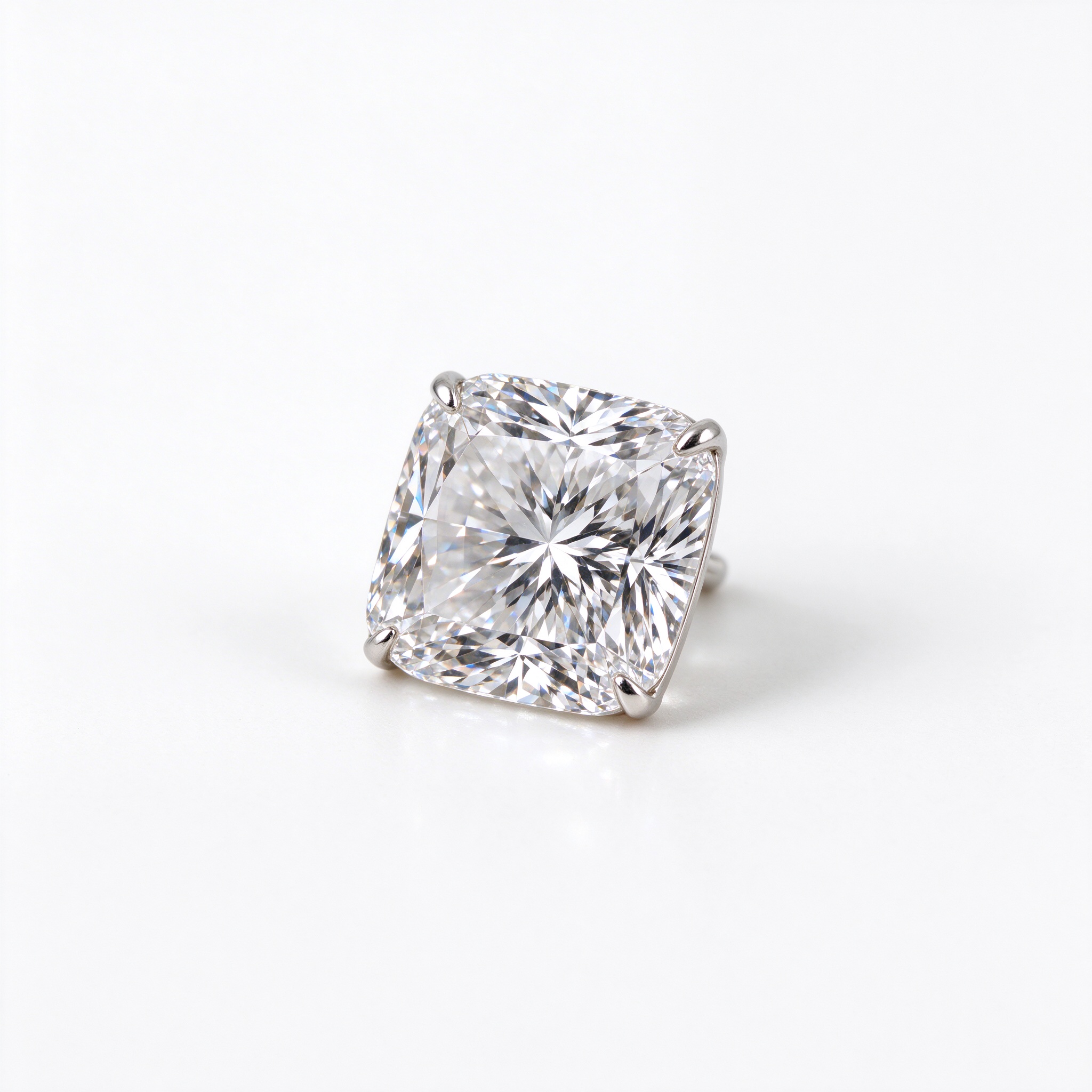
Two cushions, two customers
Cushion cut moissanite is not one product. It is two, and the wholesale accounts that treat it as a single SKU understock one and drown in the other. The crushed-ice cushion has a fragmented, sparkly facet pattern that scatters light like broken glass. The brilliant cushion, sometimes called a chunky or classic cushion, has larger, cleaner facets and reads more like a softened square emerald cut. They sell to different people, at different margins, and at different turns.
The crushed-ice buyer is usually shopping engagement on a budget and wants the stone to glow under ring-box light and in phone flash. The brilliant cushion buyer is usually shopping a more design-led look, wants visible facet structure, and will pay more for a cleaner face-up. Mixing the two in the same tray confuses the customer and depresses the average ticket on the brilliant version.
Face-up size perception
Both cushions spread, but they read differently. A crushed-ice cushion at 1.5 carat equivalent looks denser and sparklier, so it reads smaller than its mm size. A brilliant cushion at the same weight looks wider and more open, so it reads larger. This is why a brilliant cushion can command a higher retail price for the same stone weight: the customer perceives more stone.
Wholesale buyers should stock by mm, not carat, and label the two versions separately. A 7 by 7 mm crushed-ice and a 7 by 7 mm brilliant cushion are not interchangeable, even though they occupy the same space on a tray. Customers comparing the two side by side will feel the difference immediately; staff who describe both as just cushions lose the upsell.
Metal and setting pairing
Crushed-ice cushions take to warm metals. Yellow gold and rose gold make the fragmented facets look like confetti, which is exactly what that buyer wants. Brilliant cushions take to cooler metals: platinum, white gold, and silver-toned mounts, where the larger facets read as structured mirrors. A brilliant cushion in rose gold can look muddy, because the warm tone fights the cool open table.
Settings differ too. Crushed-ice cushions work in halos, pavé bands, and ornate mounts, because the extra sparkle blends in. Brilliant cushions look best in clean solitaire or three-stone mounts where the facet pattern is not crowded. A halo around a brilliant cushion often hides the very facet structure that justifies the price.
Inventory pitfalls
The classic mistake is overbuying crushed-ice. It is the faster mover at retail, so wholesale buyers keep reordering it until the tray is two-thirds crushed-ice. Then the design-led customer walks in looking for a clean brilliant cushion, finds nothing, and buys elsewhere. The reverse mistake is overbuying fancy-colored or custom-tone cushions, which sit because the crushed-ice buyer wants white and the brilliant buyer wants classic.
Another pitfall is corner shape. Cushions come with sharp corners and with rounded (pillow) corners. Sharp corners chip in standard prongs; rounded corners are safer but read less modern. Stock rounded corners for solitaire engagement stock, sharp corners only where the setting has protected prongs. And avoid buying cushions with a visible bow-tie across the center; moissanite's double refraction makes bow-ties look worse in cushion than in oval, and customers return them.
Pricing follows the split. Crushed-ice cushions are the faster mover at a lower price point, so they turn cash quickly but carry a thinner margin. Brilliant cushions move slower but command a higher ticket, because the facet structure justifies a premium. Wholesale buyers who stock only crushed-ice maximize turn but leave margin on the table; buyers who stock only brilliant cushions maximize margin but risk slow inventory. The split is where the account works best.
Color temperature also differs between the two. Crushed-ice cushions read brighter and whiter under light, because the fragmented facets scatter more light back. Brilliant cushions read warmer and more open, because the larger facets let the stone's body color show. This means a brilliant cushion in a slightly warmer grade can look yellow through the open table, while the same grade in crushed-ice will look fine. Buy brilliant cushions in a cooler grade than crushed-ice stock, even at a small wholesale premium.
Who buys, and how to split the parcel
A working wholesale split for a boutique account is roughly 60 percent crushed-ice to 40 percent brilliant cushion, biased by region. Boutiques in bridal-heavy markets lean crushed-ice; boutiques near design districts lean brilliant. Stock the crushed-ice depth in 1 to 2 carat equivalent sizes, and keep the brilliant depth in 1.5 to 2.5 carat equivalent sizes, where the facet structure shows best.
Ask the supplier which cushion pattern the parcel is cut to, and request a face-up photo under both soft and bright light before ordering. The pattern is visible in a photo; it is not visible on a spec sheet. Pair the cushion stock with the matching metal mounts, and use the wholesale buying guides to teach staff the difference between the two before the next bridal push. Accounts that label the two versions clearly see a higher attach rate on the brilliant cushion, because the customer understands why it costs more.