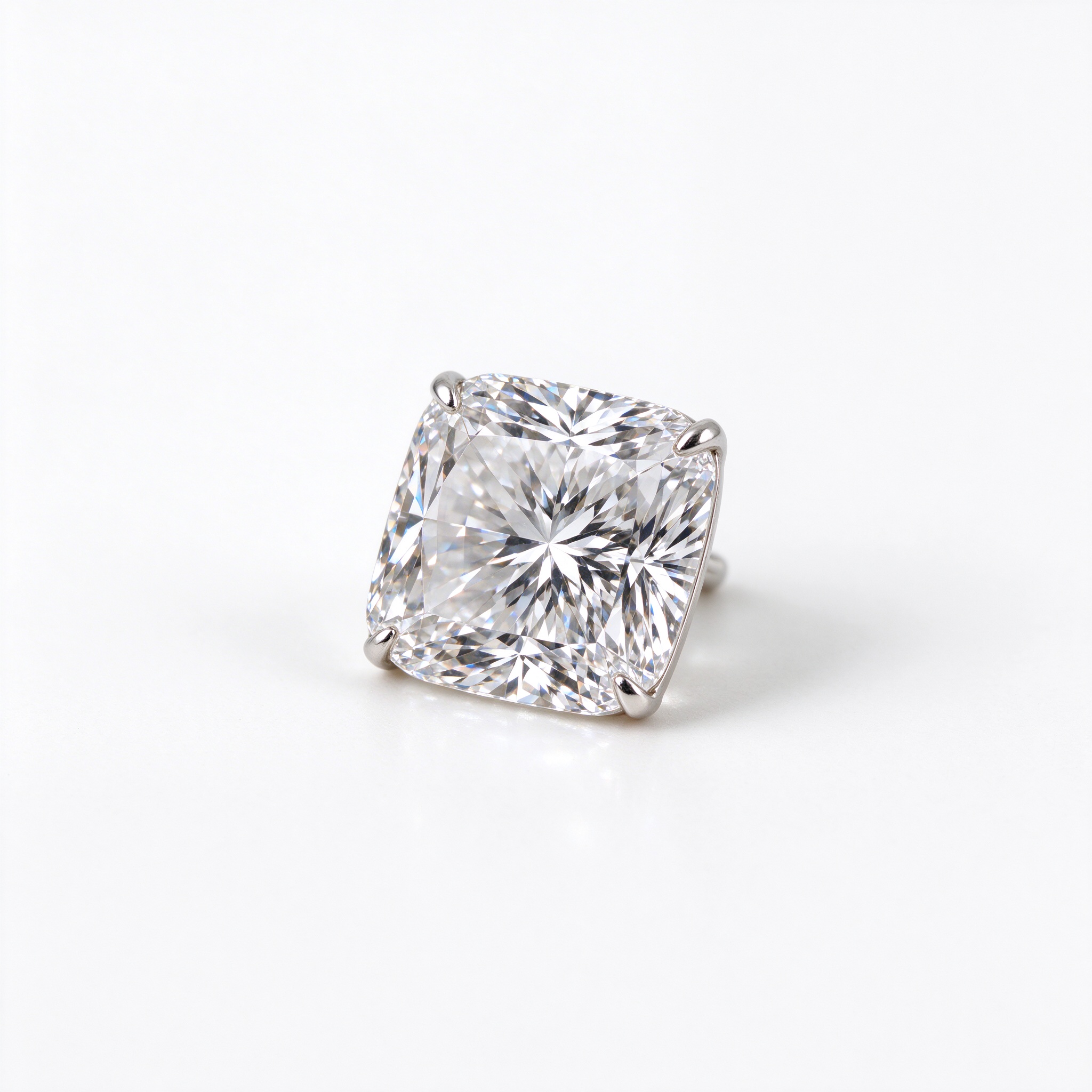
Cushion moissanite is one of the most forgiving shapes to live with: rounded corners mean fewer chips, and the chunky facets hide everyday wear. But a cushion piece is often set in a halo or pavé setting, and that is where the maintenance actually lives. This care guide covers how to keep a cushion moissanite ring or pendant bright and secure for years.
Why cushion is forgiving
Unlike a princess cut with sharp corners, the cushion's rounded corners are less likely to chip on impact. The chunky facet pattern also hides minor surface scratches better than a step cut. This makes cushion a great choice for customers who want a fine ring but lead active lives. The material itself, moissanite at 9.25 Mohs, is everyday-durable, as we cover in the durability guide.
The real risk: the halo, not the stone
Most cushion pieces leave the factory in a halo or pavé setting. The center cushion is tough, but the small accent stones around it sit in tiny prongs. Over time, lotion and oils build up under the halo, making the whole piece look dull. Worse, a loose halo prong can drop an accent stone. The maintenance focus is the setting, not the center.
The cleaning routine
For a cushion halo, cleaning is more about the halo than the center:
- Soak in warm water with mild dish soap for 10 minutes.
- Use a soft brush to get under the halo and between the accent stones.
- Pay special attention to the gap under the center stone, where oils collect.
- Rinse well and pat dry with a lint-free cloth.
This restores the sparkle that customers think has "faded." It almost never is the moissanite; it is buildup under the setting.
Prong checks
Every six months, look at the halo prongs under a bright light or loupe. If any accent stone looks loose or a prong is bent, bring the piece to a jeweler for tightening. Catching a loose halo stone early prevents losing it. The center cushion, held by larger prongs, rarely loosens if set well.
What to avoid
- Chlorine and bleach: they can pit the metal and loosen prongs, even though they will not harm moissanite.
- Ultrasonic on a pavé halo: vibrations can loosen accent stones. Use the soak method for halo settings.
- Storage with diamonds: moissanite scratches less than most gems but diamonds can scratch the metal and abrade softer accents.
Travel and everyday wear
Cushion pieces handle travel well thanks to the rounded corners. Keep them in a padded pouch so the halo does not snag on fabrics. For weddings, sports and gardening, remove the ring; no gemstone should take that kind of wear. For wholesale shipping standards, see our packaging guide.
Will the cushion stay bright?
Yes. Moissanite does not cloud, yellow or fade. If a customer complains their cushion "looks dull," it is almost always buildup under the halo, solved by the soak-and-brush. If after a clean it still looks off, contact the seller; the GRA certificate guarantees the stone's grade, and manufacturing defects are rare. Start with the GRA guide.
Quick FAQ
Can cushion moissanite be worn daily? Yes; the rounded corners make it one of the safest shapes for everyday rings.
How often clean a halo? Weekly soak at home, and a jeweler check on the prongs twice a year.
Does the cushion center scratch? At 9.25 Mohs it resists scratching; only diamond will scratch it.
Why the cushion center is tougher than it looks
The cushion's rounded corners are its secret advantage. Unlike a sharp princess corner, a rounded corner spreads impact, so it chips far less easily. Combined with moissanite's 9.25 hardness, a cushion center is one of the most durable choices for an everyday ring. This is part of why cushion halos are such low-return pieces. The durability science is in our hardness article.
Cleaning under the halo
A cushion halo traps oils between the center and the accent stones. Use a soft brush under warm soapy water and get right under the halo. This is the step that restores the sparkle customers think has "faded." Avoid ultrasonic cleaners on pavé halos, because the vibrations can loosen tiny accent prongs. The soak-and-brush method is always safe. We describe the packing standards that protect these pieces in the shipping guide.
When to re-tip or tighten
Check the halo prongs twice a year. If an accent stone looks loose, tighten it before it falls out. The center cushion, held by larger prongs, rarely loosens. If the center ever rocks in its setting, stop wearing it and have the bench check the seat. For certified stones, the grade is guaranteed by GRA; read what that means in our certificate guide.
Why cushion pieces rarely need repairs
The rounded corners and chunky facets mean cushion rings tolerate daily life better than most shapes. Combined with moissanite's hardness, they rarely chip or scratch. The main wear is on the halo prongs, not the stone itself. This makes cushion a low-maintenance bestseller. We explain the material science in the durability article.
Cleaning a cushion halo correctly
Use warm soapy water and a soft brush under the halo. Avoid ultrasonic on pavé. This restores the sparkle customers think faded. Most "dull moissanite" complaints are just buildup. Include this tip on your care card. For shipping and packing standards, see the packaging guide.
Educating cushion customers
A one-line care instruction on the sale prevents most service calls: soak weekly in warm soapy water and check the halo prongs twice a year. Cushion centers are durable, so the focus is the setting. Hand a printed care note and customers keep their rings bright. For wholesale care cards or bulk packing, see our packaging guide.
Turning care into a trust point
When you sell a cushion halo, hand the customer a short care note. It signals professionalism and prevents the "my ring looks dull" complaint. Most dullness is just oil under the halo, fixed by a warm soak. This small gesture builds trust and reduces service calls. It also positions your store as knowledgeable, which encourages repeat buys. We can supply blank care cards for your brand on wholesale orders.
Remind customers to check the halo prongs twice a year. The cushion center is tough, but tiny accent stones can loosen. Catching this early prevents lost stones. For certified pieces, the grade is guaranteed by GRA; if a clean stone still looks off after a thorough clean, contact the seller. Read more in our certificate guide.