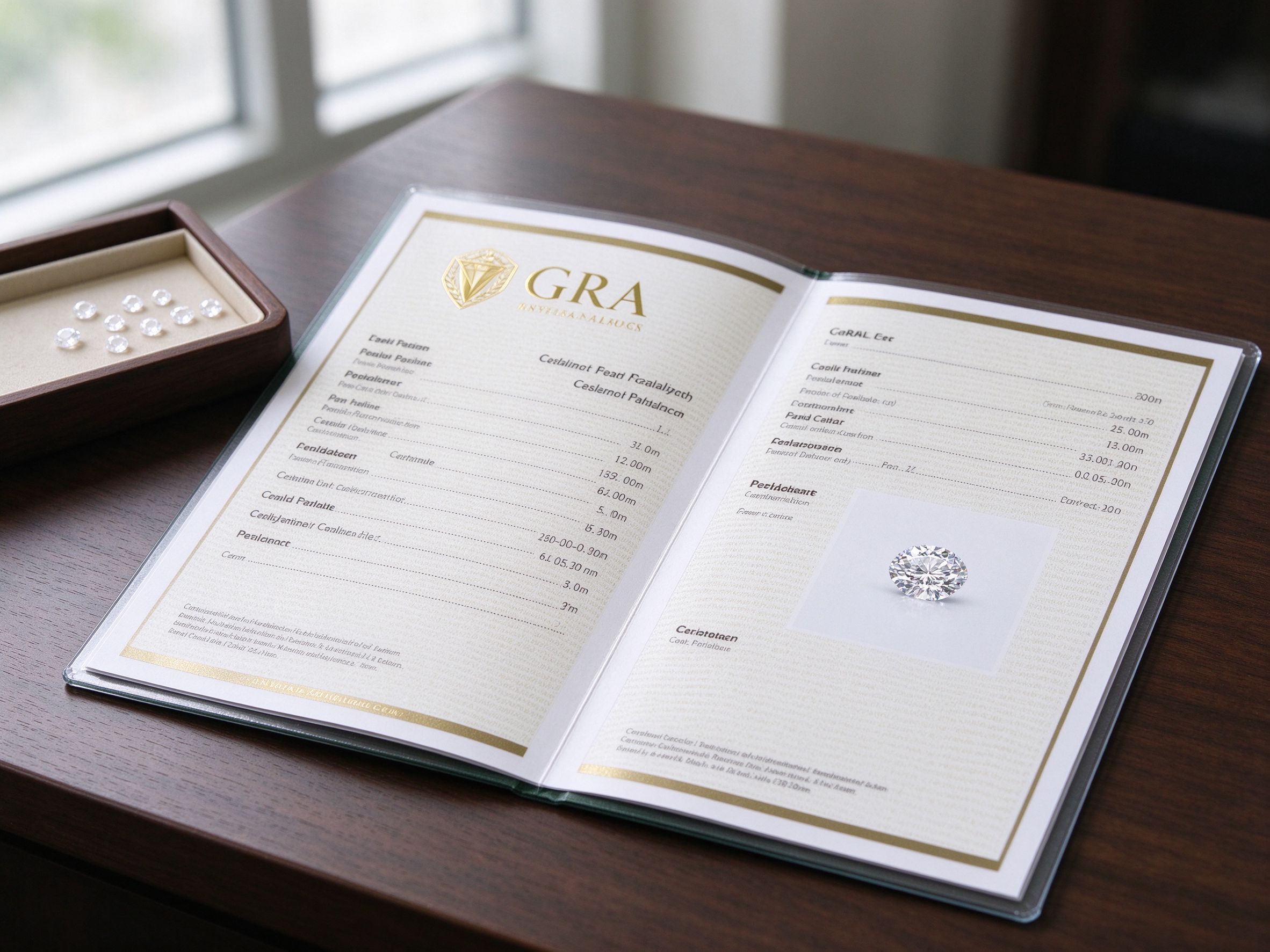
A wholesaler in Miami bought a "GRA-certified" lot of 60 rounds at a price that looked too good. It was. When a retail customer checked the serial numbers online, a third of the cards returned no match, and the customer returned the whole order. Certificate fraud in the moissanite trade is common enough that bulk buyers need a verification routine, not a hope.
This article walks through what a genuine GRA certificate is, how to verify serial numbers at volume, the tells of a fake, and the unpacking process that catches problems before a stone reaches a sales floor.
What a GRA certificate actually covers
GRA (Gem Research Authority) grading documents report the stone's shape, carat equivalent, measurements, color grade, clarity grade and cut proportions, and tie each result to a unique serial number that is laser-inscribed on the girdle. Unlike diamond grading labs such as IGI, GRA is specific to moissanite and simulants, which is why it is the document most retail customers ask for on a moissanite purchase. A genuine card lets the customer look up the serial and confirm the stone on their finger matches the report.
The commercial value of that lookup is why certificates matter in bulk: a retailer selling a GRA-certified stone can advertise authenticity and charge a margin they cannot charge on an uncertified parcel. A fake certificate undermines both the retailer and you.
The five checks that catch fakes at unpack
Run this on every parcel, not just a sample:
- Serial lookup: enter the certificate serial on the issuer's verification portal. A genuine card returns a match with the same carat, shape and measurements. A dead link or a "not found" result is a reject.
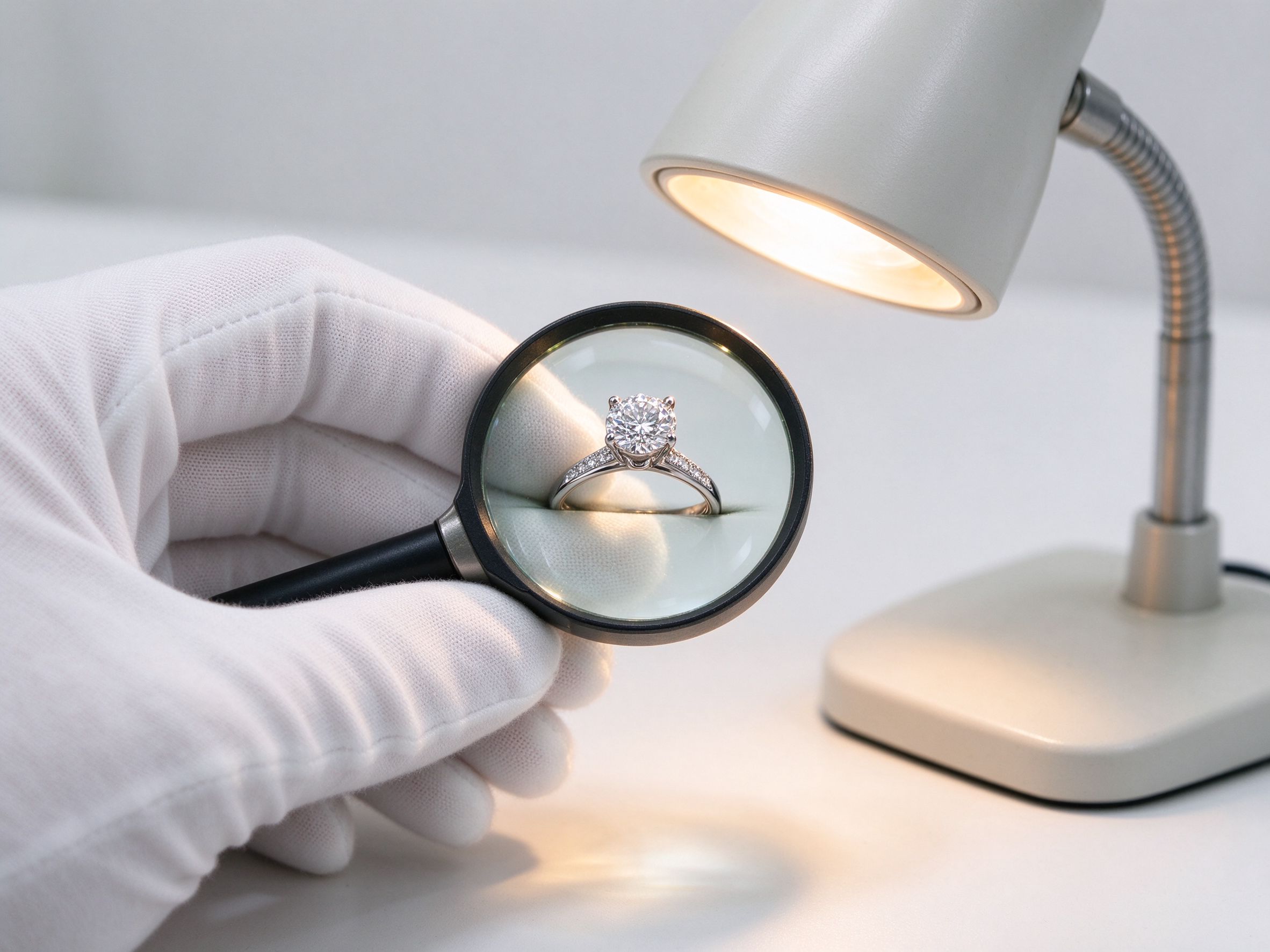
- Girdle inscription match: under 10x loupe, the girdle carries a laser inscription of the serial. It must match the card exactly. Missing or mismatched inscription means the stone and card are paired up after the fact.
- Measurement cross-check: measure the stone with digital calipers. The millimeter dimensions on the card should match within 0.02 mm. Cards that read "6.50 mm" on a stone that measures 6.80 are borrowed or generic.
- Hologram and stock: genuine cards use a security hologram, fixed logo placement and consistent card stock. Fakes often have misaligned print, blurry serials or card colors that shift between stones in the same lot.
- Lot consistency: certificates in one parcel should share the same issuer, format and date range. A parcel mixing card styles is a red flag.
For clarity grading, remember that step-cut moissanite reads clarity differently from brilliants, so a certificate clarity grade is interpreted by shape; the emerald clarity guide covers that. Always keep digital photos of each certificate beside its stone so you can defend a disputed lot later.
What to do when a certificate fails
Do not resell a stone with an unverifiable certificate, even if the stone itself is genuine. Retail customers verify; a failed lookup becomes a return, a complaint and a chargeback. Quarantine the failing stones, photograph them, and raise a claim with the supplier. Reputable suppliers reissue or replace certificate-verified stones on the spot; suppliers who argue are suppliers to leave.
Build verification into your cost. A 60-stone parcel takes about 25 minutes to check at unpack—serial lookup, loupe, calipers—and that is cheaper than one returned retail order. The GRA lot buying guide covers how to order lots with certificates you can trust.
Frequently Asked Questions
How do I verify a GRA moissanite certificate?
Look up the serial number on the issuer's verification portal, then confirm the laser-inscribed serial on the girdle matches, and cross-check the millimeter dimensions with calipers. If any of the three disagree, treat the card as unverified.
Can a genuine stone come with a fake certificate?
Yes. Suppliers pair real stones with borrowed or printed cards to inflate price. The girdle inscription must match the serial; if the stone is uninscribed, the certificate is not reliable.
What percentage of certificates in a suspect lot fail?
In lots priced well below market, we have seen 20–40% of serials fail verification. Price below the usual band is itself a warning sign—verify before you pay, not after.
Is GRA as trusted as IGI or GIA for moissanite?
GRA is a moissanite-specific document; IGI and GIA report natural and lab-grown diamond. For moissanite retail, the customer expects the moissanite-specific certificate, which is why GRA verification matters commercially.
Do I need to check every stone in a bulk parcel?
Yes. Sampling misses the problem stones, and a single unverifiable certificate reaching a retail customer triggers returns on the whole order. Budget 25 minutes per 60-stone parcel at unpack.
Request a certificate-audited parcel: every stone serial-checked, girdle-inscription verified and caliper-measured before shipment, with a verification sheet per lot, shipped DDP in 5 business days. Open a wholesale account for audited lots, or see the GRA cushion lot guide for shape-specific ordering.