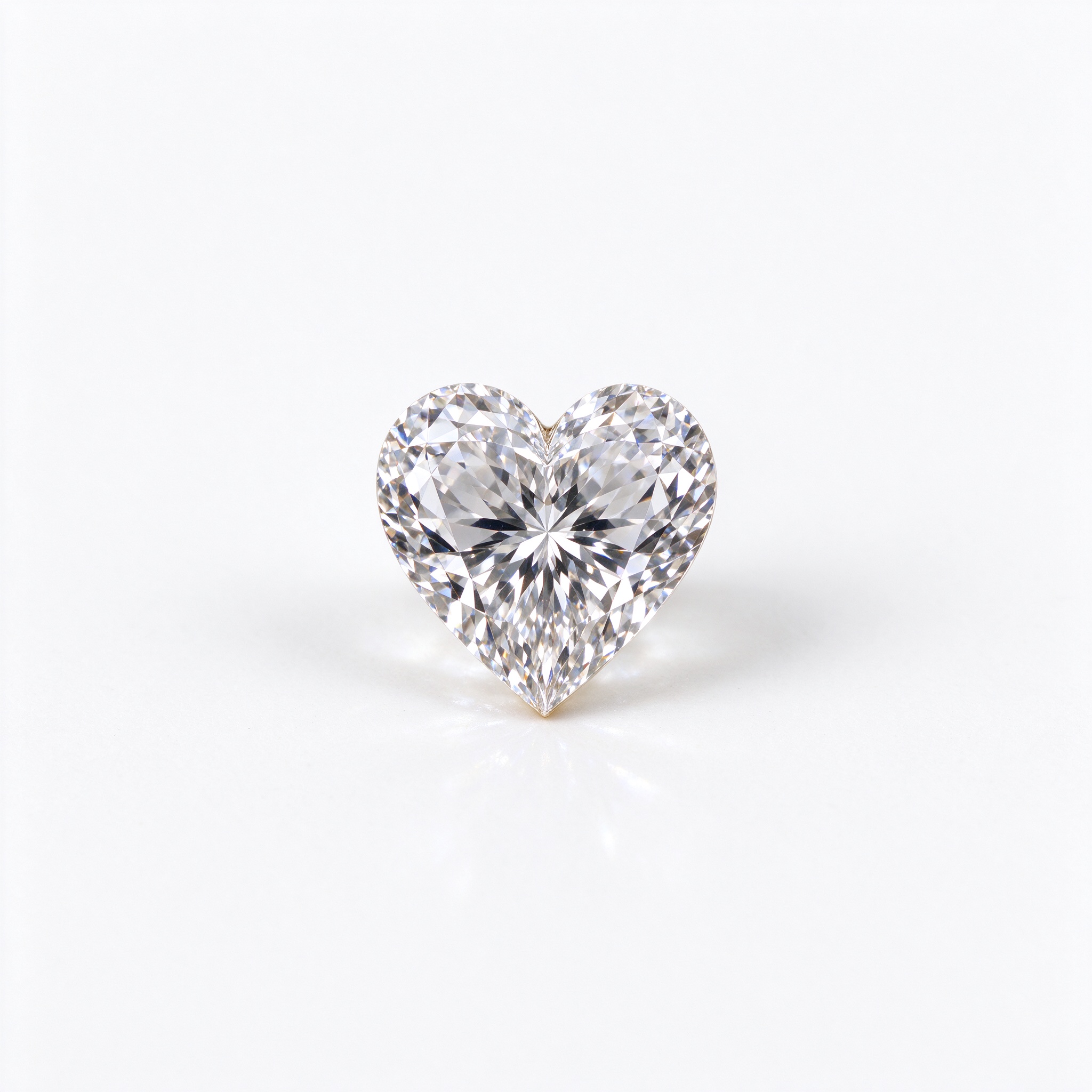
Hearts are a calendar business
Heart cut moissanite is the most seasonal cut in the catalog. It does not sell evenly through the year. It sells in peaks: Valentine's Day, graduation, Mother's Day push, Christmas gifting, and proposal-adjacent buys around December. Wholesale buyers who treat hearts as a steady bridal SKU understock before the peak and overstock afterward, ending the year with a tray of hearts that nobody wants in July.
The buyer is also different. The heart cut customer is usually not shopping for herself as an engagement ring. She is receiving a gift, often a pendant or earrings rather than a ring, and the buyer is often a man shopping with no jewelry knowledge. That means the retail product has to be pre-sold: a ready piece in a gift box, with a clear price, not a loose stone for custom work.
Face-up size perception
Heart cut moissanite reads smaller than its weight. The two lobes and the cleave remove surface area, so a 1 carat heart looks noticeably smaller than a 1 carat round. For gifting, this matters: the giver wants the stone to be visible when it arrives. Wholesale buyers should stock hearts at a minimum of 1 carat equivalent for pendants, and 1.5 carat equivalent and up for rings. Sub-1 carat hearts look like charms, which sells in a different price tier and a different customer.
Shape symmetry is everything. A heart with uneven lobes or a lopsided cleave reads as defective even to an untrained eye, and the gift recipient will notice. Moissanite hearts are cut by machine, but the symmetry still varies. Always inspect hearts face-up before stocking; a lopsided heart is the most returned stone shape in the gifting category.
Metal and setting pairing
Heart cut moissanite pairs best with white-toned metals for the gifting buyer: sterling silver, white gold, and platinum all read as a clean bright heart. Rose gold hearts sell to a smaller, softer gifting segment and move slower. Yellow gold is niche, used mostly for heirloom-style pendants.
The setting should be a simple solitaire head or a bezel. A heart with a halo reads busy and obscures the shape, which defeats the point of buying a heart in the first place. Pendants should hang from a short bail so the heart sits level; a long bail twists the heart sideways on the chain. Earrings should be matched pairs with identical lobe orientation, which is harder than it sounds and worth paying a premium for.
Inventory pitfalls
The biggest pitfall is timing. Wholesale buyers order hearts in January and get them in February, which is too late. The gifting peak requires stock on the floor by mid-January for Valentine's, and by mid-November for Christmas. Ordering late means missing the peak and sitting on stock for the next cycle.
The second pitfall is format. Buying loose heart stones for a gifting customer is a mistake, because the gift buyer does not want custom work. Stock finished pendants, stud earrings, and ready rings in gift boxes. Loose hearts are for the smaller number of buyers shopping a heart as an unconventional engagement stone, which is a niche within a niche.
The third pitfall is color consistency. Hearts in moissanite can read warmer than rounds of the same grade, because the shape concentrates color in the cleave. Ask the supplier for the actual stone grade and a face-up photo, not a generic stock image.
The emotional content matters more than the stone specs. A gifting customer does not ask about table percentages or depth; she asks whether the heart looks like a heart and whether it arrives in a box. Wholesale buyers should invest in presentation for heart stock, because the packaging is part of the product. A plain plastic pouch on a heart pendant underperforms a small gift box, even at the same stone cost.
Who buys, and how to plan the calendar
The heart cut buyer is a gift giver, 20 to 45, shopping for a partner, a daughter, or a close friend. The product is emotional, so packaging matters as much as the stone. Wholesale accounts should plan heart inventory around two main pushes, Valentine's and Christmas, with a smaller Mother's Day push in pendants. Stock 1 to 2 carat equivalent hearts in silver and white gold pendants and studs, keep a small ring selection for the unconventional engagement buyer, and liquidate leftover hearts at the end of each peak rather than carrying them into the off-season.
Ask the supplier for matched pairs and symmetrical shapes, and confirm delivery dates backward from the retail peak. The heart is the one cut where timing is the whole margin. Pair finished heart pieces with a small moissanite pendants display, and the gifting segment will outperform the bridal heart stock every year.