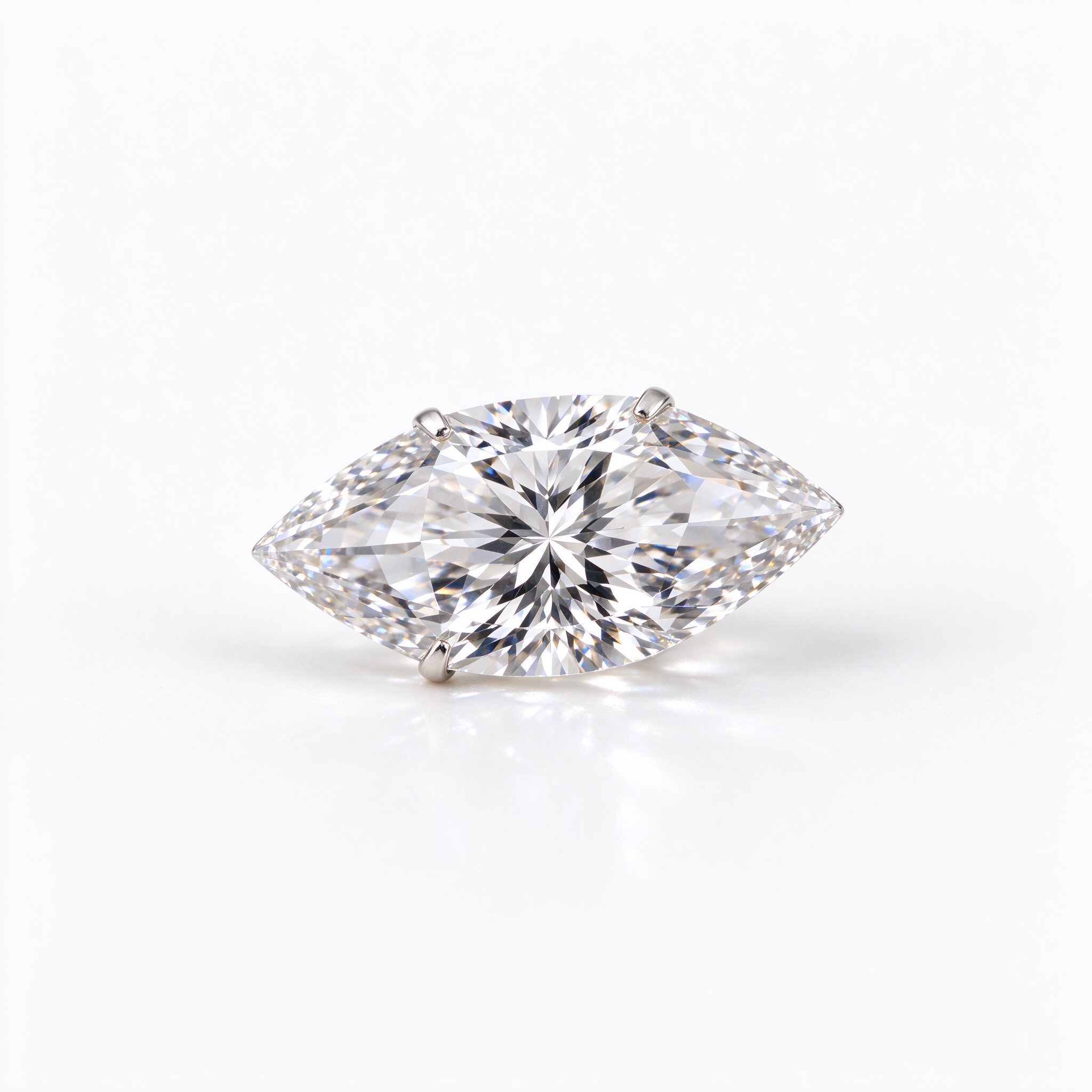
A Phoenix retailer priced a marquise line against three quotes and picked the middle one. The stones arrived looking slim and beautiful, but 11% came back with chipped points within six months—the supplier had not flagged that the long, tapered ends were the most exposed parts of any cut. The returns ate the savings the middle quote had promised. This is how marquise pricing actually works at wholesale, and the point-protection cost no quote should hide.
What moves marquise price
The marquise is an elongated, boat-shaped cut with two tapered points. It faces up the largest of any shape per carat, which is its selling point. But the two sharp points are also its cost driver: they are fragile, they must be matched symmetrically, and the L/W ratio controls how much rough is wasted. A 2.0:1–2.2:1 ratio is the classic marquise; slimmer ratios waste more rough and cost more.
| Carat / use | Typical ratio | Price note |
|---|---|---|
| 0.5–0.7ct, side stones | 1.8:1 | Consistency over ratio |
| 1.0–1.5ct, bridal solitaire | 2.0:1 | Most popular, best value |
| 2.0ct+, statement | 2.2:1+ | Custom ratio, higher cost |
| Matched pair, earrings | 2.0:1, matched | Matching premium per pair |
The specs that protect your margin
We cut marquises to a documented 2.0:1 ratio as default and inspect both tapered points for chips under the loupe. Because the points are exposed, we recommend V-prong protection at both ends and print that on the mounting note. Moissanite’s 9.25 Mohs hardness helps—it is far more chip-resistant than a softer marquise—but the geometry still demands protection. Color is D–F near-colorless; the long table can show a faint bow-tie shadow, which we grade as acceptable. Every stone ships with a GRA certificate.
- Default ratio: 2.0:1, adjustable to 2.2:1 on request.
- Points: both ends inspected, V-prong recommended.
- Color: D–F near-colorless; bow-tie graded faint.
- Symmetry: both ends matched in length and taper.
- Cert: GRA per stone above 3mm.
Pricing by your buying tier
Test order: Start at 10 stones, 1.0–1.2ct, standard 2.0:1. Marquise is a love-it-or-leave-it shape—a small test gauges whether your clients respond. MOQ 10 pieces; sample parcel available.
Boutique stocking a marquise line: Lock a lot and hold the ratio and point treatment constant. Marquise clients expect consistency, and chipped points on a reorder ring are the fastest way to lose them. We reserve cutting lots per account.
Private label / matched pairs: We supply marquises set in V-prong mounts, plus matched pairs for drop earrings, DDP to US/EU, GRA documentation, third-party-audited process since 2016. RMA window 30 days for point chips; reorder guarantees apply to locked lots.
Frequently Asked Questions
Why does marquise moissanite cost more per carat?
Marquise cutting wastes more rough than a round to achieve the long, tapered shape, and the two points require careful symmetry work. That fabrication cost is baked into the price.
What ratio makes a marquise look best?
2.0:1 is the classic balance—elongated but not fragile-looking. Slimmer ratios (2.2:1+) look dramatic but chip more easily and cost more.
Do marquise moissanites chip at the points?
The tapered points are the most exposed part. With V-prong protection at both ends, chip returns stay under 2% in controlled programs. Without protection, the rate climbs.
Do marquises show a bow-tie?
Yes, a faint bow-tie shadow across the center is normal in elongated cuts. We grade it faint for bridal lots; heavy shadows are excluded.
Can I match marquises for earrings?
Yes. Pairs are matched by weight, ratio and symmetry from the same lot, with a matching sheet. Matching carries a small premium per pair.
DDP shipping and landed cost math
The quoted per-stone price is not what hits your bank account once freight, duty and plating finish are added. For US and EU boutiques, we ship DDP—delivered duty paid—so the freight and customs paperwork are handled upstream and there are no surprise brokerage fees on your end. When you compare quotes, ask whether the number is DDP or EXW. An EXW quote that looks 8% cheaper can end up higher once you add a forwarder, insurance and import duty. Plan on roughly 15–25% on top of EXW for landed cost depending on destination, and budget your margin against the landed number, not the stone number. We provide a full commercial invoice and packing list with every parcel, and for repeat accounts we can pre-clear a monthly consolidated shipment to cut per-order freight. That consolidation alone usually saves a mid-size boutique 6–10% a quarter. When you ask for a quote, state your destination zip and whether you want DDP; that one detail stops most apples-to-oranges comparisons before they start.
Takeaways
- Default to 2.0:1; slimmer ratios cost more and chip easier.
- Always spec V-prong point protection—it cuts returns.
- Compare landed cost, including the matching premium for pairs.
- Lock a lot so point treatment stays consistent on reorder.
Request a sample parcel: MOQ 10 pcs, ships in 5 business days. Browse the marquise cut collection, read the marquise buying guide, or see bulk pricing tiers.