Why a Supplier Audit Protects Your Business
Every year, jewelry buyers lose money to unreliable suppliers: factories that overpromise, underdeliver, disappear after taking payment, or send stones that do not match samples. A structured supplier audit is the cheapest way to avoid these disasters. It takes one hour of questionnaire time and can save you thousands of dollars in bad inventory.
This checklist is based on our experience working with dozens of Wuzhou moissanite factories. We have organized it into seven categories. Score each supplier on a simple 1 to 5 scale, and compare scores before you commit.
Category 1: Factory Basics and Ownership
Start with the fundamentals. A legitimate factory should be able to answer these questions without hesitation.
- How long has your company been cutting moissanite? (Look for 3+ years minimum.)
- Are you the actual cutter, or are you a trading company reselling stones from another factory?
- Where is your cutting workshop located? (Wuzhou has several industrial zones.)
- How many cutting machines do you operate?
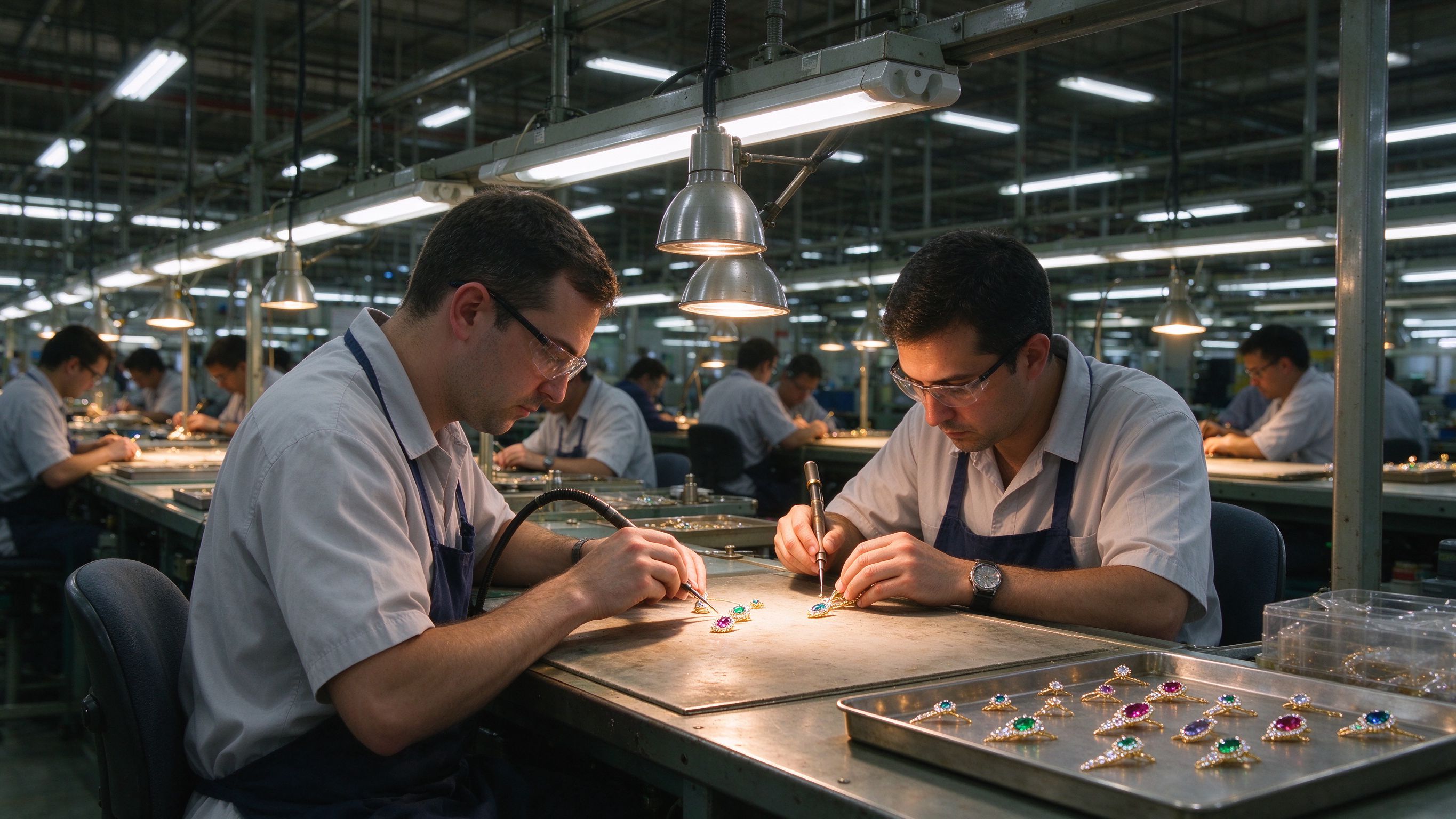
- Can you provide photos or a video walkthrough of your workshop?
- What is your business license number? (You can verify Chinese company registrations online.)
Trading companies are not necessarily bad. They can offer convenience and a wider product range. But if you want factory-direct pricing, you need to know whether you are talking to the cutter or a middleman.
Category 2: Production Capacity and Lead Times
Capacity matters because you need a supplier who can scale with your business.
- How many stones do you produce per month across all shapes and sizes?
- What is your typical lead time for a 50-piece order? For a 500-piece order?
- Do you maintain stock of common sizes (6.5mm round, 8mm oval) for immediate shipment?
- Can you handle rush orders? What is the rush premium?
- What happens if your machines go down? Do you have backup production?
A factory that maintains ready stock of best-selling sizes is much more valuable than one that produces everything to order. Stock availability means you can reorder quickly and keep your shelves full.
Category 3: Quality Control Process
Quality control is where most problems originate. A supplier with a rigorous QC process will save you endless returns and complaints.
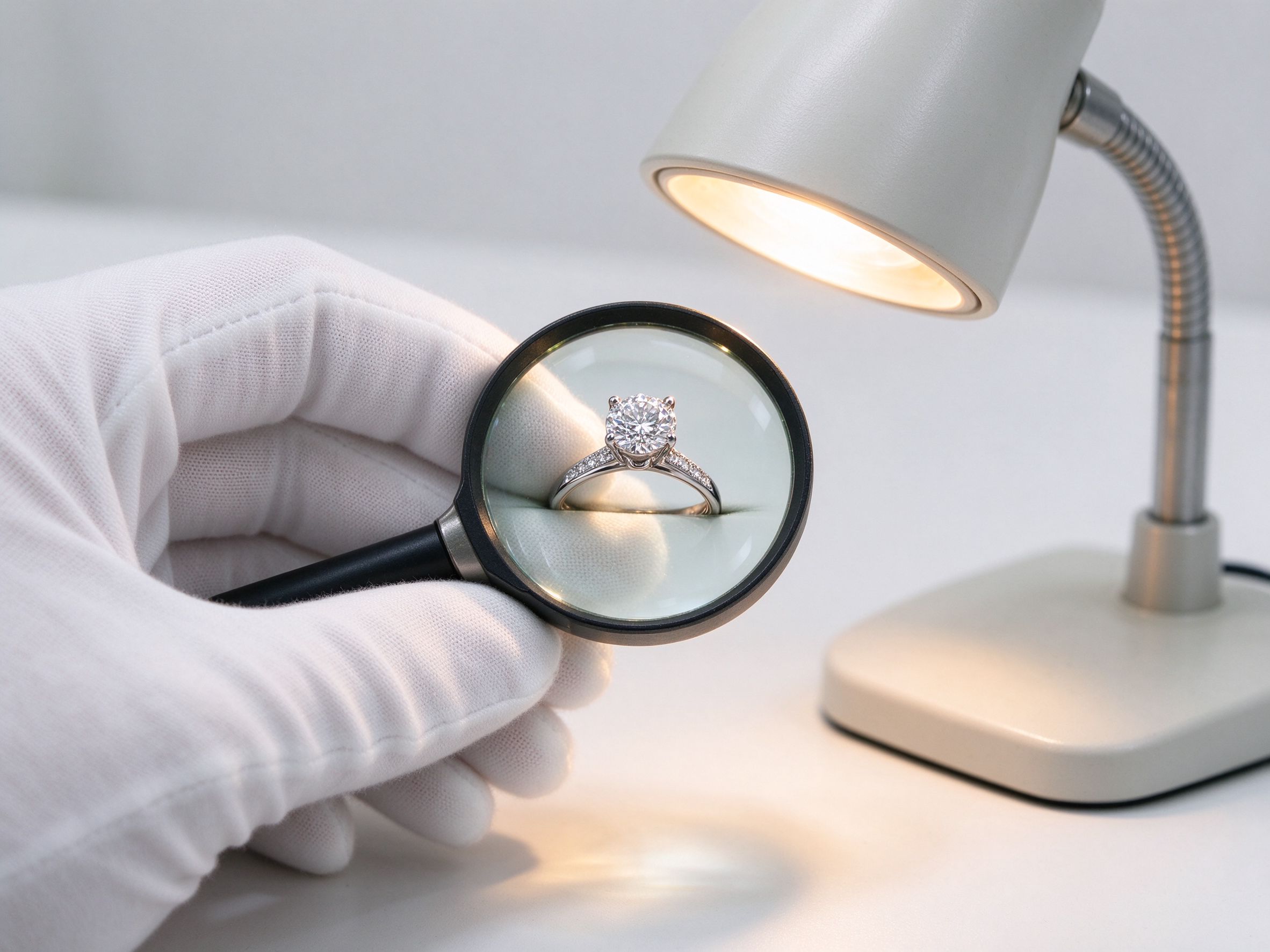
- Do you inspect every stone under 10x magnification before shipment?
- What is your rejection rate? (A good factory should reject under 5 percent of production.)
- Do you sort stones by color and clarity, or are they mixed in the same box?
- How do you handle bow-tie effects in fancy shapes? Do you sort them out?
- Can you provide photos of every stone before bulk shipment?
- Do you have a QC checklist that you can share with us?
If a supplier cannot describe their QC process in detail, they probably do not have one. Walk away.
Category 4: Certification and Documentation
- Do you include GRA or GTC certificates on your stones?
- Are certificates included in the price, or charged separately?
- Do you offer laser inscriptions matching certificate numbers?
- Can we verify certificates on the lab website before shipment?
- Do you provide commercial invoices and packing lists for customs?
Category 5: Pricing and Payment Terms
- What is your price at 10, 50, 100, and 500 pieces?
- Do you offer volume discounts beyond 500 pieces?
- What payment methods do you accept? (Wire, PayPal, credit card, Alibaba Trade Assurance?)
- What are your deposit and balance terms?
- Do you offer net-30 or net-60 terms for established customers?
- Are there any hidden fees (packing, certificates, handling)?
A supplier who offers Alibaba Trade Assurance or escrow payment is lower risk for first-time orders. These platforms hold payment until you confirm receipt.
Category 6: Communication and Responsiveness
Communication quality predicts how well a supplier will handle problems. A supplier who takes three days to reply to your initial inquiry will take three days to reply when you have a quality complaint.
- How quickly do you typically respond to messages? (Test this before ordering.)
- Do you have English-speaking sales staff?
- What communication tools do you use? (WhatsApp, WeChat, email, Skype?)
- Do you send photo updates during production?
- Do you have a dedicated account manager for our order?
Category 7: After-Sales and Return Policy
No supplier is perfect. What matters is how they handle mistakes.
- What is your policy if a stone arrives chipped or damaged?
- Do you offer replacements for stones that fail our QC inspection?
- How long is the warranty period?
- Do you offer a credit note for defective stones, or only replacement stones?
- Have you had any major quality issues in the past year? How did you resolve them?
A supplier who openly discusses past problems and how they fixed them is more trustworthy than one who claims perfection. Nobody is perfect. How you recover from mistakes defines the relationship.
Scoring and Comparing Suppliers
Score each supplier on every question from 1 (poor) to 5 (excellent). Add up the totals and compare. A score above 100 out of 125 indicates a strong supplier. A score below 75 indicates significant risk. Do not choose a supplier solely on price. The cheapest supplier usually has weaknesses in QC, communication, or after-sales that cost you more in the long run.
Red Flags That Should Disqualify a Supplier Immediately
Some answers are automatic disqualifiers:
- The supplier refuses to provide a video of their workshop.
- They demand 100 percent payment before production with no escrow option.
- They cannot name the certificate lab they use.
- Their quoted price is 30 percent below every other supplier. (This usually means inferior material or cut.)
- They pressure you to order immediately with a "today only" discount.
Use this checklist for every new supplier, even ones referred by peers. Referrals reduce risk but do not replace due diligence. A 30-minute audit interview protects your business for years.