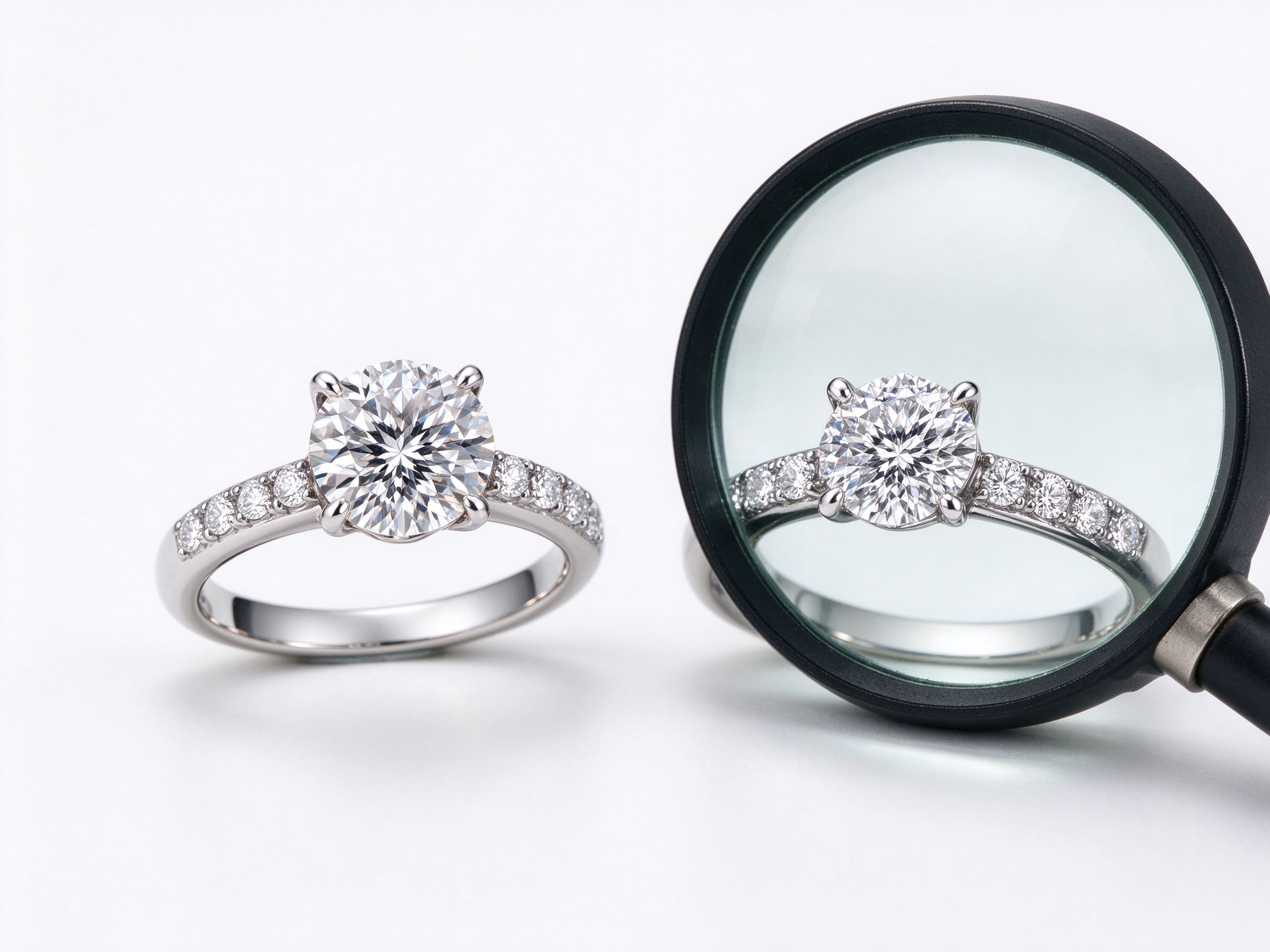
Why Moissanite Has Become a Staple for Jewelry Buyers
If you have been buying diamonds or cubic zirconia for your jewelry business, you have likely noticed a shift in customer demand. Modern shoppers want affordable stones that look brilliant, hold up to daily wear, and carry a story that feels ethical. Moissanite checks all three boxes. As a wholesale buyer, adding moissanite to your inventory is no longer a niche decision. It is a mainstream category that drives foot traffic, online clicks, and repeat purchases.
Moissanite is lab-created silicon carbide. It was first discovered in a meteorite by Henri Moissan in 1893, and today it is grown in controlled laboratory conditions. Unlike mined diamonds, every moissanite stone is produced with consistent quality and a fraction of the environmental footprint. For jewelers, this means predictable pricing, reliable supply, and a product that appeals to cost-conscious millennial and Gen Z buyers.
This guide is written specifically for buyers who are placing their first wholesale order from a moissanite factory. We assume you already know basic jewelry terminology but have not yet sourced loose moissanite at scale. By the end, you will understand how to evaluate a stone, what questions to ask your supplier, and how to structure your first order for maximum sell-through.
Understand the Three Variables That Define a Moissanite Stone
Every loose moissanite you buy is described by three core variables: color, clarity, and cut. These are often called the 3Cs, just like diamonds, but the grading scales and market expectations are different.
Color Grades
Wholesale moissanite is graded on a color scale that runs from D (colorless) down through K and beyond. For commercial jewelry, D through F stones are the most popular because they appear eye-clean and white in white gold or platinum settings. G through I stones carry a slight warm tint and are often used in rose gold or yellow gold settings where the warmth blends naturally.
At HOLYCOME, our factory stock primarily carries D-color and E-F color stones. D-color is the top tier and commands a premium, but E-F offers a near-identical appearance at a lower cost. For most jewelry lines, E-F color is the sweet spot for margin.
Clarity Grades
Moissanite clarity is graded on a VVS, VS, SI, I scale. Because moissanite is lab-grown, it naturally has very few inclusions. Commercial-grade wholesale stones are almost always VVS1 or VVS2, which means loupe-clean under 10x magnification. VS stones are also available at a lower price point and remain eye-clean for most customers.
When buying wholesale, do not overpay for VVS1 versus VVS2. The difference is visible only under a jeweler's loupe, and your customers will never see it. Focus your budget on cut quality and color instead.
Cut Quality
Cut is the most underrated variable in moissanite wholesale. A poorly cut stone will look dull and glassy, no matter how high its color and clarity grades. A well-cut stone, by contrast, displays the strong fire and brilliance that moissanite is known for.
Look for factories that cut to specific proportions: table percentage, crown angle, pavilion angle, and girdle thickness. At HOLYCOME, we cut all our round brilliants to ideal proportions, and our fancy shapes follow established cut templates that maximize light return.
Which Shapes and Sizes Should You Order First?
For a first order, we recommend sticking to the proven sellers. Round brilliant is the volume leader. Oval and cushion are the fastest-growing shapes for engagement rings. Emerald cut and pear cut attract design-focused buyers but move more slowly.
| Shape | Demand Level | Typical Use |
|---|---|---|
| Round Brilliant | Very High | Engagement rings, studs, pendants |
| Oval | High | Engagement rings, fashion rings |
| Cushion | High | Engagement rings, halo settings |
| Pear | Medium | Drop pendants, earrings, rings |
| Emerald | Medium | Right-hand rings, bracelets |
| Princess | Medium | Solitaire rings, eternity bands |
| Radiant | Growing | Engagement rings, three-stone settings |
For sizing, start with the 6.5mm (1ct equivalent) and 8mm (2ct equivalent) round stones. These two sizes cover the majority of engagement ring and pendant orders. Add a smaller run of 5mm and 7mm to cover stud earrings and side-stone jewelry.
Certification: Do You Need a GRA Certificate?
Most wholesale moissanite sold today comes with a GRA (Gemological Research Alliance) certificate. The GRA report lists the stone's shape, carat weight, color, clarity, and measurements. It is not equivalent to a GIA or AGS diamond grading report, but it gives your customers confidence and provides a resale narrative.
For engagement-ring stones 6.5mm and above, we strongly recommend including a GRA certificate. For smaller stones used in pav settings or eternity bands, certificates are usually not cost-justified. Ask your factory whether certificates are included in the price or charged separately.
How to Place Your First Wholesale Order
Here is the step-by-step process we recommend for first-time buyers:
- Request a sample pack: Order 3 to 5 loose stones in the sizes and shapes you intend to sell. Inspect them under daylight and indoor lighting. Check for chips, uneven girdles, and obvious bow-tie effects in fancy shapes.
- Confirm pricing tiers: Ask for the price at 10 pieces, 50 pieces, and 100 pieces. Wholesale pricing drops significantly as quantity increases.
- Request photo verification: Before bulk production, ask the factory to send photos of your stones in hand, with your order number written on a slip of paper beside each stone.
- Agree on payment terms: Most factories require 30 percent deposit with the balance paid before shipment. First-time orders are usually 100 percent in advance.
- Confirm shipping and customs: Decide whether you want DHL, FedEx, or EMS shipping. Ask whether the factory ships under a commercial invoice or low-value declaration. Understand your country's import duty rules for lab-grown gemstones.
Common Mistakes First-Time Buyers Make
After working with hundreds of jewelry retailers and designers, we see the same mistakes repeated. The first is over-ordering fancy shapes. It is tempting to buy a wide range of shapes to feel comprehensive, but slow-moving inventory ties up cash. Start with round, oval, and cushion, then expand based on actual sales data.
The second mistake is buying too small a size range. If you only stock 6.5mm stones, you will miss customers who want 7mm or 8mm rings. Plan for at least three size steps in your best-selling shape.
The third mistake is ignoring cut quality in pursuit of a lower price. A cheap, poorly cut stone will come back as a return. A slightly more expensive well-cut stone will generate word-of-mouth referrals. In jewelry, quality compounds.
Next Steps for Your Sourcing Journey
Once you have placed and fulfilled your first order, review what sold and what did not. Track your sell-through rate by shape, size, and color grade. Use that data to negotiate better pricing on your second order and to expand into new shapes with confidence.
HOLYCOME works exclusively with wholesale buyers and jewelry manufacturers. We do not sell retail, which means our pricing is structured for B2B margins. If you are ready to request a sample pack or discuss a first order, contact our sales team with your target shapes, sizes, and quantities. We will respond within one business day with a quotation and available stock list.