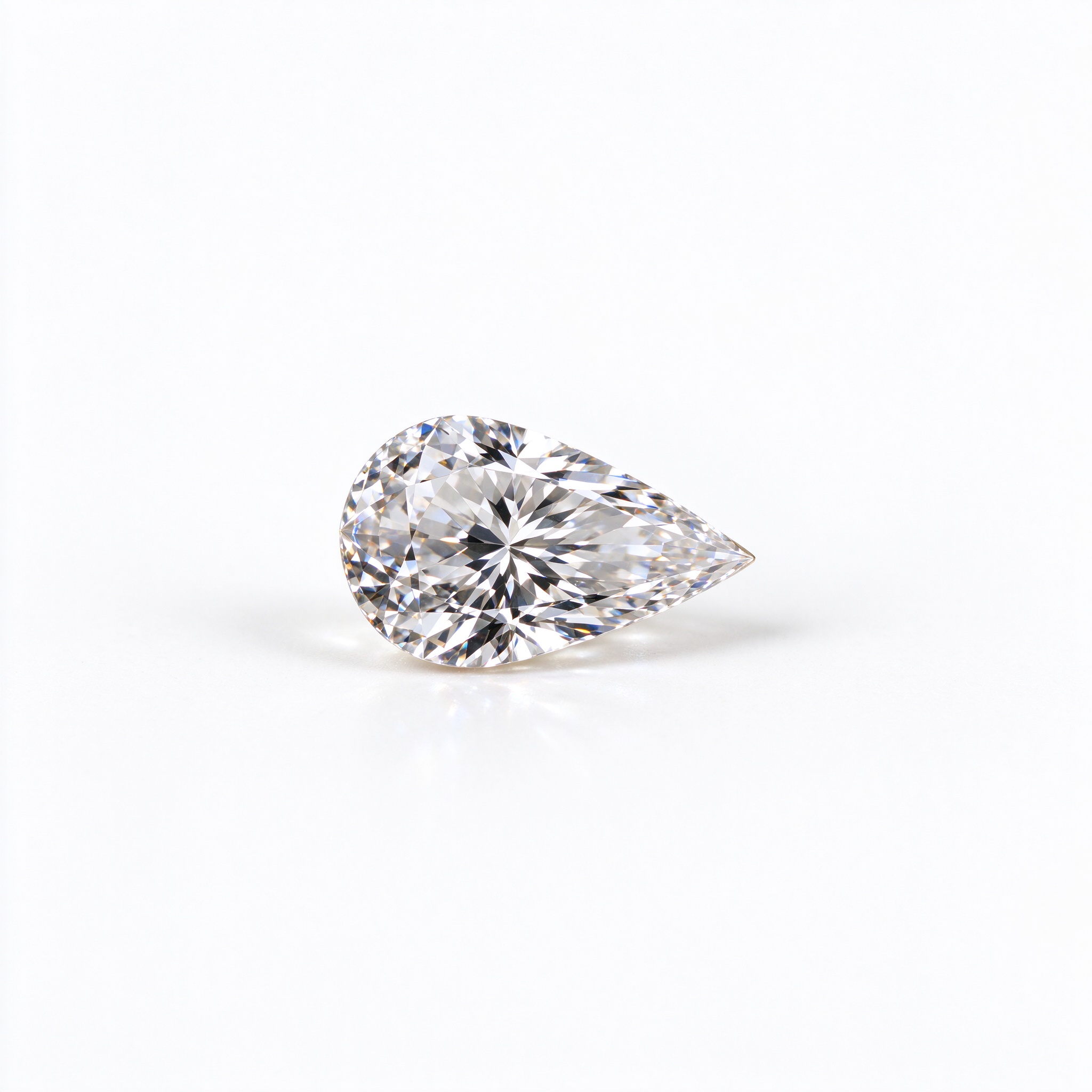
The pear cut is the shape buyers either love on sight or never consider. Asymmetrical, teardrop, half round and half marquise, it rewards the setter who understands direction. Get the orientation right and a pear moissanite lengthens the finger and reads elegant; get it wrong and the stone looks like it is tipping over. This guide covers how to set pears, which hands they suit, and the settings that sell best for our retail partners.
Point up the finger (north-south)
The classic engagement-ring orientation: the rounded end sits at the base of the knuckle and the point aims up toward the fingertip. This direction visually lengthens the finger, which is why it is flattering on shorter or wider hands. The one rule: the point must align exactly with the finger, not tilt. A lopsided pear or a tilted setting looks accidental, and customers notice.
Sideways (east-west)
When the pear is set horizontally, it becomes a vintage drop or a modern statement ring. Sideways pears are striking on pendants and drop earrings, where the teardrop hangs naturally. In rings, an east-west pear is a fashion-forward choice that suits clients who want something nobody else has. We cut pears balanced enough to work either way.
Which fingers and hands does pear flatter?
- Short or wide fingers: north-south pear elongates the line and slims the look.
- Long slender fingers: pear works, but an oval or marquise often reads even more graceful.
- Drop earrings and pendants: pear is a natural, because gravity points the tip down.
If your customer is unsure, the safest sell is a north-south pear solitaire in white gold. It is versatile and photographs beautifully.
Protecting the tip
The pointed end of a pear is its weak spot. We strongly recommend a V-shaped prong or a bezel cap over the tip rather than a single naked prong. A V-prong cradles the point and prevents chipping. When you order pears like our 1ct pear, tell us the setting type so we can select a stone with a durable tip. For the full shape overview, see our pear buying guide.
Halo and three-stone styling
A pear center inside a diamond-style halo makes the teardrop pop and adds security. Three-stone pear rings (pear center with two small rounds or baguettes) are a bridal favorite. Because the pear is asymmetrical, the side stones must be sized to balance the visual weight; a common mistake is using identical side stones that make the pear look off-center.
Pear in wholesale assortments
Pear is not a volume SKU the way round is, but it has loyal demand and a strong margin. We recommend stocking a small range: a 0.75ct and a 1ct pear for rings, plus a matching pair for earrings. Our pear collection covers those sizes. Order a sample first to check the tip quality, since cutting pears cleanly is where factories differ.
Quick FAQ
Which way should the point face? Up the finger for rings; down for pendants and earrings by gravity.
Do pears show a bow-tie? Some do, like ovals. We QC pears for light return so the center does not go dark.
What carat reads best? 0.75 to 1.5ct, where the teardrop shape is clearly visible without looking oversized.
Choosing the right pear size for the design
Pear is a shape where size matters more than with a round. Too small and the teardrop silhouette is hard to read. The sweet spot is 0.75 to 1.5ct, where the rounded base and pointed tip are clearly visible. Below 0.5ct the pear looks like an irregular round. We stock the 0.75ct pear and 1ct pear for rings, and matched sizes for earrings. For pendants, a slightly larger pear reads better hanging at the neckline.
Pear in bridal stacking
A north-south pear pairs beautifully with a straight or slightly curved wedding band. Because the pear is wider at the rounded base, a contoured band sometimes sits better than a straight one. Discuss this with the customer before ordering the mounting. Pear also works as a side-stone flanker, but most buyers use it as a center. For the full shape context, our cut guide shows how pear sits among the ten shapes.
Marketing the teardrop
Pear sells on symbolism and elegance. Tell your customer it lengthens the finger and reads romantic. Photograph it north-south on a slender hand. It performs well on social media because the teardrop is instantly recognizable. If your boutique serves bridal, a small pear assortment will surprise you with conversion. We can cut custom pears through the custom cut page, and the standard range is on the pear category page.
Marketing the pear to the right customer
Pear sells to the romantic, design-aware buyer. It is not a default shape, which is an advantage: the customer who chooses a pear is making a deliberate, emotional choice. Market it as elegant and finger-lengthening. Photograph it north-south on a slender hand. It performs well in bridal lookbooks. If your boutique serves engagement rings, a small pear range will find its loyal customers. See the stones on the pear page.
Pairing pear with other shapes
Pear centers pair well with small round sides or with a pave band. The asymmetry invites creative settings. Because the pear has one tip, it is slightly easier to protect than a marquise. If a customer wants elongated elegance but finds a marquise too bold, the pear is the middle ground. Compare the two in our comparison.
Ordering pear stones the right way
When you order pears, tell us the setting orientation and the mounting type. North-south rings need a centered point; pendants and earrings hang by gravity. We select stones with a clean tip for pronging. A sample lets you confirm the teardrop reads as a heart-like pear before you bulk order. See the range on the pear page and request samples through custom cut.
Why buy pear stones direct from the cutting factory
Sourcing pear moissanite directly from a Wuzhou workshop means you see the actual cut before you commit. We can send face-up photos of the exact stone, confirm the point is centered, and match the teardrop symmetry you need. Buying through a middleman adds margin but removes that control. When you order direct, you also get the GRA certificate and girdle inscription matched to the stone, which matters for resale confidence. The whole process is described in our step-by-step buying guide.
For retailers new to the shape, the sample order removes risk. One pear on approval lets you check the direction the tip faces, the light return, and how it sits in your display. Most buyers then place a small recurring order rather than one large stock-up. Pear is a steady, emotional seller, not a spike item. Plan for it accordingly and it will reward you with loyal bridal customers.