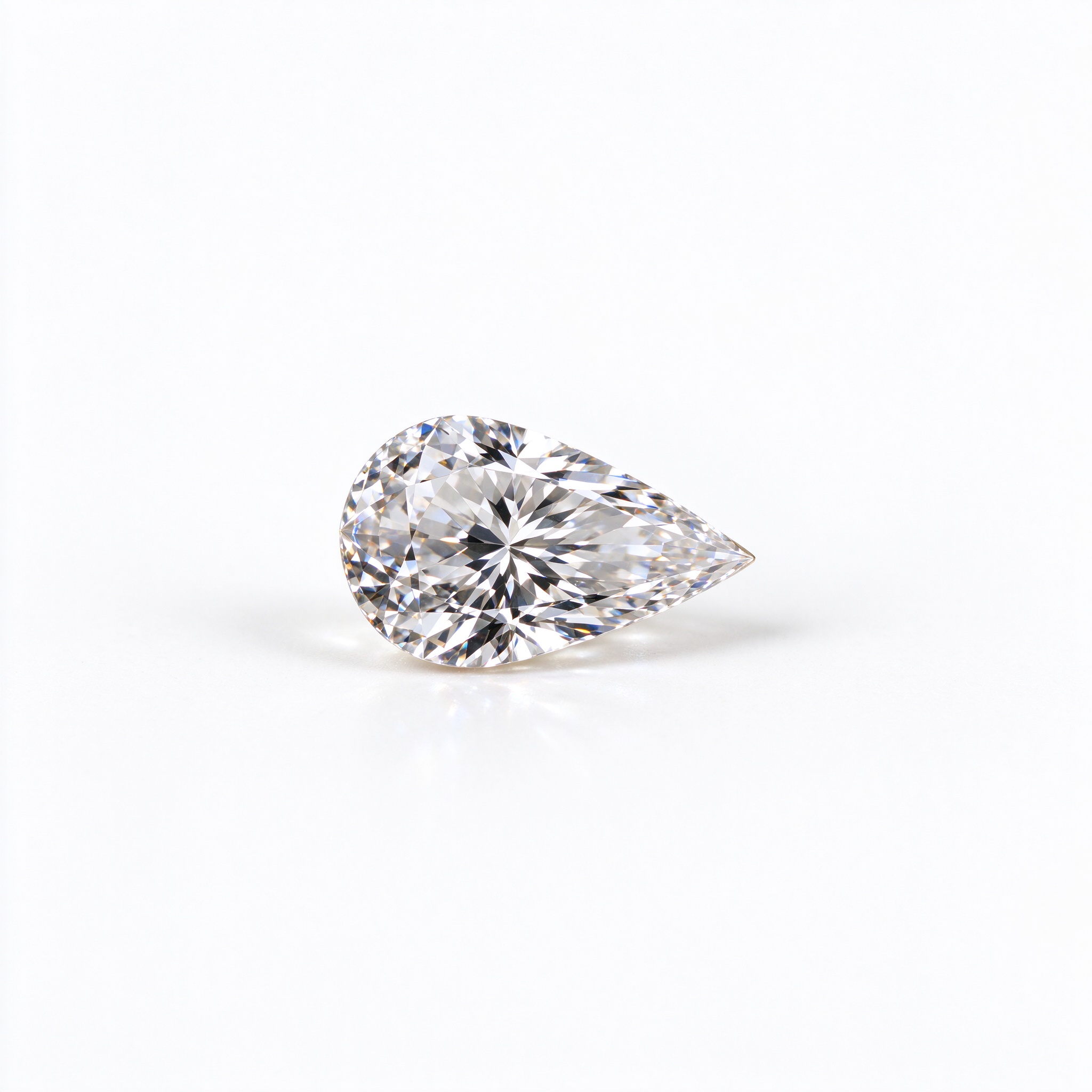
The Pear Shape: A Tear Drop of Light
The pear cut is a hybrid of the round brilliant and the marquise. It is rounded on one end and comes to a point on the other. The shape is elegant, feminine, and surprisingly versatile. It works in engagement rings, drop pendants, and earrings.
Because of its elongated shape, the pear cut makes fingers look slender, similar to the oval. But the pointed end adds a dynamic, fashion-forward element that oval does not have.
Pear Cut Proportions
The ideal pear cut has a length-to-width ratio of approximately 1.45:1 to 1.65:1. A ratio below 1.45 makes the stone look too round and chubby. A ratio above 1.65 makes it look too thin and narrow.
Symmetry is critical in a pear cut. The two sides of the stone should mirror each other exactly. If one shoulder is wider than the other, the stone looks lopsided. This is the most common defect in pear cuts.
When inspecting a pear stone, look at it face-up. Draw an imaginary line from the point to the center of the rounded end. The two sides should be mirror images. If one side bulges or curves differently, reject it.
The Pointed End: Vulnerability and Protection
The pointed tip of a pear cut is the most vulnerable part. It is susceptible to chipping if hit. For this reason, pear stones are usually set with a protective V-prong at the point. This prong covers the tip and prevents chipping.
When you sell pear-shaped jewelry, mention this to your customers. The V-prong is not a design flaw; it is a necessary protection. Reputable jewelers always use it on pear, marquise, and other pointed shapes.
Bow-Tie in Pear Cuts
Like ovals, pear cuts can show a bow-tie shadow. In pears, the bow-tie is often more pronounced because the shape narrows to a point. A slight bow-tie is acceptable, but a dark, permanent shadow reduces the stone's appeal.
When buying pear stones, inspect them under both overhead lighting and natural daylight. The bow-tie is more visible in some lighting than others. If the stone looks good in both, it will look good to your customers.
Best Uses for Pear Cut Moissanite
Pear cut moissanite is used in several jewelry categories:
- Drop pendants: A single pear on a chain is a classic, elegant look. The point faces down, drawing the eye downward.
- Drop earrings: A pair of pears, one facing each direction, creates symmetry and movement.
- Engagement rings: Pear engagement rings have grown in popularity. The point can face toward the fingernail (up) or toward the palm (down).
- Three-stone rings: A pear center flanked by two round or pear side stones is a popular bridal design.
For wholesale buyers, we recommend stocking a moderate quantity of pear stones. They are not volume sellers like round, but they add variety to your collection and attract customers who want something distinctive.
Pear Sizes to Stock
Popular pear sizes:
- 5x7mm (0.75ct equivalent) - small pendants and earrings
- 6x9mm (1.25ct equivalent) - our best seller for pendants
- 7x10mm (1.75ct equivalent) - engagement rings
- 8x12mm (2.5ct equivalent) - statement pieces
Stock the 6x9mm and 7x10mm sizes deepest. These cover the majority of pendant and ring orders.
The Symmetry Science of the Pear Cut
Pear cut is the most shape-sensitive of all common gem cuts. Because the outline is a teardrop, any asymmetry is immediately visible. The two shoulders (the curved sides) must mirror each other exactly. The point must align with the center of the rounded end. If one shoulder is even 5 percent wider than the other, the stone looks lopsided.
This is why pear cutting requires skilled artisans. The cutter must continuously compare both sides during polishing. At HOLYCOME, our pear cutters spend 20 to 30 percent more time on each stone than on a round of the same size. This extra time is why pear stones carry a slight premium over rounds of equivalent carat weight.
When inspecting a pear stone, place it on a white surface under diffused daylight. Look straight down. The two curved sides should trace mirror-image arcs from the point to the rounded end. The width at the widest point should be centered between the two ends. If you trace a vertical line through the point and the center of the round end, the left and right halves should be equal.
Setting Pear Moissanite: Orientation and Prong Strategy
How you set a pear stone determines its visual impact. There are two main orientations:
- Point up (toward the fingernail): This is the traditional engagement ring orientation. The elongated shape lengthens the finger. It is the most universally flattering orientation.
- Point down (toward the palm): This orientation is less common but creates a bold, fashion-forward look. It is popular in right-hand rings and cocktail rings.
- East-west setting: Setting the pear horizontally is a modern bridal trend. The point faces sideways. This works best on wider bands and makes the ring look substantial.
Prong placement is critical for pear stones. The pointed tip must be protected by a V-prong that covers the corner. The two curved shoulders each need a prong. The rounded end needs one or two prongs. A four-prong setting (one at the point, one on each shoulder, one at the round end) is standard. Do not use a prong directly on the pointed tip; always use a V-shaped prong that cups the corner.
Common Pear Buying Mistakes
The first mistake is buying a pear with a weak or rounded point. The point should come to a clean, sharp tip. If the point is blunted or rounded, the stone looks like a poorly shaped oval. Inspect the point carefully under magnification. A sharp point is a sign of careful cutting.
The second mistake is ignoring the bow-tie in pear stones. Pear cuts often show a stronger bow-tie than ovals because the shape narrows to a point. A strong bow-tie across the wide end of the pear is a defect. Inspect the stone face-up under bright light and reject stones with permanent dark shadows.
The third mistake is buying too small a size for pendants. A 5x7mm pear pendant looks dainty, but most customers want a statement pendant. The 6x9mm and 7x10mm sizes are the pendant sweet spot. If you stock only small pears, you will miss pendant sales.
The fourth mistake is pairing pear stones with the wrong side stones. A pear center looks best with round or pear side stones, not with square or emerald-cut sides. The mismatch in faceting styles looks disjointed. Stick to complementary shapes.
The fifth mistake is forgetting to mention prong protection to customers. The pointed tip is vulnerable to chipping. Educate your customers that the V-prong is there to protect the stone, not as a design choice. Customers who understand this will not try to remove the prong to get a cleaner look.
Frequently Asked Questions: Pear Cut Moissanite
Which direction should the point face? A: The traditional engagement ring orientation has the point facing up, toward the fingernail. This lengthens the finger. Some customers prefer the point facing down for a bolder look. Show both options.
Q: Do pear stones chip easily? A: The pointed tip is vulnerable. A V-prong protects it. Advise customers to remove rings during manual work. With proper prong protection, pear stones hold up well in daily wear.
Q: Are pear stones good for earrings? A: Yes. A pair of pear drops, one facing each direction, is a classic elegant look. The movement catches light beautifully. They are also popular as pendants.
Q: What is the most popular pear size? A: 6x9mm is our best seller. It works for both pendants and rings. The 7x10mm is a step up for customers who want a larger statement.
Q: How do I know if a pear is symmetric? A: Place it on a white surface and look straight down. The two curved sides should mirror each other. If one side is wider, the stone is lopsided.