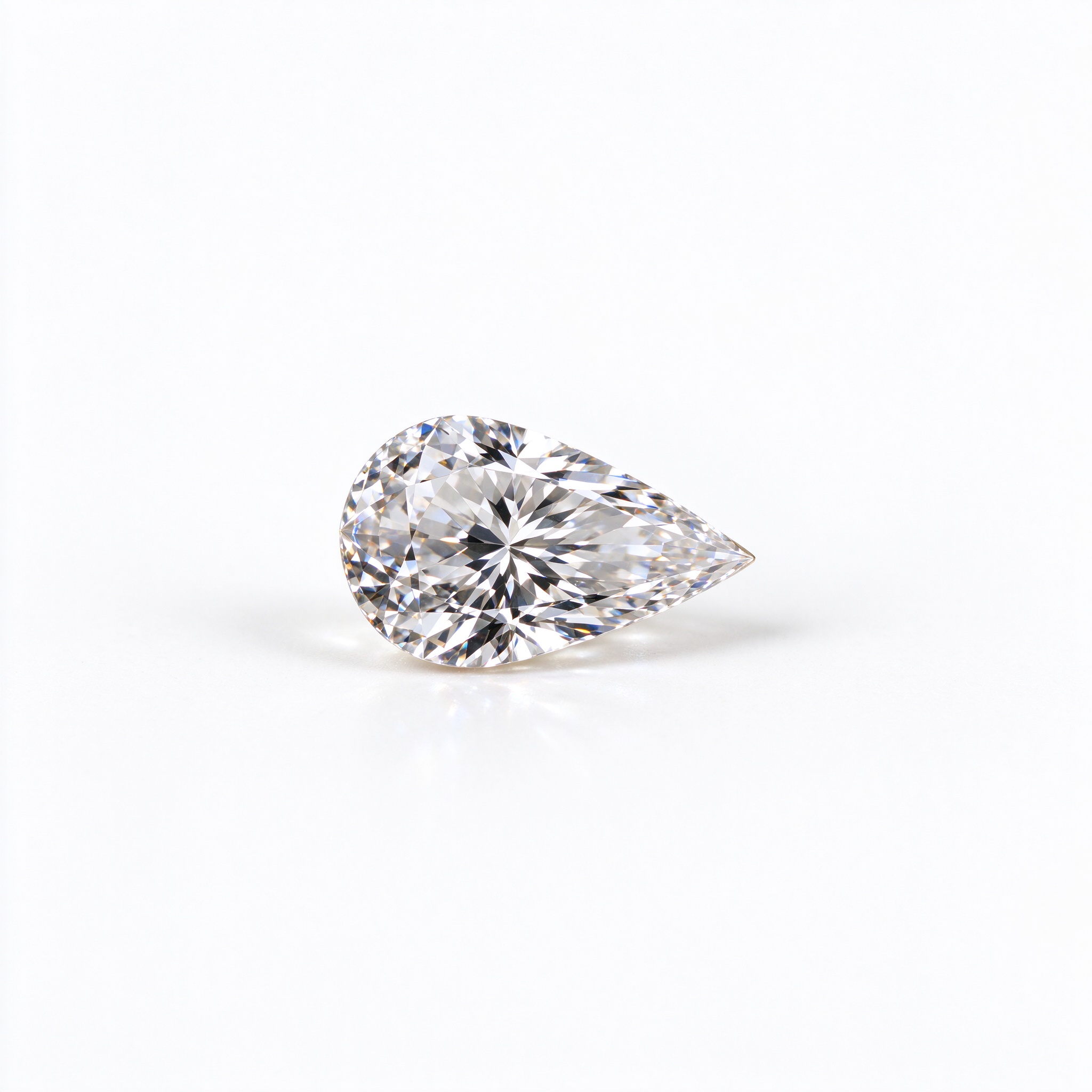
Pear and marquise are the two tapered, elongated brilliant shapes in our cutting range, and buyers often mix them up. Both stretch across the finger, both maximize face-up size, and both need careful setting. But they are not interchangeable, and the customers who buy one rarely buy the other. In this comparison we break down pear vs marquise moissanite so you can stock the right shape for the right customer.
The shape difference
A pear is asymmetrical: one end is rounded like a round, the other comes to a point. A marquise is symmetrical: both ends are pointed, making a tapered boat or eye shape. The pear reads softer and more organic; the marquise reads more architectural and dramatic. If a customer wants "teardrop", they mean pear. If they want "long and boat-like", they mean marquise.
Finger coverage and perceived size
Both shapes make a stone look larger than its carat. The marquise is the size champion: it is the longest shape we cut, so even a 1ct marquise stretches across the finger dramatically. The pear is elongated but less extreme. If the customer's top priority is "looks as big as possible for the money", the marquise wins. If they want elongated elegance without overdoing it, the pear wins.
Bow-tie and light return
Both tapered shapes can show a bow-tie shadow if cut shallowly. The marquise is more prone to it because both tips are pointed. We QC both shapes face-up, but marquise demands proportionally more inspection. The pear's rounded end helps distribute light, so it is slightly easier to cut clean. Read more on this in our bow-tie deep dive.
Setting difficulty and durability
- Pear: one pointed tip needs a V-prong; the rounded end can take regular prongs. Moderate difficulty.
- Marquise: two pointed ends both need V-prongs or bezels. More setting work, and the tips chip more easily if unprotected.
For everyday-wear rings, the pear is slightly more forgiving. The marquise is better for statement pieces and side-stone pairs flanking a round center.
Where each shape shines
Pear is at home in engagement rings, drop earrings and pendants. It reads romantic and bridal. Marquise excels as a side-stone flanker, in vintage cocktail rings, and on clients who want a bold, unusual look. We stock pear in the pear category and marquise in the marquise category, including matched marquise pairs like the 1ct marquise.
Who buys which
Pear buyers tend to be romantic, traditional-modern, drawn to the teardrop symbolism. Marquise buyers tend to be bold, vintage-loving, or specifically chasing maximum finger coverage. If your customer says "something elongated but classic", steer them to pear. If they say "something nobody else has that looks huge", steer them to marquise.
Pricing and stocking
Both sit at a small premium over round due to hand-finished tips. Pear usually sells in rings and earrings; marquise moves as side-stone pairs. We suggest stocking a modest pear range and a smaller marquise range, then expanding based on local demand. Our wholesale tiers are explained on the guides index.
Quick FAQ
Which looks bigger? Marquise, for its length.
Which is safer for daily wear? Pear, with one tip to protect instead of two.
Can I use both in one design? Yes, a pear center flanked by marquise sides is a known vintage combination.
Using both shapes together
Pear and marquise are not always competitors; they can be partners. A classic vintage design uses a pear center flanked by two small marquise sides, or a marquise center with pear accents. The complementary curves create an asymmetric but balanced look. If your customer likes elongated shapes, suggesting this combination makes your design feel considered rather than off-the-shelf. We cut matched sets for these combinations; describe the design and we will source the stones.
Which hides color better
Both tapered shapes show color at the pointed ends, but the pear's rounded base spreads light more gently, so it hides slight warmth better than the marquise. For F-G stones, pear is the more forgiving choice. For D-F in white metal, both read icy. Our color guide explains the tiers, and you can compare the pear and marquise ranges directly.
Stocking tapered shapes on a budget
You do not need deep inventory to test tapered shapes. Start with one 1ct pear and one 1ct marquise as display pieces. If customers respond, expand. Because these are emotional, design-driven purchases, even a small range can drive high-margin sales. The MOQ starts at one stone for samples, as explained in the sample process. When you are ready to order matched pairs, the custom cut page handles it.
How to describe the difference to customers
When a customer is choosing between pear and marquise, keep it simple. Show both and say: "the pear is soft and romantic, rounded on one end; the marquise is bold and boat-like, pointed on both ends." Let the shapes do the explaining. Most customers know within seconds which one they prefer. This is faster than speculating about ratios.
Setting both elongated shapes safely
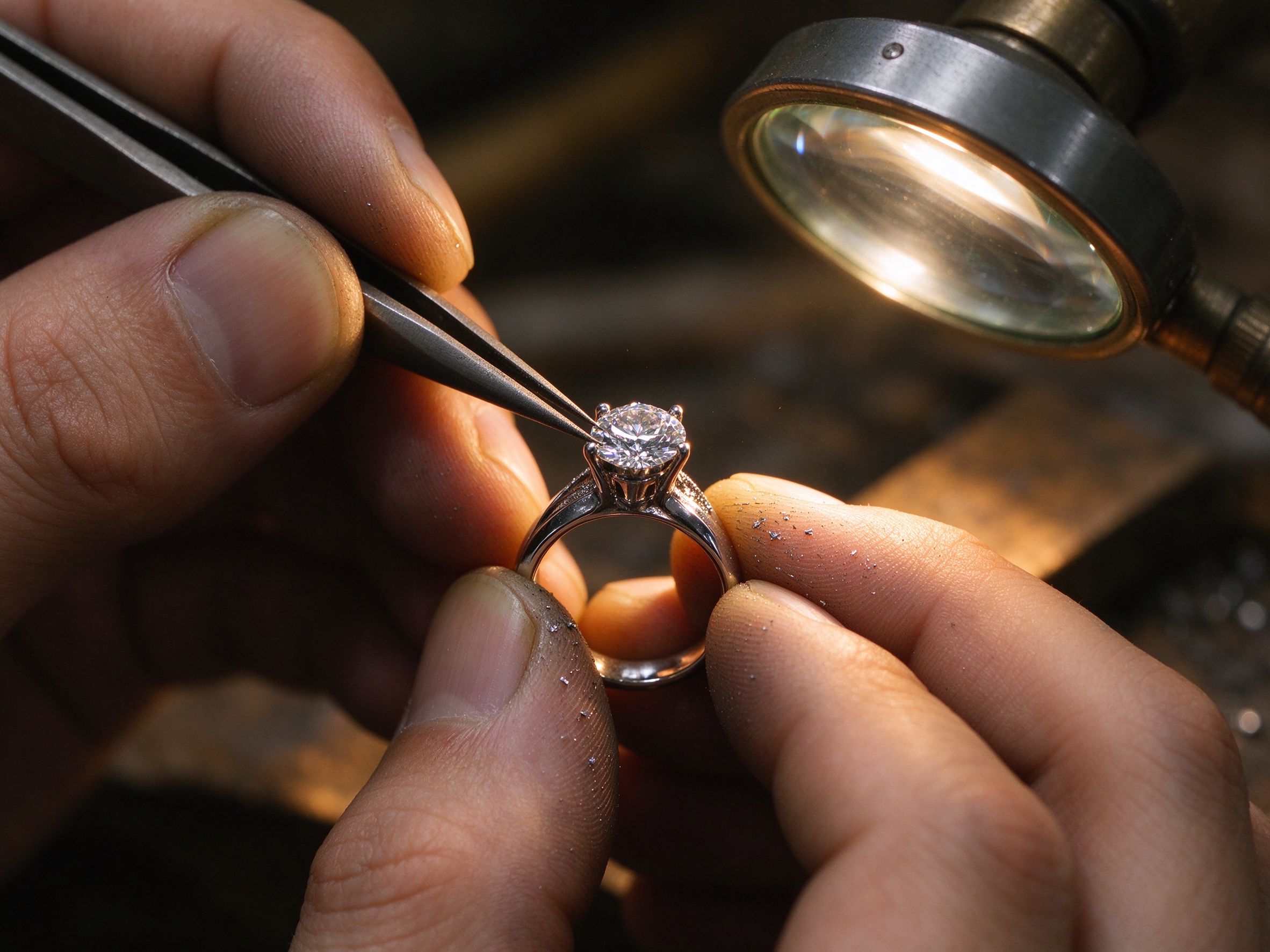
Both shapes have tips that need protection, but the pear has one and the marquise has two. This makes the pear slightly easier and safer to set. For a customer who wants elongated but worries about damage, the pear is the recommendation. For a statement piece, the marquise. We detail setting protection in the marquise setting guide.
Testing both elongated shapes
If you are unsure which elongated shape your market wants, order one pear and one marquise as samples. Display them side by side. Customers usually gravitate within minutes. The pear buyers return for romantic designs; the marquise buyers for bold ones. This low-cost test de-risks your assortment. Compare the stones on the pear and marquise pages.
Getting the best from both elongated shapes
Smart retailers do not choose between pear and marquise; they carry both and let the customer self-select. The pear customer arrives wanting romance and a teardrop; the marquise customer wants drama and maximum length. Train your sales staff to ask which feeling the customer wants, and the sale becomes effortless. We can supply both from the same production run, which simplifies your ordering and keeps color consistent across shapes.
Because both shapes have tips, stock them near your prong-setting supplies and advise on protection. A small display stand showing one pear and one marquise side by side converts well in person. Customers rarely buy elongated shapes from a photo alone; they want to see the length on the hand. Offer try-on mounts and watch the right shape choose itself. The guides index has more on merchandising.