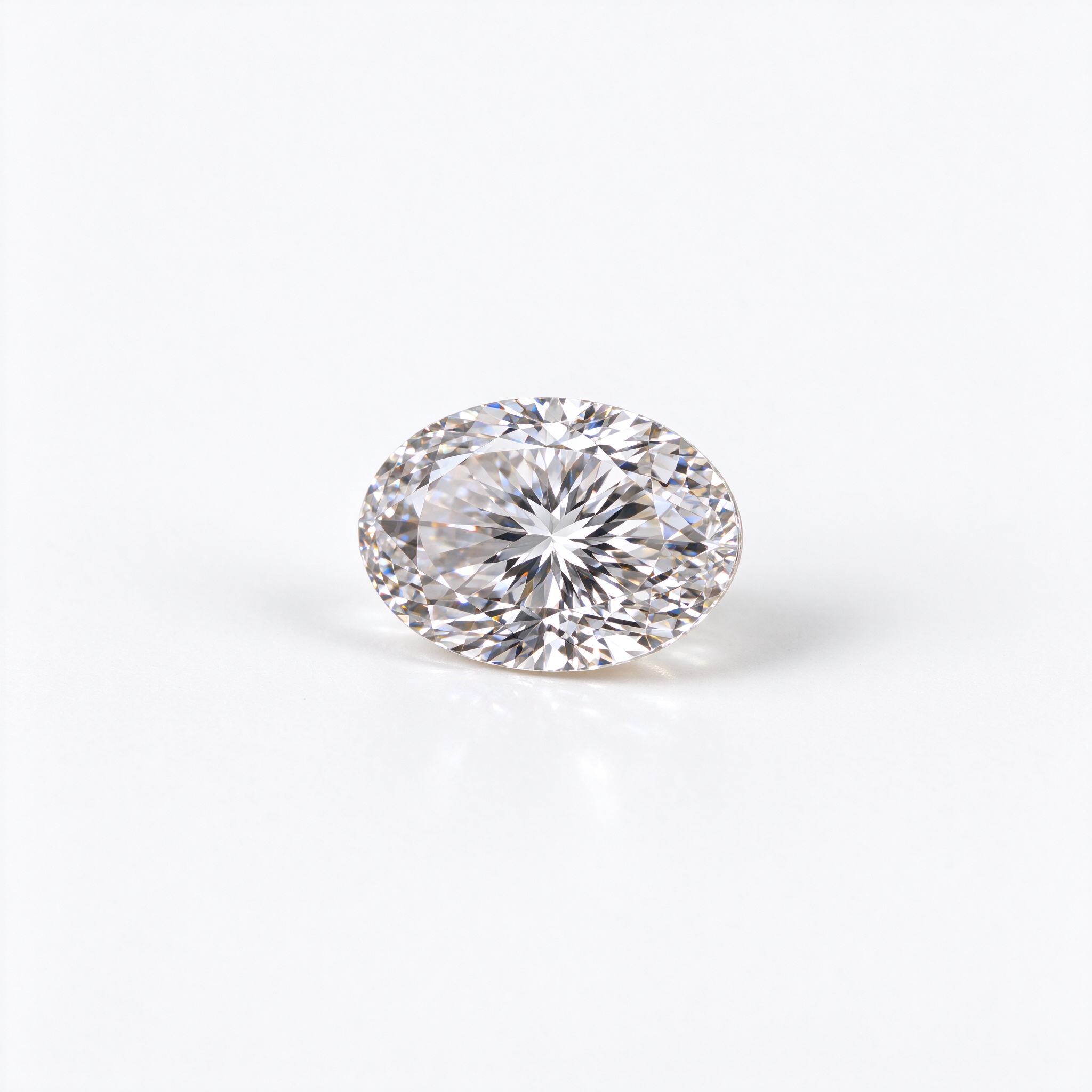
Two ovals at the same carat weight can look like completely different stones on different hands. Wholesale buyers who stock only one "default" oval ratio will find that the same SKU flatters one client's finger and overwhelms another's. The oval is the most ratio-sensitive mainstream cut, and matching ratio to finger length is the detail that separates a good fitting from a disappointing one.
The Length-to-Width Ratio
An oval's ratio is its length divided by its width. The most common wholesale ovals run 1.30 to 1.50. A 1.30 oval is roundish and full; a 1.50 oval is long and slender. Manufacturers often default to around 1.40, which is safe but not always right for the hand. The ratio changes the entire visual character of the stone.
At 1.30 to 1.35, the oval reads almost round, with the soft spread of a round but a slightly elongated silhouette. At 1.40 to 1.45, it is the classic balanced oval. At 1.50 and above, it becomes narrow and slender, edging toward marquise territory.
How Finger Length Changes the Read
A short finger benefits from elongation. An oval with a longer ratio (1.45 to 1.55) draws the eye up the finger and makes the hand look longer and slimmer. A short, full oval (1.30) on a short finger can look squat and heavy, like a round that got slightly stretched.
A long finger, by contrast, can disappear under a very narrow oval. A 1.50 oval on a long, slim finger looks like a thin sliver; the same stone on a short finger looks elegant. Long fingers carry a fuller ratio (1.30 to 1.40) better, because the wider stone balances the length of the finger rather than competing with it.
Thin fingers also prefer a fuller oval; thick fingers can take a longer, slender ratio because the extra width of a thick hand balances the long silhouette.
The Three-Ratio Stocking Rule
Experienced wholesale buyers do not stock a single oval ratio. They carry three:
- Full oval (1.30 to 1.35) - for long or thick fingers, and clients who want a round-with-extension look.
- Balanced oval (1.40) - the default, works on most hands; 50 to 60 percent of oval stock.
- Slender oval (1.50) - for short fingers and clients who want maximum elongation.
Within each ratio, keep the same carat weights so a client can compare across ratios on the bench. A 1.50ct full oval and a 1.50ct slender oval side by side show the client immediately which silhouette suits her hand.
Bow-Tie and Setting Interaction
Longer ovals are more prone to a bow-tie effect - a dark band across the middle where light exits poorly. The bow-tie is worst on very slender ovals (1.55+) and is hidden on full ovals. When stocking slender ovals, inspect each stone face-up for bow-tie severity; a strong bow-tie looks like a dark mark on the finger and draws returns. A mild bow-tie is acceptable and often hidden under the setting's prongs.
Metal setting also changes the read. A yellow gold band warms the oval and softens the elongation; a white gold or platinum band keeps the cool, slender look. For clients choosing a slender oval on a short finger, a white metal band amplifies the lengthening effect.
Oval vs Round on the Same Budget
Clients moving up from a small round to an oval often do so because the oval looks larger per carat. An oval's elongated silhouette spreads across the finger, so a 1.20ct oval reads wider than a 1.20ct round. That face-up spread is the oval's selling point. But the ratio choice changes that spread: a slender 1.50 oval reads long and thin, while a full 1.30 oval reads broad and roundish. On a short finger, the slender ratio gives the elongating spread clients want; on a long finger, the full ratio gives the broad presence a round would have given.
A buyer who stocks only one oval ratio forces every client into the same silhouette. A client with short fingers gets the full oval and complains it looks squat; a client with long fingers gets the slender oval and complains it looks thin. The three-ratio rule removes that complaint before it happens.
Band Pairing With the Ratio
The oval's ratio also changes which band sits next to it. A slender oval leaves shadow gaps at the narrow ends, similar to a marquise but milder; a slightly curved band helps. A full oval sits flush against a straight band with no gap. When quoting an oval set, match the band curve to the ratio: straight bands for full ovals, gently curved bands for slender ones. Stocking both band profiles alongside the three ratios lets the bench build a set that sits flush on the first try.
What to Ask the Supplier
When ordering oval parcels, do not ask for "ovals" as one category. Specify the ratio bands above, and ask the supplier to label each stone's ratio. A supplier who handles oval stock seriously will tag stones by ratio on the parcel sheet. Buyers who run buying guides for fitting can use the three-ratio rule as a sales script: short finger, pull the slender oval; long finger, pull the full one.
The oval flatters because it adapts. Stock the adaptation, not a one-size silhouette.