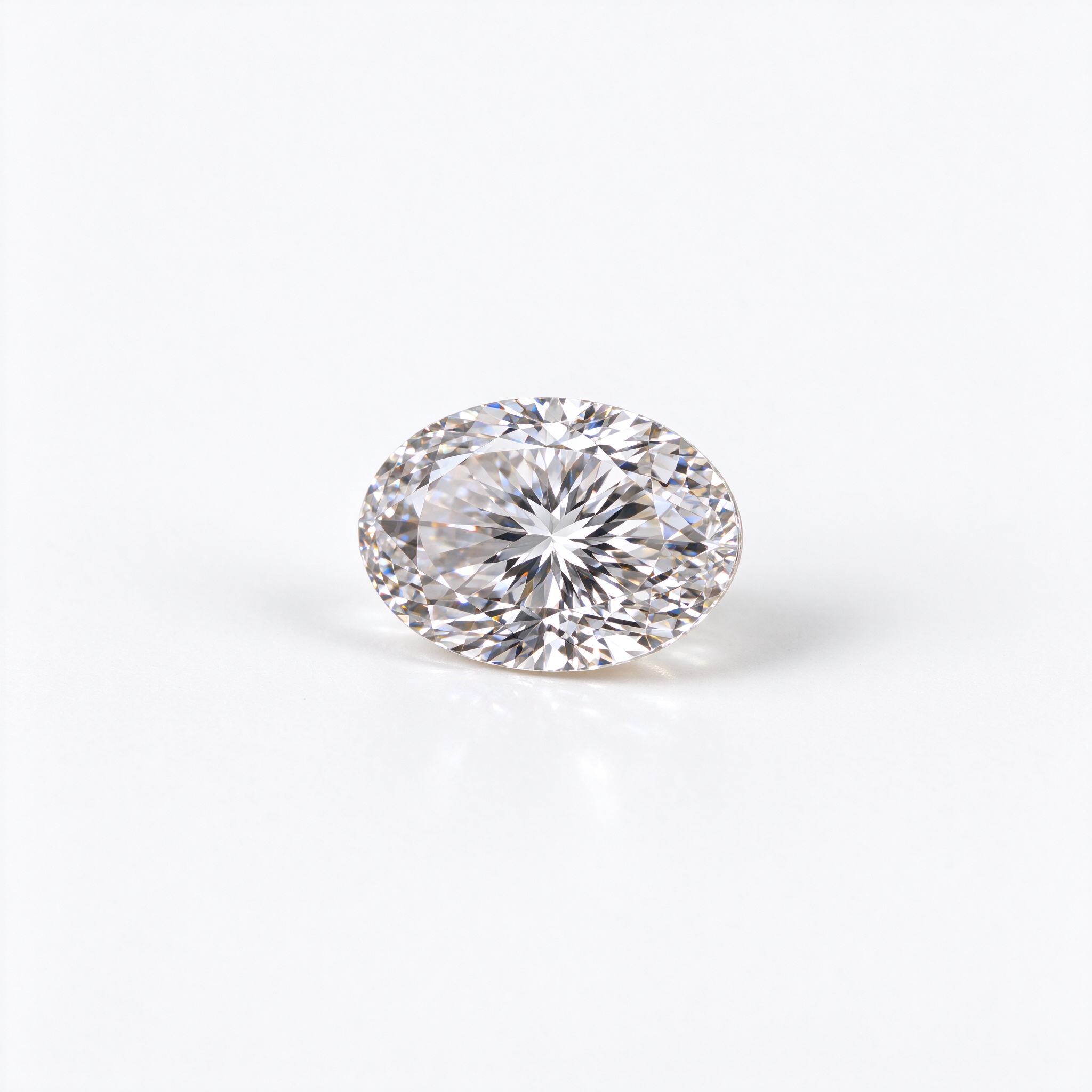
A Toronto store priced an oval bridal line against a competitor’s quote and found the per-carat number was 12% lower—but the landed cost was higher. The difference was not the stone. It was the length-to-width ratio they had been shipped without asking, and the 8% of stones they had to set aside because the ratio was too slim for their oval mounts. This guide breaks down what actually moves oval cut pricing at wholesale, so the quote you compare is apples to apples.
What drives the price of an oval
Oval moissanite is priced by carat, but three factors swing the real number: the length-to-width (L/W) ratio, color grade, and whether stones are matched. A 1.30:1–1.50:1 ratio is the classic elongated oval that looks largest on the finger. Ratios outside that band—rounder near 1.20:1 or very slim near 1.60:1—cost more because they are cut to order and take more rough.
| Carat tier | Typical use | Price driver |
|---|---|---|
| 0.5–0.7ct | Stackables, right-hand rings | Color grade, supply consistency |
| 1.0–1.5ct | Best-selling bridal oval | L/W ratio band, lot matching |
| 2.0–3.0ct | Signature / high-jewelry | Custom ratio, VVS clarity |
Bulk pricing steps down as volume rises, but the ratio premium stays flat—you are paying for precision cutting, not quantity.
The specs that protect your margin
We cut ovals to a documented L/W band printed on the parcel label, so you never receive a ‘rounded oval’ by surprise. Color defaults to near-colorless D–F; clarity VVS for solitaires. Moissanite’s 9.25 Mohs hardness means the curved girdle polishes cleanly and holds up to basket setting. We check for a strong bow-tie shadow under the stone—a faint bow-tie is acceptable and visible in all ovals, but a heavy one is rejected before it ships. Every stone above 3mm carries a GRA certificate.
- Default ratio: 1.35:1 ±0.05, adjustable on request.
- Color: D–F near-colorless standard; G–I on request at lower cost.
- Bow-tie: graded faint; heavy bow-tie stones excluded from bridal lots.
- Finish: hand-polished girdle, no abrasion on the cuved facets.
Pricing decisions by buyer type
Opening buyer, testing oval demand: Order 10–15 stones at 1.0–1.2ct in the standard 1.35:1 ratio. This is the fastest-moving oval and fits off-the-shelf mounts. MOQ 10 pieces; sample parcel available.
Boutique with a defined oval line: Lock your ratio band. If your mounts are cut for 1.40:1, say so on the PO. We reserve a lot to that band, and reorders match. This is where the Toronto store lost money—no ratio on the PO.
Private label / high-jewelry: Custom ratios (1.50:1+), VVS clarity and matched pairs for earrings. We ship DDP to US/EU with full documentation and a third-party-audited process running since 2016.
Frequently Asked Questions
Why does one supplier quote oval so much cheaper?
Cheap quotes often use an unspecified ratio band or G–I color. The stone looks fine loose, but seats poorly in standard mounts or reads faintly green-white next to your D–F stock.
What oval ratio should I stock?
1.35:1 is the safest bridal ratio and fits most off-the-shelf oval mounts. Move to 1.45:1 only if your clients ask for a slimmer look.
Is a bow-tie in an oval a defect?
A faint bow-tie shadow is normal in all oval cuts and is not a defect. A heavy, dark bow-tie is—we exclude those stones from bridal lots.
Does bulk pricing drop at higher carat?
Per-carat price generally steps down at 50+ and 100+ stones within a carat tier, but custom ratio premiums remain because cutting time does not scale with volume.
Can I mix ratios in one order?
Yes, but each ratio is a separate lot and priced separately. Mixing is fine for a test order; for a stocked line, keep one ratio.
The hidden costs that change landed price
Per-carat pricing is the headline, but three quieter costs decide whether your oval line is profitable. First is matching: if you also sell oval studs or side-stone suites, matched stones carry a small pair premium because the cutter has to select two stones that read identically. Second is reorder consistency: a cheap first quote often uses an open lot, so your second order arrives a touch greener or rounder and clients notice. Locking a lot costs nothing extra on our side and saves the return risk. Third is setting yield: if the ratio you ordered does not fit your mounts, you pay a bench setter to adjust seats—usually more than the stone discount saved. Before you compare quotes, total the stone price plus the matching fee plus your expected setting labor, then divide by the sellable stones. That is the number to negotiate against.
Takeaways
- Put the L/W ratio on the purchase order—it controls your seating fit.
- Default to 1.35:1 for bridal; custom ratios cost more.
- Ask for bow-tie grading, not just color and clarity.
- Compare landed cost, not just per-carat price.
Request a sample parcel: MOQ 10 pcs per carat tier, ships in 5 business days. View the oval cut collection, read the oval buying guide, or check wholesale pricing tiers.