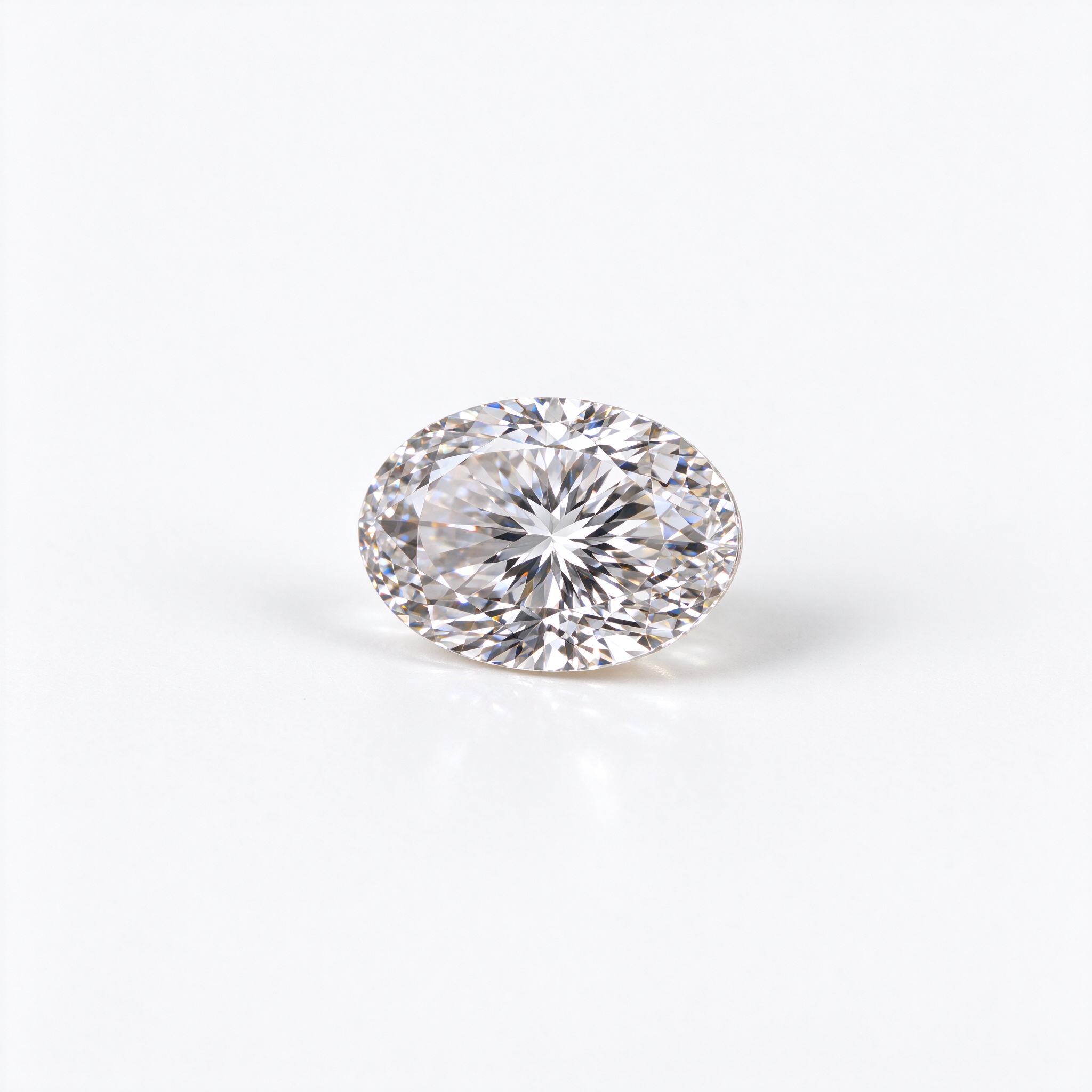
A bridal store in Ann Arbor ordered 45 oval moissanites to chase the oval trend and got back parcels where roughly one in four stones showed a gray band across the middle — the classic bow-tie. Two clients walked out of the showroom after seeing it loose, and the store had to discount the remaining stock to clear it. Ovals are the fastest-growing fancy shape in wholesale moissanite, and also the shape with the widest swing in cut quality. The difference between a supplier you reorder from and one you leave is entirely in how they inspect ovals. Below is our oval inspection protocol and how we price by ratio.
What goes wrong with bulk ovals
Two failure modes account for nearly all oval returns:
- Bow-tie severity. A bow-tie is the dark area across the widest part of the oval, caused by light leakage. Mild bow-tie reads as character; moderate-to-heavy bow-tie reads as a flaw. Industry parcels often allow moderate bow-tie because it is hard to cut around.
- Ratio inconsistency. Ovals are cut to length-to-width ratios from roughly 1.3:1 (plump) to 1.7:1 (slender). A store that orders “ovals” without specifying ratio gets a grab-bag and cannot build a matched display tray.
| Inspection point | Industry bulk norm | Our oval parcel |
|---|---|---|
| Bow-tie | Moderate allowed, not documented | Rejected if more than slight; documented per stone |
| L:W ratio tolerance | ±0.10 unsorted | ±0.03 within tray; plump/slender trays labeled |
| Color | D–H mixed | D–F sorted |
| Symmetry | Visual | 5-point symmetry check; off-center stones flagged |
The oval spec we publish
We cut and grade ovals to the following standard, roughly 20% tighter than bulk suppliers:
- Bow-tie: every stone is examined face-up under north light. We reject any oval with a bow-tie rated moderate or stronger. Slight bow-tie is accepted and noted on the grading sheet so you can price it accordingly.
- Ratio trays: we ship plump ovals (1.35–1.45 L:W) and slender ovals (1.50–1.65 L:W) in separate trays. A tray of matched ratio photographs far better and sells as a collection rather than a bargain bin.
- Center vs sides: for ring orders we match the oval center to small round or pavé side stones from the same growth batch so color does not shift across the setting.
- Certification: GRA on every oval, with the ratio recorded on the certificate. IGI documentation available for US high-jewelery accounts.
Which oval program fits you
Boutique testing oval demand
Start with a 20-stone parcel in the 1.0–1.5ct bracket, slender ratio, D–F color. This is the configuration that photographs and sells best for most US stores. Reorder at 10 stones once you see which ratio your clients prefer.
High-end bridal store
Run two trays — plump for clients who want cushion-adjacent softness, slender for the modern elongated look. We supply matched pairs for earring stock and matched center-plus-side-stone sets for custom rings.
Private-label / OEM
We cut ovals to your ratio spec and your proportion sheet, carded under your brand. Minimum 50 stones per ratio bracket. Export documentation covers EU and US DDP shipping, and every parcel carries GRA with optional IGI backup.
Frequently Asked Questions
Do all oval moissanites have a bow-tie?
Nearly all ovals show a faint bow-tie; what matters is severity. We reject any oval with a moderate or stronger bow-tie, so the stones we ship read clean face-up while retaining the oval shape clients want.
What length-to-width ratio sells best?
For bridal center stones, slender ovals between 1.50 and 1.65 L:W outsell plump ovals roughly two to one in our US book. Plump ovals sell better in earrings and pendants. We recommend ordering slender for rings.
What MOQ do you require on ovals?
Opening MOQ is 20 loose ovals in one ratio bracket. Reorders start at 10 stones. Private-label programs require 50 stones per ratio and color combination.
Can I order matched oval pairs for earrings?
Yes. We hand-match pairs by length, width, depth and color, and price the pair as a unit. Matched pairs move faster than loose ovals in boutique display trays.
How long does oval production take?
Stock ovals ship in 5 business days. Custom-ratio or private-label ovals run 15–20 business days from confirmation, with DDP delivery to US and EU addresses.
How oval pricing compares to rounds in your buy
On a per-carat basis, ovals run roughly 10–15% above rounds in our price book, because the elongated cut yields less saleable rough from a given crystal. That premium is recovered easily at retail: most boutiques price oval centers 20–30% above a comparable round, because clients perceive the elongated silhouette as more distinctive. For a store chasing margin rather than pure volume, the oval bracket is where the gap between wholesale cost and retail price is widest.
Takeaways
- Specify bow-tie severity on every oval PO; moderate bow-tie is a return waiting to happen.
- Order plump and slender ovals in separate, labeled trays.
- Stick to D–F color so ovals do not yellow beside side stones.
- Ask for matched pairs if you carry earring stock.
Request an oval sample parcel: 20 slender ovals, 1.0–1.5ct, D–F, ships in 5 business days. Browse the oval collection, read our fancy-shape buying guides, or apply for wholesale pricing. Finished ovals are also available as ready-to-sell rings.