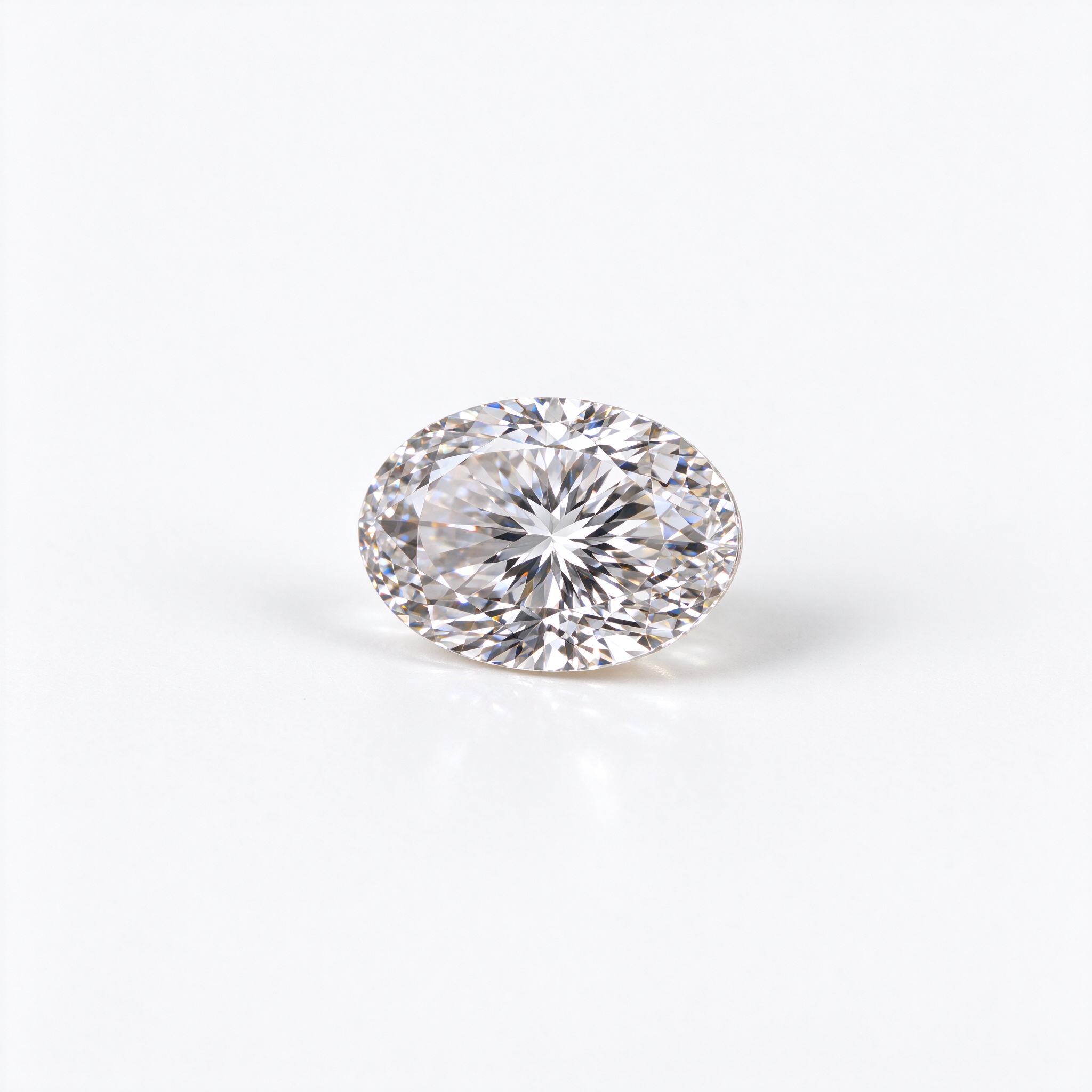
Wholesale moissanite is sold two ways at once: by carat and by millimeter. The round brilliant obeys the conversion most buyers memorize in the first week of the trade, roughly 6.5mm equals about 1.0ct. The oval does not. An 8x6 oval can weigh anywhere from 1.50ct to 1.85ct depending on how deep the pavilion is and how thick the girdle is cut, and that spread is the difference between a mid-tier SKU and a value SKU on your price sheet. Reading oval weight correctly is the fastest way for a buyer to stop overpaying for depth.
Why oval weights are not standardized
The oval is a modified brilliant stretched along one axis. To hit a target millimeter length, the cutter has two dials to turn: the length-to-width ratio and the depth percentage. A shallow oval with a thin girdle reaches 8x6 while weighing closer to 1.45ct. A deeper oval with a thicker girdle reaches the same 8x6 while weighing 1.80ct or more. Both are "8x6" on the spec sheet, but one looks large on the finger and the other looks small and sunk into the setting. Carat is mass; face-up size is area. Wholesale oval buying is mostly about not confusing the two.
The reference conversions buyers keep on the bench
A useful starting table for calibrated oval moissanite, measured on stones cut to a roughly 1.35 to 1.45 length-to-width ratio with medium-thin girdles, looks like this: 7x5mm sits around 1.00 to 1.10ct; 8x6mm around 1.50 to 1.65ct; 9x7mm around 2.00 to 2.20ct; 10x8mm around 3.00 to 3.30ct. These are not universal. A supplier quoting you a 9x7 at 2.60ct is shipping a heavier-deep stone; a supplier quoting 1.80ct for the same 9x7 is shipping a spreadier stone that will look larger but may leak light through the side.
Reading length-to-width ratio
The ratio is the second number that matters more than carat. Ovals cut below 1.30 read almost round on the finger; ovals cut above 1.55 start to look narrow and like a marquise with rounded ends. The sweet spot for bridal is 1.35 to 1.45. When you quote ovals, always ask for the ratio in writing. A lot of slow-moving oval inventory in the trade is stones cut at 1.25 to chase heavier carat weights, which look squat next to the customer's mental image of an oval. They return or get marked down.
Bow-tie and how it ties to weight
Depth and ratio decisions also drive the bow-tie, the dark band across the center of the oval caused by light leaking past the pavilion. Heavier, deeper ovals tend to show less bow-tie but read smaller face-up; spreadier ovals read larger but carry a more visible bow-tie. There is no free lunch. The right spec for a retailer is usually medium bow-tie at a 1.40 ratio and a weight on the lower-middle of the range, because the customer's first impression is face-up size and only the second impression is contrast.
Setting implications of depth
A deeper oval sits lower in the head and can look as if it is sinking into the setting, which is a common customer complaint. A spreadier oval sits higher, which makes the prongs more visible and the stone more dramatic, but also more vulnerable to side impact. When you order ovals for pre-set rings, the depth percentage has to match the head size. A stone cut too deep will not sit in the head you have stocked; a stone cut too shallow will rattle. This is why calibrated oval settings are usually built for a specific depth band, and why a "one size fits all" oval head is a false economy. Ask the factory for the recommended depth range for each head, and spec the stones to that range.
What to ask the supplier
When you open an oval line, ask for three things on the spec sheet: actual millimeter measurements (not nominal), actual carat weight per stone, and a bow-tie grade. Ask for a calibration parcel of five stones across the ratio range so you can see the difference between a 1.30 and a 1.45 ratio on your own bench. If the supplier only quotes "equivalent to 1.5ct oval" without the millimeter callout, treat that as a warning; equivalent carat is a marketing number, not a weighing. Buy by millimeter, price by carat, and grade the ratio separately. That three-step habit keeps oval margins honest. Also ask whether the factory can supply a depth recommendation per head size, and whether they will replace a stone that does not fit the head you have stocked; most mid-tier suppliers will exchange a mis-cut stone at no charge, but you have to ask for that policy in writing before you place the order.
Buyers who want to compare oval spread against other stretched cuts should also read our notes on moissanite rings across shapes before committing to a depth tier. The oval's weight-versus-size tradeoff is the most predictable in the stretched family once you have a calibration parcel.