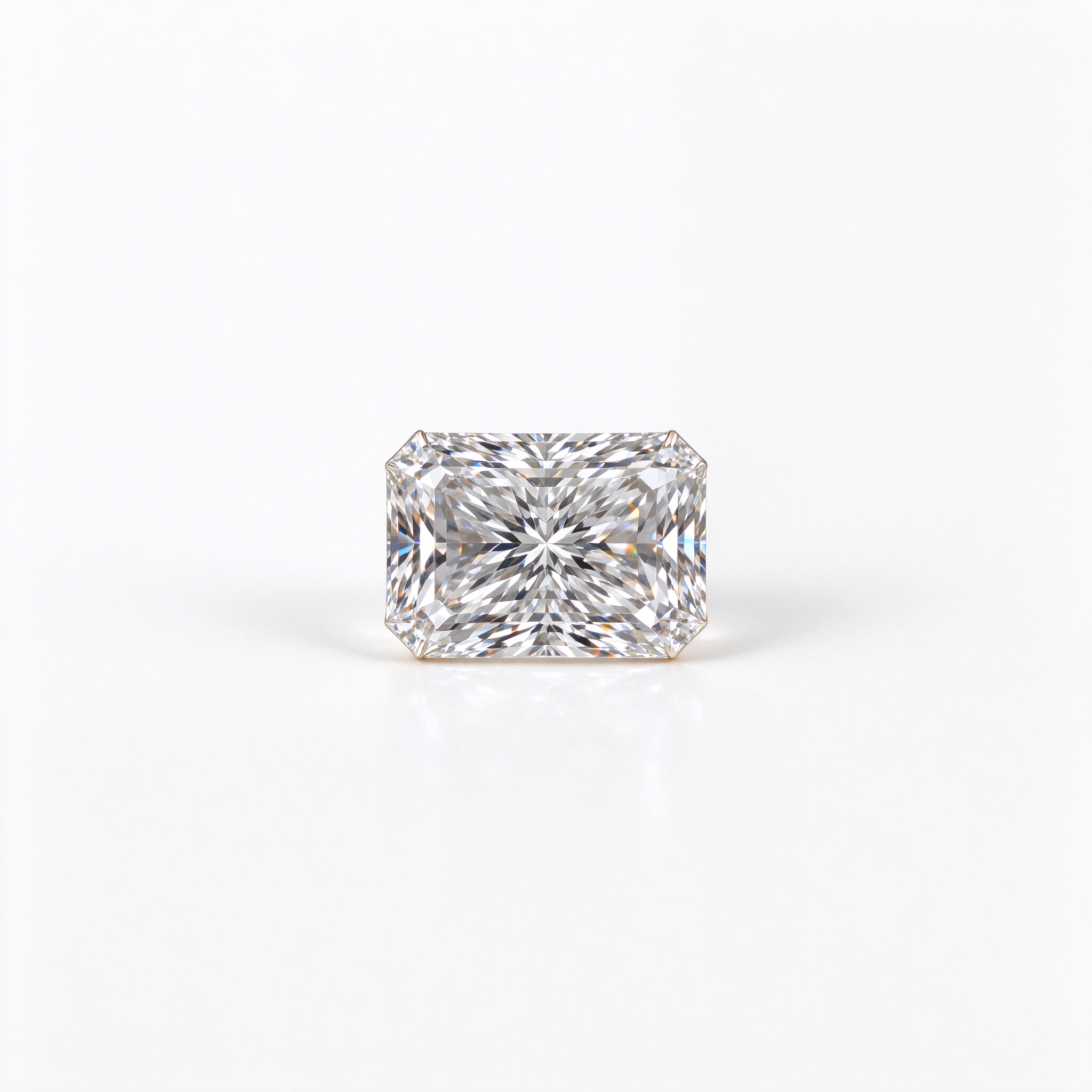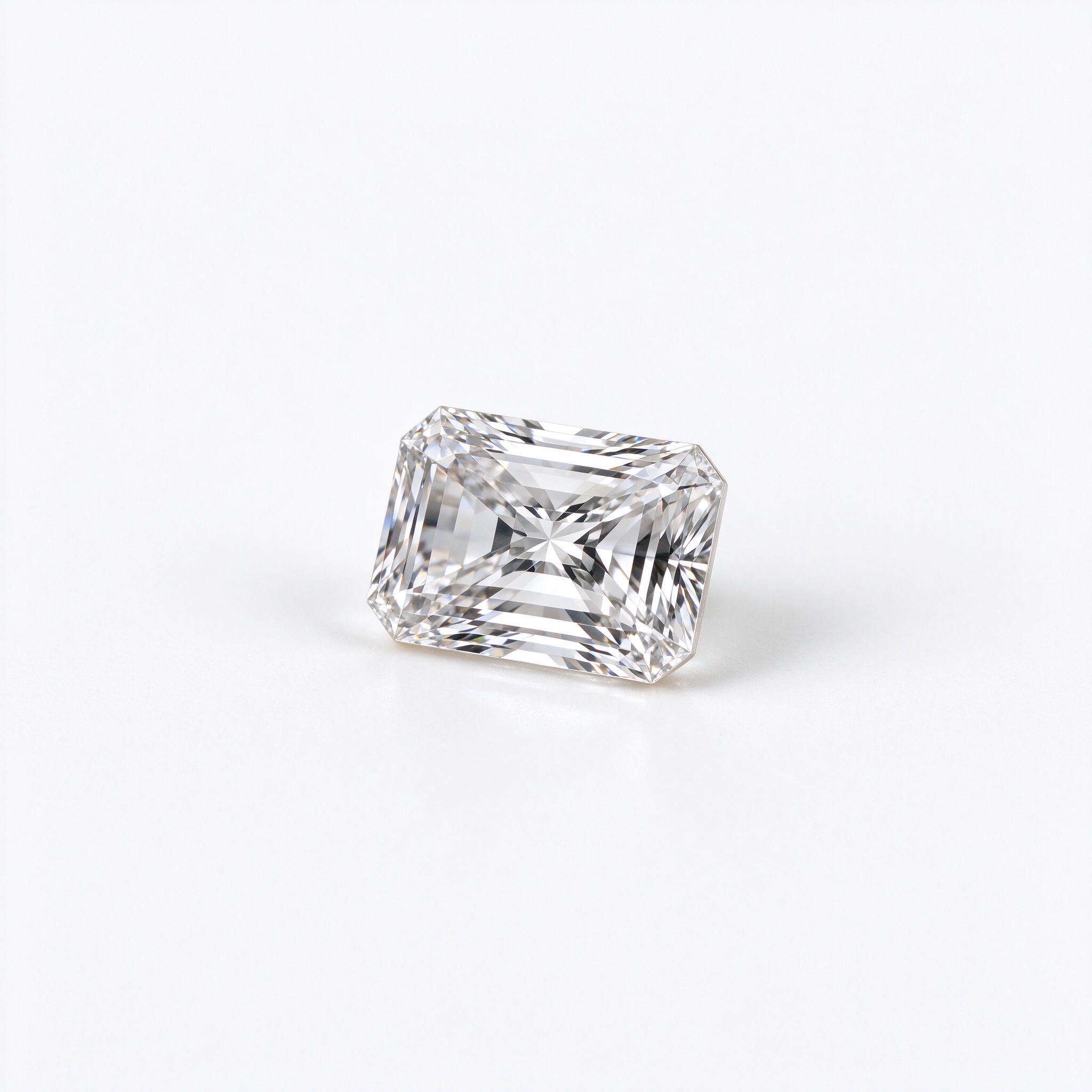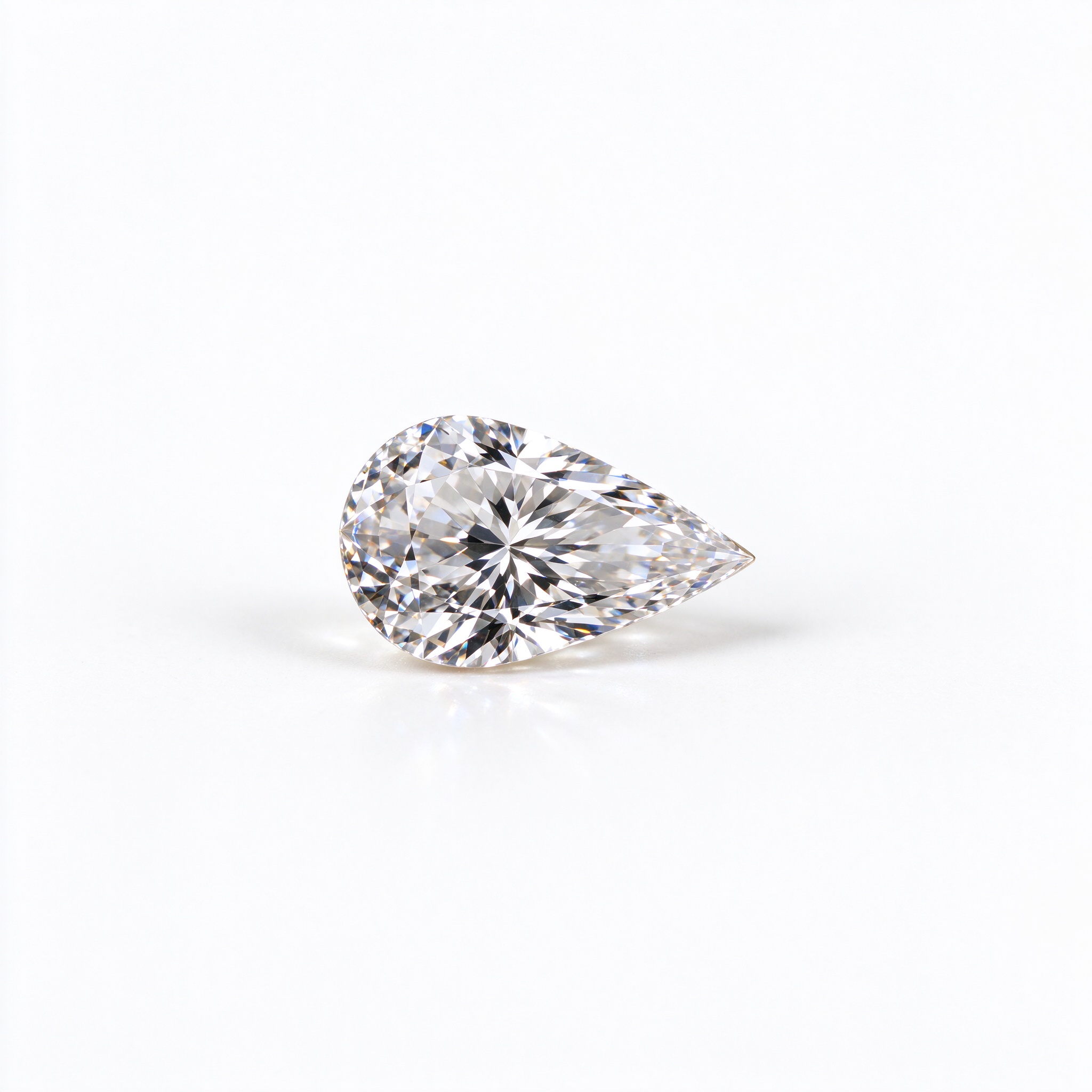
A jewellery buyer in Birmingham told us they once returned a third of a pear parcel. The stones were certified, color-sorted and arrived on time, but every one of them showed a dark bow-tie bar across the middle when held up to retail lighting. Pear cuts are the fancy shape where grading discipline pays off the most, and the shape where cutting corners costs you the most.
Pear demand has grown steadily since 2023, driven by engagement styles and a strong pendant trade. This guide explains what graders actually check on a pear moissanite, the ratio window that sells, and the inspection steps we run before a pear parcel ships.
What the bow-tie actually is
A bow-tie is a symmetrical dark shadow across the widest part of a pear or oval, caused by pavilion facets angled so that light from the viewer's side escapes through the crown rather than returning to the eye. It shows most clearly when the stone is held face-up and slightly tilted; it disappears in direct overhead light, which is why supplier studio photos often hide it.
Graders describe it in four severity bands. Our wholesale standard: none means no visible shadow face-up and is best for solitaire mounts; mild means a faint bar visible only when tilted 30 degrees or more, acceptable in stock and fine in halos; moderate means a dark bar visible face-up under normal light, which we reject from bulk stock; strong means an obvious bow-tie that sells only as a clearance piece.
Because moissanite is doubly refractive (refractive index 2.65–2.69 versus diamond 2.42), facet doubling tends to soften the edges of any bow-tie rather than sharpen it. This works in your favour: a mild bow-tie in moissanite looks better than a mild bow-tie in diamond. It does not make a moderate bow-tie acceptable.
Length-to-width ratio and tip alignment
The pear is a hybrid of round and marquise, and its ratio window is tighter than the oval's. The classic pear band of 1.45–1.65 is balanced between width and length and covers the highest retail demand. Below 1.40 the stone reads almost round and competes with oval stock; above 1.75 it reads marquise-like and sells to a narrow customer group.
Two additional checks separate a good pear from a great one. First, the two shoulders where the curve meets the point must match in height; one shoulder lower than the other makes the stone look lopsided on the finger. Second, the tip must sit on the central axis. A tip that leans 3 degrees or more off-centre is obvious in a solitaire and is the second most common return reason after bow-tie.
How graders actually inspect a pear parcel
Our incoming pear inspection runs four steps, and wholesale buyers should ask their supplier to do the same. First, a face-up photograph of every stone against a neutral gray background with no ring light from above. Second, a bow-tie rating recorded on the pack sheet, not just the certificate. Third, a tip-on-axis check with a digital calliper across the widest point, measuring tip offset in millimetres. Fourth, a symmetry test in which the stone is rotated 180 degrees on the tray; it should look identical.
Certification is the baseline, not the finish. A GRA report covers color, clarity and carat but does not assign a bow-tie grade. For accounts selling into the US market, many customers cross-check report language against the FTC Jewelry Guides, and a stone marketed as eye-clean with a visible bow-tie risks a misrepresentation complaint. Staff should describe bow-tie honestly rather than hide it.
Which settings hide or expose bow-ties
Setting choice changes how a pear reads, and smart retailers stock stones that match the mounts they already have. A solitaire with V-prongs exposes everything, so stock only none-to-mild bow-tie stones here. A halo masks mild bow-tie almost completely. In a pendant, bow-tie is less noticeable because the stone hangs at an angle, which makes pendants the right channel for stones that fall into the mild band. Because the pear's pointed tip sits naturally on a ring, tip protection matters: expect unprotected tips to chip during resizing. Pair pear stock with marquise length-to-width logic for elongated designs, and cross-reference the heart symmetry tolerance guide if you build matching pear-and-heart jewelry sets.
Frequently Asked Questions
Is a bow-tie in a pear moissanite normal?
Mild bow-tie is normal in any elongated fancy cut. Moderate or strong bow-tie is a cut-quality problem that should be rejected from wholesale stock.
What length-to-width ratio sells best for pears?
1.45 to 1.65. Below 1.40 the stone reads round; above 1.75 it reads marquise and narrows your customer base.
Does a halo hide a bow-tie?
A narrow halo masks mild bow-tie effectively. It does not hide moderate bow-tie, which remains visible through the centre.
Why do pear stones get returned more often than ovals?
Two reasons: tip chipping from unprotected settings, and bow-tie that was not disclosed at sale. Both are controlled by inspection and honest staff language.
Should pears be sold by carat or by millimetre?
By millimetre, like ovals. A pear's selling power is its face-up silhouette, and depth-cut stones look thin on the finger.
Request a pear sample parcel: 4 stones in the 8x5.5 to 10x7 mm bracket, each with a face-up bow-tie rating on the pack sheet. Open wholesale terms for tiered pricing, or read the oval carat-vs-size guide to plan your elongated-shape mix.