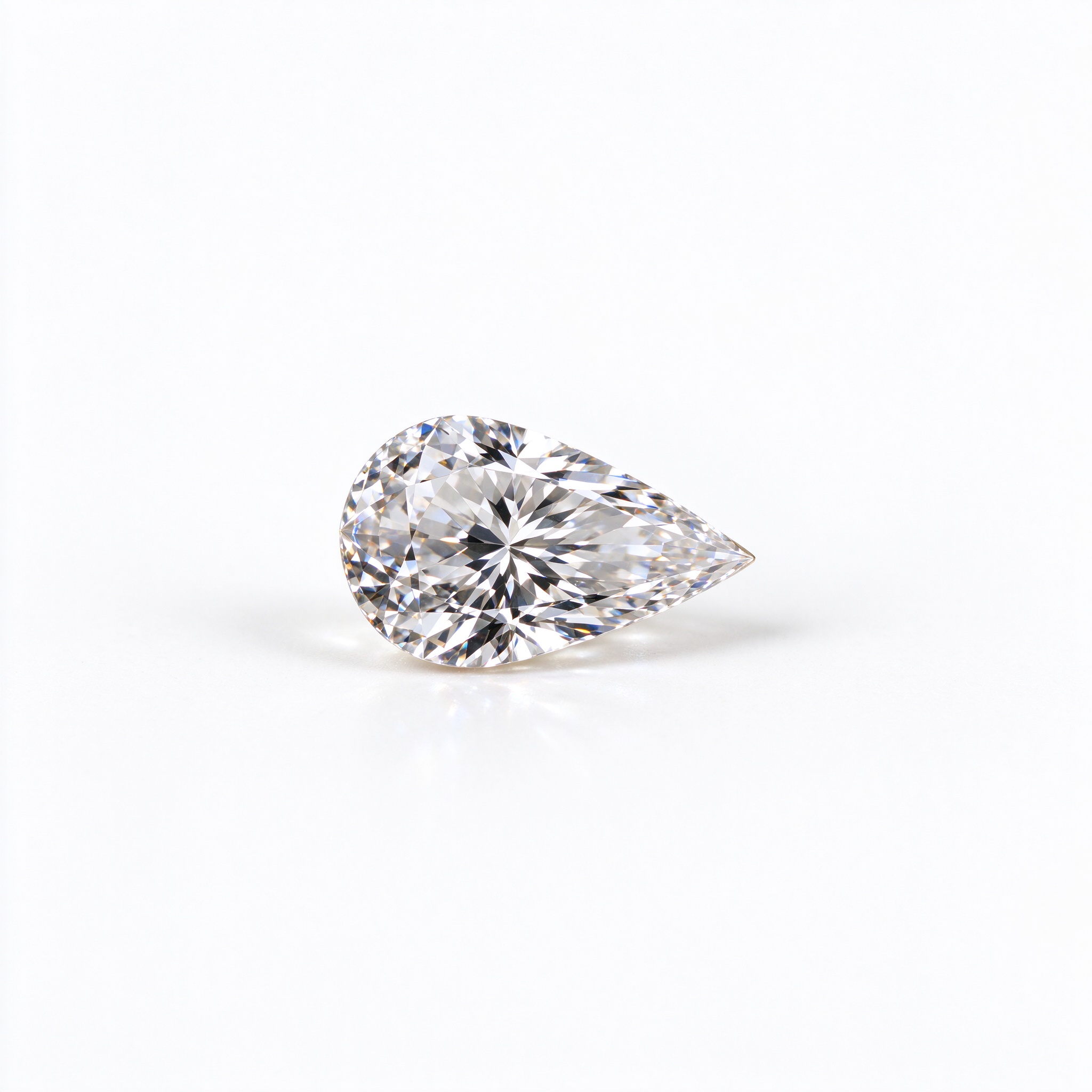
Pear moissanite is one of the shapes where wholesale pricing surprises new buyers. It is not priced the way a simple round is, because cutting a clean teardrop takes more hand work and a higher yield loss. If you are sourcing pear moissanite for resale, understanding what drives the price helps you negotiate tiers and set a retail price that holds margin. This guide lays out the factors and the typical tier structure.
Why pear costs more than round
A round brilliant is cut from a crystal with predictable yield. A pear shape has to be oriented so the rounded base and pointed tip both come out clean, and the pointed tip is the first place a crystal cracks if misjudged. Factories lose more rough per pear stone, and they hand-finish the tip facets. That extra work shows up as a small wholesale premium over an equivalent round. It is usually modest per stone, but it is real.
The factors that move the price
- Carat / mm size: the biggest factor. Larger pears are priced on stepped tiers, not linearly.
- Color: D-F commands the top; F-G is the margin sweet spot.
- Clarity: VVS adds cost; VS is eye-clean and cheaper. For pear, VS is usually fine because the faceting hides minor inclusions.
- Cut quality: a pear with no visible bow-tie and a balanced tip is worth more than a marginal one.
- Quantity: tier pricing drops the per-stone cost as volume rises.
Typical wholesale tier structure
Most factories, including ours, price on quantity breaks. A sample order of 1 stone costs more per piece; a run of 10 to 50 drops the unit price; a repeat bulk order drops it further. The exact numbers change with rough supply, so we send a current tier sheet on request through the inquiry page. As a new buyer, always start with a sample at the small tier to verify quality before committing to the bulk price.
How to set retail without losing the customer
Pear is an emotional purchase, not a commodity buy. Customers pay for the teardrop look and the symbolism. That means you can price a pear ring at a healthy margin over the loose stone cost, especially in a halo or a designer mounting. The mistake retailers make is pricing pear too close to round, which throws away the margin the shape earns. Compare your cost against the market for teardrop engagement rings rather than against plain solitaires.
Where to save and where not to
You can save by choosing F-G color and VS clarity, which are eye-clean in a pear. Do not save by choosing a cheaper-cut pear with a visible bow-tie; returns on a dark teardrop will wipe out the saving. Always inspect samples face-up, the way we describe in our pear buying guide.
Sizing guide for pricing
Pear is sold by carat and by mm. A 1ct pear is roughly 10x6mm; a 0.75ct pear is around 8.5x5.5mm. Because face-up size is the selling point, list the mm dimensions on your product page, not just carat. See our carat to mm chart for the full conversion.
Quick FAQ
Is pear moissanite worth the premium over round? For bridal and pendant lines, yes, because it commands a distinct retail price.
What clarity is best for wholesale? VS for most SKUs; VVS only for high-end solitaires.
Do prices fluctuate? Rough supply moves prices, so lock in a tier when it looks good. Ask for the current sheet.
Reading the tier sheet
When we send a wholesale tier sheet for pear moissanite, you will see price breaks at quantity levels. The unit price drops as the quantity rises, but the biggest jump is usually between the sample tier (1 stone) and the first bulk tier (around 10 stones). If you are confident the shape will sell, placing the first bulk order immediately saves more than ordering one sample at a time. If you are unsure, start with one sample, inspect the tip, then bulk order. This is the logic in our MOQ tier guide.
Where returns hurt margin
The cheapest pear is rarely the cheapest once you factor returns. A pear with a visible bow-tie or a lopsided tip comes back, and a returned ring costs you shipping, rework and the customer's goodwill. We price our pears at a level that includes hand-finished tips and face-up QC. That slightly higher cost prevents returns that would wipe out your margin. See our QC standards in the QC article.
Pricing the finished ring
A finished pear ring should be priced as a design piece, not as a loose-stone markup. Customers who want a teardrop are not comparing to plain solitaires. Build your price from the mounting design, the brand, and the packaging. Because pear is a recognizable, romantic shape, it supports gift-style marketing around engagements, anniversaries and Valentine's. Browse the stones on the pear page and request the current tier sheet through the inquiry page.
Negotiating pear pricing as a repeat buyer
Pear pricing is most favorable once you become a repeat customer. The first sample order establishes quality; the bulk order gets the first tier break; ongoing reorders earn the best tier. If pear sells for you, commit to regular reorders rather than one-off purchases, and ask us for the repeat-buyer tier. Our MOQ tier guide explains the structure.
Pricing the finished pear ring
A finished pear ring should be positioned as a romantic design piece, not a commodity. Include gift packaging and a care card. Customers buy pears for engagements, anniversaries and proposals, so the emotional value supports the price. Do not discount it to compete with rounds. Browse the stones on the pear page and request the current tier sheet through custom cut.
Getting the current price
Prices move with rough supply, so the tier sheet changes. When you are ready to order, ask us for the current pear tier sheet rather than relying on old numbers. We will quote sample and bulk prices for the carats you need. If a tier looks good, lock it in. Start from the pear collection and request the sheet on custom cut.