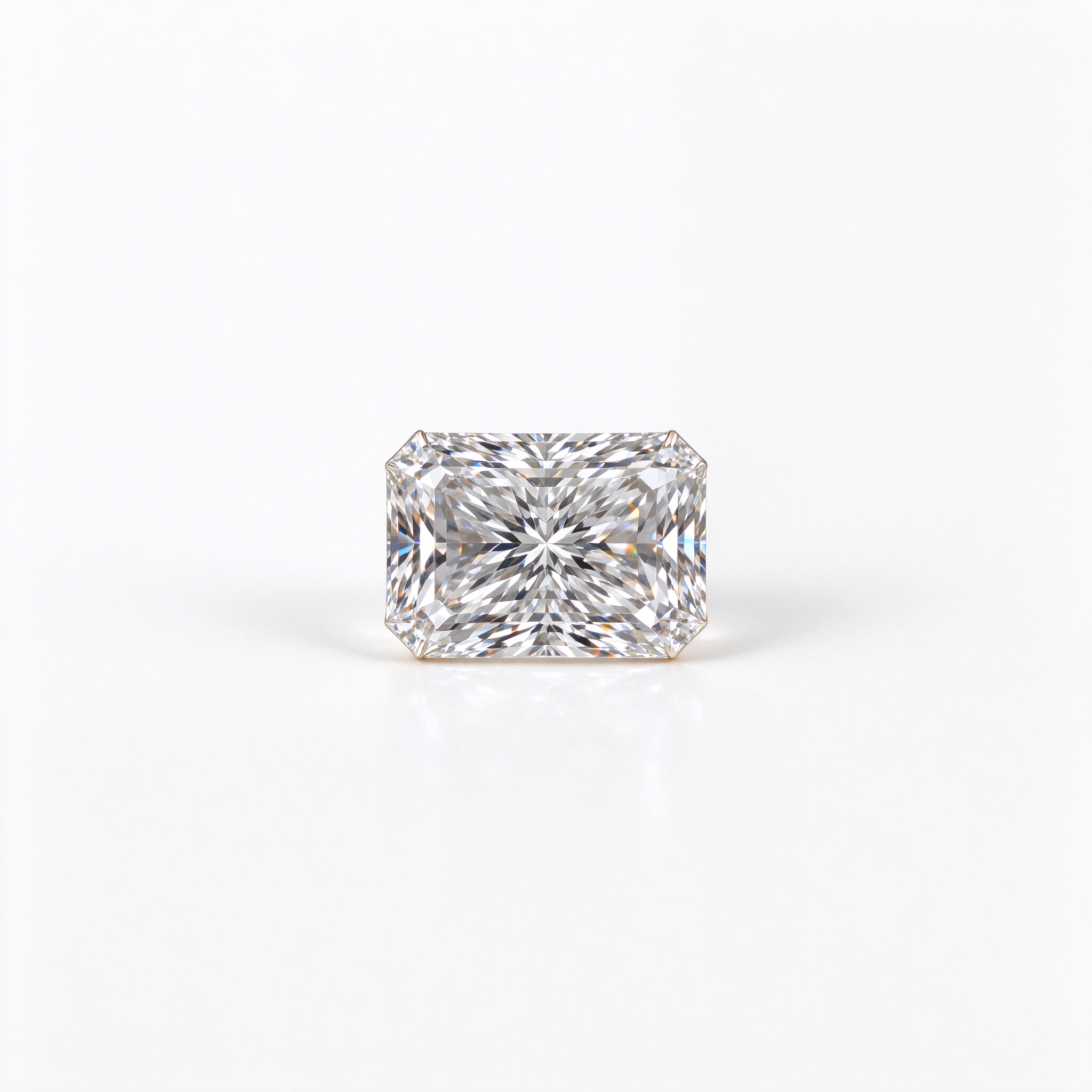
The Best of Both Worlds
The radiant cut was invented in 1977 by Henry Grossbard. He wanted to create a square or rectangular stone that had the elegant outline of an emerald cut but the brilliant fire of a round. The result was the radiant cut: a square shape with clipped corners and a full brilliant-cut pavilion.
Today, the radiant cut is one of the fastest-growing fancy shapes. It is popular because it offers the geometric appeal of a square stone without sacrificing sparkle. Customers who like the look of emerald cut but want more fire often choose radiant.
Radiant vs Cushion vs Princess
These three square shapes are often confused. Here is how to tell them apart:
- Radiant: Square or rectangle with clipped corners. Brilliant faceting on both crown and pavilion. Sharp, clean lines.
- Cushion: Square or rectangle with rounded corners. Softer, pillow-like outline. Often has crushed-ice faceting.
- Princess: Square with sharp, unclipped corners. Full brilliant faceting. More angular and modern.
The radiant sits between cushion and princess. It has the clipped corners of an emerald cut but the sparkle of a round. It is a versatile middle ground.
Radiant Cut Proportions
Radiant cuts come in square (1:1) and rectangular (1.1:1 to 1.3:1) proportions. The rectangular radiant is more popular for engagement rings because it lengthens the finger. The square radiant is preferred for eternity bands and statement jewelry.
Like all fancy shapes, radiant cut quality depends on symmetry and proportion. A well-cut radiant will be bright and lively across the entire face. A poorly cut one will show dark areas in the corners or center.
Why Radiant Is Gaining Traction
Radiant cut moissanite is growing in popularity because:
- It offers a distinctive shape that is less common than round or oval.
- It sparkles as brightly as a round, making it practical for everyday wear.
- The clipped corners are more chip-resistant than princess cut sharp corners.
- It looks modern and works in both solitaire and halo settings.
Radiant Sizes to Stock
- 5x5mm (0.4ct equivalent) - accent stones, small rings
- 6x6mm (0.8ct equivalent) - entry engagement rings
- 7x8mm (1.25ct equivalent) - our best-selling radiant size
- 8x10mm (2ct equivalent) - statement rings
Radiant is still a growing shape. Stock a moderate quantity and watch demand. As more customers discover it, sales will increase.
The Radiant Cut's Optical Advantage
The radiant cut is unique because it combines the step-cut outline of an emerald cut with the brilliant-cut faceting of a round. This hybrid design was invented to solve a problem: emerald cuts are elegant but not very sparkly, while rounds are sparkly but not very distinctive. The radiant delivers both.
Optically, the radiant has a full brilliant pavilion, which means it returns light as effectively as a round. The square or rectangular outline gives it the architectural appeal of an emerald cut. The clipped corners protect the stone from chipping, unlike a princess cut's sharp corners.
In moissanite, the radiant cut performs exceptionally well because the stone's high dispersion is amplified by the dense faceting. A well-cut radiant moissanite sparkles with rainbow fire while maintaining a clean, geometric outline. This combination is why radiant is one of the fastest-growing engagement ring shapes.
Because the radiant has so many facets, it can hide minor inclusions well. This means you can buy slightly lower clarity (VS instead of VVS) for radiant stones and still get an eye-clean result. This is a cost saving that does not compromise appearance. At HOLYCOME, our radiant stock is VVS, but VS-grade radiants are available on request at a 15 percent discount.
Metal Settings for Radiant Moissanite
Radiant stones work in several setting styles:
- Three-stone setting: A radiant center flanked by two tapered baguettes or pear-shaped side stones is a classic bridal look. The geometric shapes complement each other.
- Solitaire: A simple four-prong solitaire on a platinum or white gold band is a modern, clean look.
- East-west setting: Setting the rectangle horizontally is a fashion-forward choice. It makes the ring look wider and more substantial.
- Bezel setting: A bezel around the radiant protects the corners and creates a sleek, contemporary look.
Radiant pairs best with white gold or platinum for a modern look. Yellow gold radiant rings have a vintage appeal. Rose gold radiant is a niche but growing trend.
Common Radiant Buying Mistakes
The first mistake is buying a square radiant when you wanted a rectangular one. Radiant cuts come in both square (1:1) and rectangular (1.1:1 to 1.3:1). They look different. Measure the stone yourself. If you want a rectangular radiant, confirm the length and width before ordering.
The second mistake is confusing radiant with cushion. Both are square-ish shapes, but radiant has clipped corners and sharp lines, while cushion has rounded corners and soft edges. The difference is visible once you know what to look for. If you want a cushion, order a cushion. If you want a radiant, order a radiant.
The third mistake is overpaying for VVS on radiant stones. Because the dense faceting hides inclusions, VS-grade radiants are perfectly acceptable for commercial jewelry. Save 15 percent by buying VS. Your customers will not see the difference.
The fourth mistake is ignoring the corner protection. The clipped corners of a radiant are still vulnerable to chipping. Make sure the setting covers or protects the corners. Four-corner prongs or a bezel are recommended. Do not use prongs that only touch the flat sides.
The fifth mistake is understocking radiant because it is "new." Radiant is growing in popularity every year. Even if it is not your top seller, keeping 5 to 10 pieces in stock lets you test demand without overcommitting. As customers discover radiant, you will be ready.
Frequently Asked Questions: Radiant Cut Moissanite
Q: What is the difference between radiant and cushion? A: Radiant has clipped corners and sharp lines. Cushion has rounded corners and soft edges. Radiant is more angular. Cushion is more plush.
Q: Is a square radiant the same as a princess? A: No. Radiant has clipped corners. Princess has sharp corners. Radiant also has different facet arrangement. They look related but are distinct cuts.
Q: Does radiant sparkle like a round? A: Very close. The full brilliant pavilion returns light effectively. Many customers cannot tell the difference in sparkle between a radiant and a round.
Q: Can I buy VS clarity for radiant? A: Yes. The dense faceting hides inclusions well. VS-grade radiant is eye-clean and saves 15 percent. For center stones, we still recommend VVS for the certificate.
Q: What is the most popular radiant size? A: 7x8mm rectangular radiant. It offers the geometric look at a popular price point.