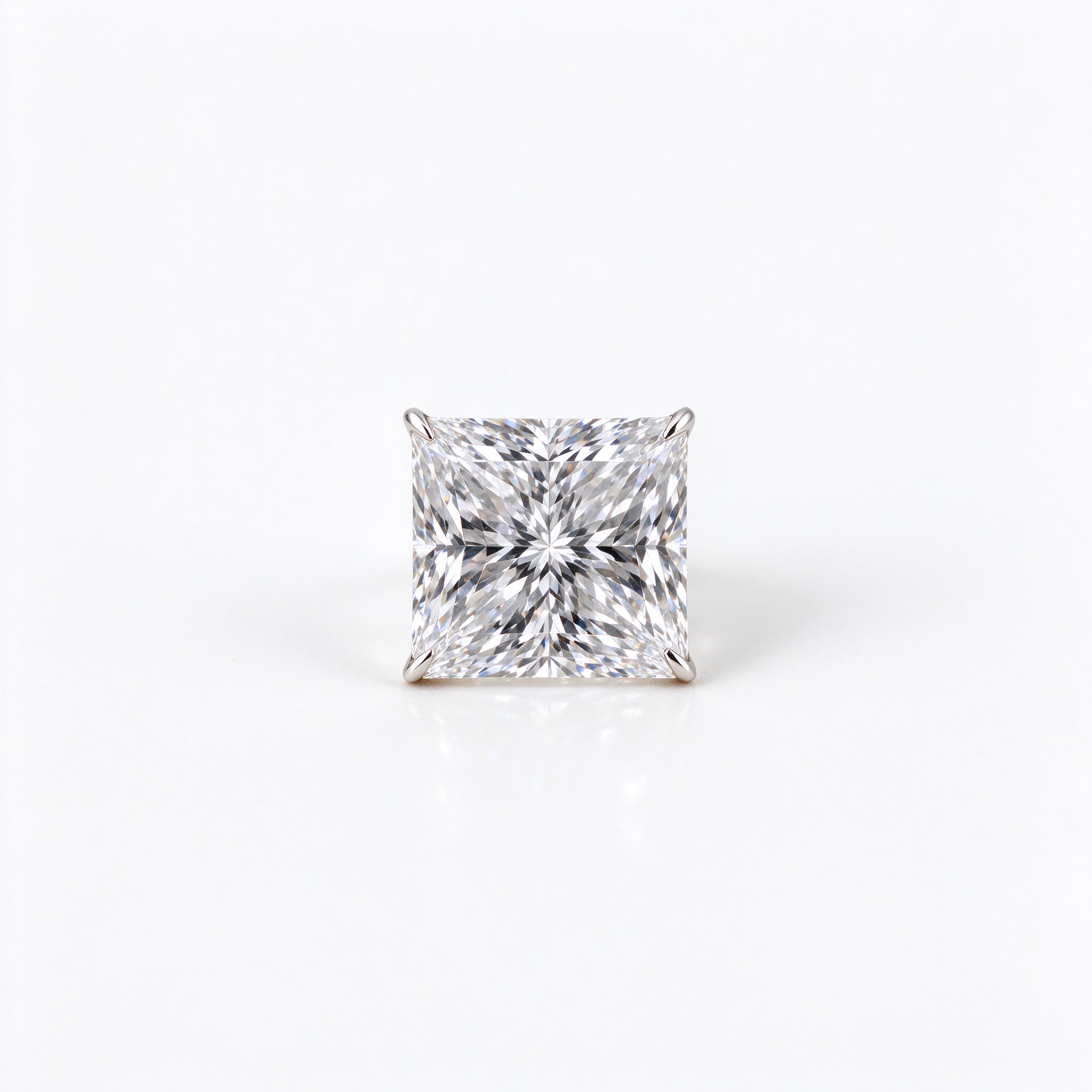
A jeweler in Zurich set a newly delivered princess-cut moissanite into a solitaire and, as the last prong tightened, a hairline crack ran off the corner into the girdle. The stone was only three days old. The cause was not a heavy hand; it was a girdle cut so thin that the princess corner had no material to grip. Girdle thickness is a spec most bulk buyers never check, and it is the reason stones come back cracked from the bench.
What the girdle does, and why thickness matters
The girdle is the widest edge of the stone—the rim between the crown and the pavilion. It is where the prongs grip, and it is the first point of contact when a stone is dropped or knocked. GIA's cut framework grades girdle from extremely thin to extremely thick, and the middle band is what setters want. A girdle that is too thin cracks or even chips when a prong is tightened. A girdle that is too thick leaves the stone sitting proud in the head, exposes the table to knocks, and wastes carat weight on a rim no one sees.
Moissanite is harder than most gems—about 9¼ on the Mohs scale—but it is also brittle along facet edges, and a thin girdle on a sharp-cornered cut like a princess or shield is the classic failure point. The durability guide covers where stones chip in normal wear; setting damage is the bench-side version of the same problem.
Specifications by shape
Girdle thickness interacts with cut style, so spec it per shape:
- Round brilliant: thin to slightly thick is standard and safe. Rounds have no corners, so a thin girdle is less dangerous than on angular cuts.
- Princess / square cuts: target slightly thick to medium. The sharp corners are the weakest point; a thin girdle here cracks under prong pressure, which is why corner protection in princess settings is a separate topic.
- Emerald / asscher step cuts: medium to slightly thick. Step-cut girdles are often left unpolished and can feel "sticky" in the head; a consistent thickness seats better.
- Oval / pear / marquise: thin to medium. Watch the tips—pear and marquise points chip easily if the girdle is paper-thin at the end.
When ordering bulk, ask for girdle thickness on the sheet, not just on the certificate. A lot can mix thin and medium stones; sorting them by girdle means you route the thinner ones to bezel or pavé settings, which grip the rim rather than pinch a corner, and reserve the sturdier girdles for solitaire prongs.
What to tell your retail customers
Setters appreciate a note that says which stones tolerate prong tightening and which need a bezel. A thin-girdle princess sold for a tight four-prong solitaire is a future crack; the same stone in a bezel or halo sits safely. Wholesale buyers who add this routing note reduce returns from the bench, and retail jewelers reorder from suppliers who save them cracked stones. The princess head requirements guide pairs with this for head selection.
Finally, never confuse a thick girdle with good value. Extra girdle material is carat weight the customer cannot see, and it raises the price per carat without raising the look. The sweet spot is the middle band: enough material to set safely, not so much that the stone sits high.
Frequently Asked Questions
What girdle thickness is safe for prong setting?
Thin to slightly thick on rounds and ovals; medium to slightly thick on angular cuts like princess, where corners crack. Extremely thin girdles should go into bezel or halo settings, not tight prongs.
Why do princess moissanite stones crack at the corners?
Princess corners are sharp points with little supporting material. When a prong is tightened against a thin girdle there, stress concentrates at the corner and runs a hairline fracture. Slightly thick girdles prevent this.
Does a thicker girdle mean a better, more valuable stone?
No. An extremely thick girdle hides carat weight in a rim no one sees, raises the per-carat price and leaves the stone sitting high in the head. The middle band is the value sweet spot.
Should I sort my bulk parcel by girdle thickness?
Yes. Route thinner-girdle stones to bezel, pavé and halo settings, and reserve medium-to-slightly-thick girdles for solitaire prongs. This routing note cuts bench-side cracks sharply.
How does girdle thickness affect the price per carat?
A thick girdle adds invisible carat weight, so you pay per carat for material hidden on the rim. Asking for the middle band keeps the visible-to-invisible weight ratio in your favor.
Request a girdle-sorted parcel: stones tagged thin / medium / thick on the packing sheet, with setting recommendations per stone, GRA-certified, shipped DDP in 5 business days. Open a wholesale account for sorted lots, or read the step-cut clarity guide before ordering angular shapes.