The first article in this series covered what the round brilliant is and how it sets. This one is for the buyer who has already decided to stock it and wants to know how much, which sizes, and when to reorder. Treating the round brilliant as an inventory line rather than a one-off purchase is the difference between a profitable moissanite program and a drawer of slow-moving stones.
The QC we run before a stone ships
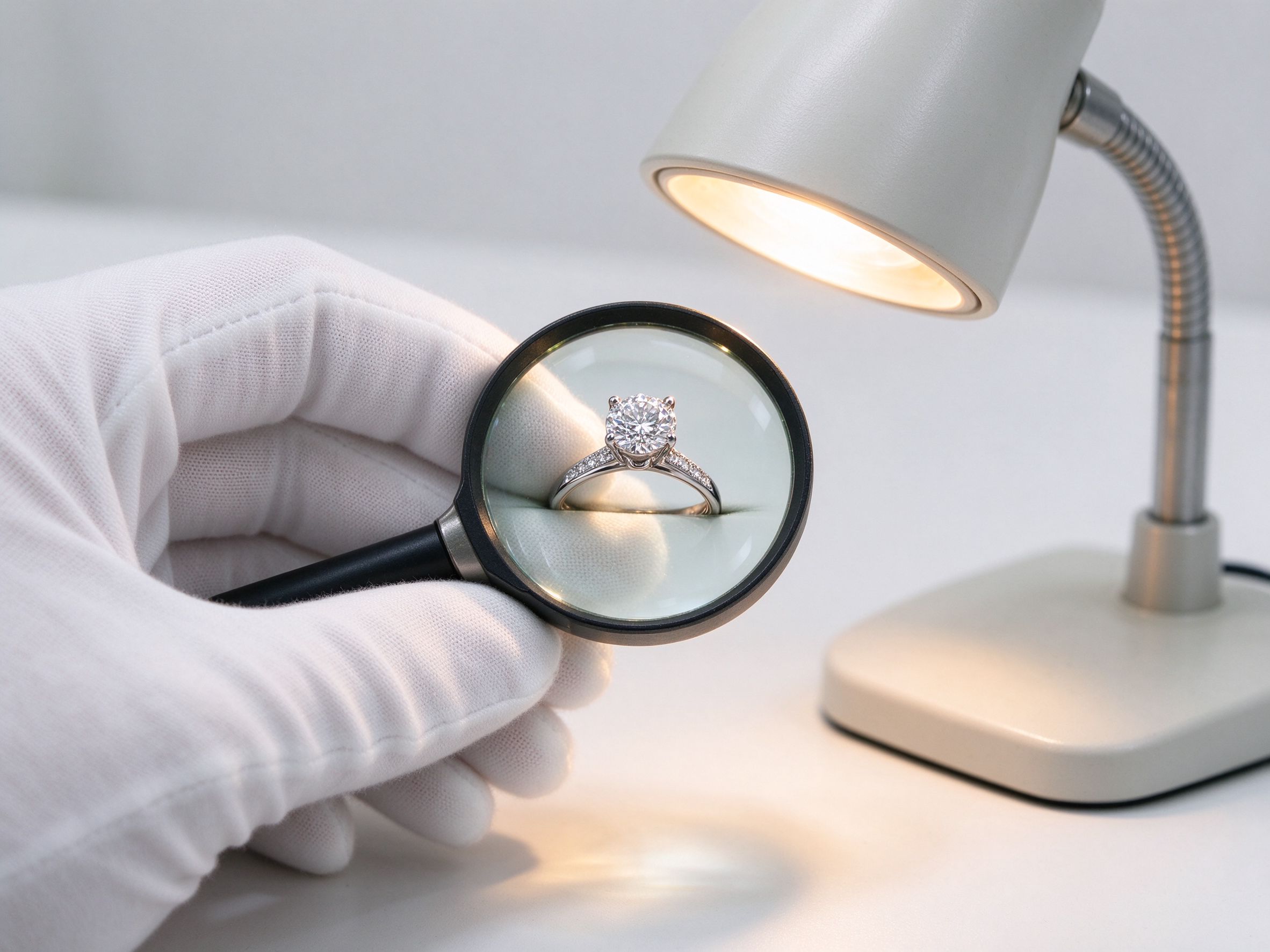
Every stock round goes through a four-step check: proportion measurement, face-up inspection under diffuse light, clarity and color grading against a master set, and laser inscription against the GRA certificate. Stones that fail the face-up check are not rebadged as VVS1; they move to a lower tier. The point for the wholesale buyer is that the certificate number on the girdle matches the paper, and a customer can verify it with a 10x loupe.
Which sizes to float
Not every mm size deserves equal stock. Demand concentrates hard at a few diameters.
| Diameter (mm) | Demand weight | Suggested float per 50-stone order | Wholesale cost band (USD) |
|---|---|---|---|
| 5.0 | low (accents) | 3 - 5 stones | $6 - $11 |
| 6.5 | highest (1ct solitaire) | 12 - 15 stones | $18 - $32 |
| 7.5 | high (1.5ct) | 8 - 10 stones | $32 - $52 |
| 8.0 | high (2ct) | 8 - 10 stones | $45 - $75 |
| 9.0 | medium (3ct, made-to-order) | 2 - 4 stones | $80 - $130 |
| 10.0+ | low, on demand | 0 - 1 stone | $140 - $220 |
Margin logic
Moissanite retail pricing is set relative to diamond, and the margin band follows the size. On 6.5mm stones, retail multiples of 3 to 4x wholesale are common; on 9mm and 10mm stones, multiples compress to 2 to 3x because the absolute price gives customers sticker shock. Plan the mix accordingly: the small stones carry the margin, the large stones carry the ticket size. A catalog that is all 8mm and 9mm stones will look impressive on the page but turn slower than one weighted toward 6.5 and 7.5.
Color and clarity mix
D-F color and VVS1 clarity are the stock grades and the grades the marketing writes itself around. We also carry EF and VS grades for budget-conscious lines, but they sell to a different customer. If you are opening a line, start with D-F VVS1 only; adding lower grades confuses the story and undercuts the premium positioning. Once the D-F line moves, add a budget tier as a separate SKU group rather than mixing it into the same tray.
Reorder rhythm
Round brilliant demand is steady, not seasonal, but it has two small spikes: engagement season (November through February) and proposal season around graduation (May and June). Reorder the 6.5mm size six to eight weeks before those spikes. The 5.0mm accent stones move with the halo-settings trend, which has been strong since 2022; keep a float of those for customers ordering halo mounts. Sizes above 9.0mm should generally be made to order rather than held, because the capital tied up in a single 10mm stone is large and the turnover is slow.
What goes wrong
The most common wholesale mistake is over-ordering large sizes because they look impressive in a sample tray. The second is ordering mixed ratios on fancy shapes and forgetting that rounds, too, vary in cut quality. Buy on a face-up photo or a short video, rather than on the certificate. A GRA certificate confirms color, clarity and weight; it does not show you whether the stone faces up bright. That check is on the supplier.
- Over-ordering large sizes because they look impressive in a sample tray.
- Ordering mixed ratios on fancy shapes without a face-up check.
- Skipping the face-up inspection and trusting the certificate alone.
Certificates and paperwork
Every stock round ships with a GRA certificate listing dimensions, color grade, clarity grade and carat equivalent. The girdle carries a laser inscription matching the certificate number, which lets an end customer verify the stone with a 10x loupe. Keep the certificate with the stone in transit; retail customers expect the paper when they buy. We do not rebadge certificates, and we recommend buyers avoid suppliers who cannot show a matching girdle inscription, because that is the easiest check a customer can do after purchase.
Packaging and transit
Stones ship in sealed grovets with the certificate tucked alongside. For orders above ten stones, we label each stone by diameter and color grade on the grovet so the retailer can sort on receipt without re-measuring. We recommend opening the order in good light and face-up checking each stone against the packing slip within 48 hours; any discrepancy is covered on replacement within that window.
Minimum order and reorder lead time
Stock rounds ship from the warehouse in five to seven working days for orders within the published size float. Sizes above 9mm, or orders outside the standard D-F VVS1 grade, run on a two to three week cutting cycle. Plan made-to-order reorders early, especially ahead of engagement season, when the cutting bench fills up.
Current round brilliant stock and sizing are in the loose stone catalog.