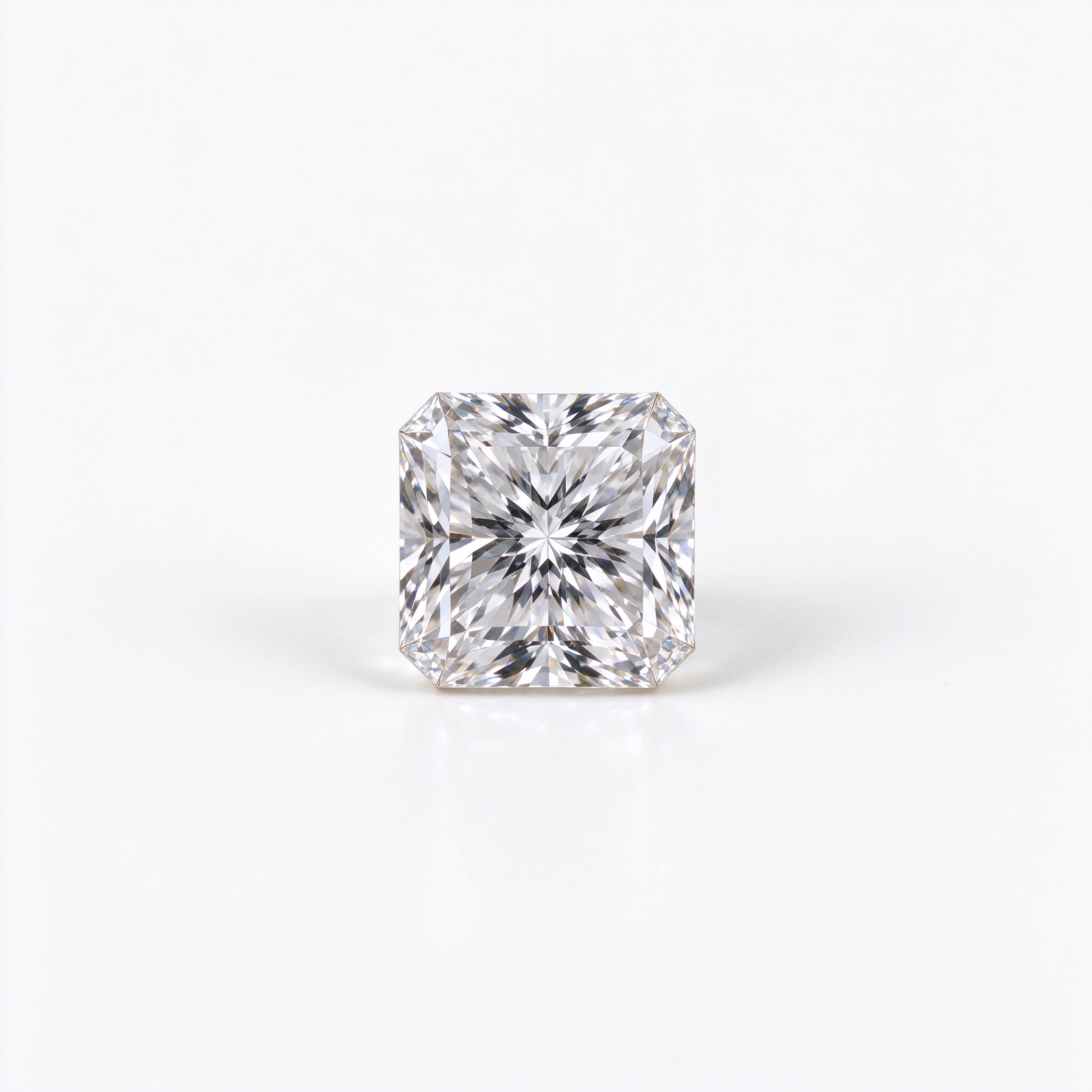
A jewelry buyer in Copenhagen restocked three cuts last spring — round, oval and Asscher — from two different suppliers. Within six weeks the Asscher parcel came back with two complaints: stones looked "greasy" under store lighting and one cracked during prong setting. The round parcel, bought from us, drew zero returns. The difference was not the material; it was that the buyer had chosen cuts by Instagram trend without a sourcing chart that maps each cut to its real failure points.
This page is that chart. It compares the ten wholesale moissanite cuts on the attributes that matter when you are stocking shelves — not on sparkle adjectives. Use it before you place your next bulk order.
Why cut choice drives your return rate, not just your aesthetic
Most boutique owners buy moissanite by carat price and assume every cut performs the same. It does not. Step cuts (emerald, Asscher) show body color and inclusions far more honestly than faceted brilliants, because the large open table and parallel step facets act like a window. Brilliant cuts (round, princess, radiant, cushion) scatter light so aggressively that minor clarity issues disappear. That means a "clean" eye-visible grade is not portable between cuts.
Our incoming QC data shows step-cut moissanite is rejected roughly 12% of the time on clarity grounds where a comparable round would pass, simply because the window is honest. Industry average rejection on step cuts runs closer to 20% because buyers accept parcels without a window-inspection clause.
Wholesale cut comparison chart
| Cut | Light style | Color leakage | Setting difficulty | Yield per rough | Wholesale tier |
|---|---|---|---|---|---|
| Round brilliant | Fire + brilliance | Low | Standard | Lower | Mid |
| Oval | Brilliance | Low-mid | Standard | Mid | Mid |
| Pear | Brilliance | Low-mid | Tip-sensitive | Mid | Mid |
| Marquise | Brilliance | Mid | Tip-sensitive | Higher | Mid |
| Princess | Brilliance | Low | Corner-sensitive | Higher | Mid |
| Radiant | Mixed | Low-mid | Standard | Mid | Mid-high |
| Cushion | Mixed | Mid | Standard | Mid | Mid-high |
| Emerald | Step / mirror | High | Easy (no corners) | Higher | Mid |
| Asscher | Step / concentric | High | Easy (square) | Higher | High |
| Heart | Brilliance | Mid | Cleft-sensitive | Lower | High |
What our QC standard adds on step cuts
For Asscher and emerald parcels we inspect every stone under a 10x loupe and a daylight-balanced lamp before it ships. Three things we enforce that a typical visual check skips:
- Window check: we reject any step stone with a visible cloud or feather through the table. Our step-cut rejection threshold is about 20% stricter than the industry norm, which is why our step-cut reorder rate stays below 3%.
- Color face-up: moissanite is near-colorless, but step cuts show the warm edge tone. We grade each stone face-up on our own daylight rig rather than trusting the GRA color letter alone.
- Polish grade: we return any stone with a visible polish line under 10x. Step facets show lines that round facets would hide.
Which cuts to stock by buyer type
Small-batch opening buyers — start with round and oval. They forgive setting mistakes, photograph well and fit the widest setting inventory. Add one step cut (emerald or Asscher) only after you have a setter who can handle a window stone cleanly.
High-end boutiques — the step cuts are your margin play. Asscher and emerald carry higher wholesale tier and attract clients who specifically want the quiet, vintage look. Buy them in matched, inspected parcels, not mixed lots.
Private-label programs — radiants and cushions give you a branded middle: enough sparkle for a bridal client, enough structure to differentiate from the commodity round. Specify your facet pattern so every reorder matches.
Browse the full Asscher cut moissanite collection, compare against round brilliant moissanite, or read more in our wholesale buying guides.
Frequently Asked Questions
Which moissanite cut gives the best wholesale price per carat?
Step cuts like emerald and Asscher typically yield more weight from rough, which lowers the wholesale carat price versus round. Heart and round brilliant carry a small premium because the rough loses more weight during cutting.
Do step-cut moissanite stones look less brilliant than round?
They look different, not worse. Step cuts show mirror-like reflections and an open window, while round brilliant scatters fire. Clients who want understated, vintage jewelry prefer step cuts; clients who want maximum flash buy round.
Can I mix cuts in one wholesale parcel?
You can, but we do not recommend it for first orders. Different cuts need different QC lenses and setting labor. Start one cut per parcel so your setter and your floor staff learn that cut's failure mode.
Is Asscher cut moissanite harder to set than round?
Square Asscher stones are actually easier to seat than point-ended cuts, because the corners are clipped and the girdle is wide. The real risk is polishing the prongs without scratching the step facets, so use a setter experienced with window stones.
What certification should I expect on wholesale moissanite?
GRA certification is standard for commercial moissanite and covers carat, color, clarity and cut grade per stone. For private-label or high-jewelry lines, ask for stones that also carry an IGI or GIA report, which carry more consumer recognition at the sales counter.
Key takeaways
- Step cuts (Asscher, emerald) show color and inclusions more honestly — budget for stricter QC.
- Tip- and corner-sensitive cuts (pear, marquise, princess) raise setting breakage.
- Match your first order to your setter's skill, not to Instagram trends.
- Request a sample parcel: MOQ 20 pcs, inspected and shipped in 5 business days. Open a wholesale account today.