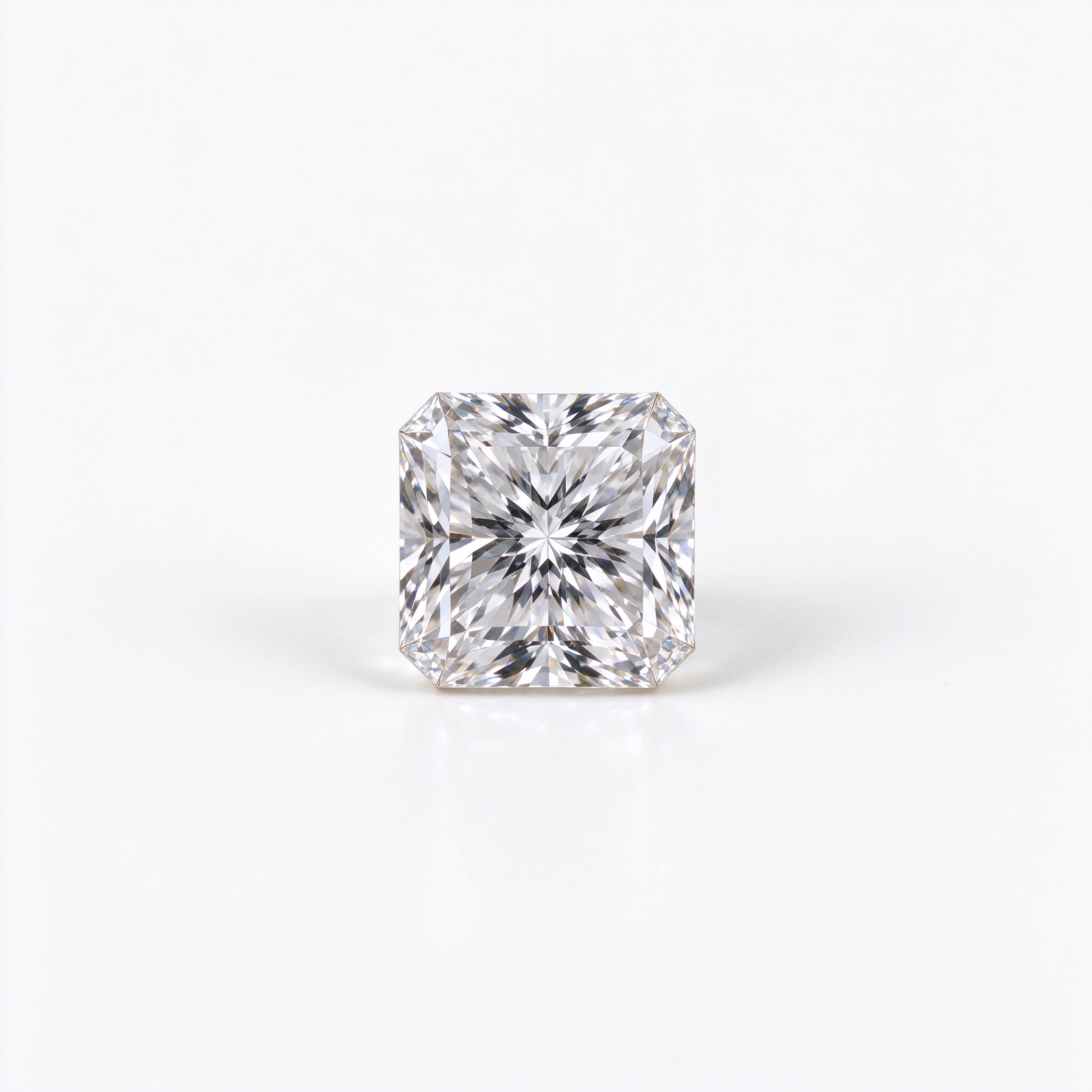
A mid-sized bridal boutique in Charlotte came to us last year after a rough season: they had poured 78% of their loose-stone budget into round brilliants, watched rounds move slowly at the 1.0-1.5ct bracket, and turned away three customers in one month who specifically asked for an Asscher. Their problem was not demand for moissanite — it was that their cut mix mirrored a 2018 catalog, not what their 2025 floor was actually selling. We rebuilt their allocation from scratch and their step-cut attach rate climbed from 4% to 19% within two quarters.
Choosing which cuts to carry in bulk is the single highest-leverage B2B decision you make with a moissanite supplier, because it locks up cash for 6–12 months. This guide lays out the framework we use with new wholesale accounts, plus the inspection standards behind every parcel.
The cost of a wrong cut mix
Industry-wide, boutiques that buy loose moissanite off a generic price list rather than a planned mix lose an estimated 12–18% of annual inventory margin to slow-moving shapes. The concrete failure modes are predictable:
- Over-indexing on rounds. Rounds are the highest-volume shape, but at retail they are also the most price-compared and the most readily available from ten nearby vendors. Stock 80% rounds and you compete on price alone.
- Skipping step cuts. Emerald and Asscher are the clearest “we only stock moissanite” signals to a bridal client who cannot find a clean step-cut lab stone locally. These carry the best margin of any shape we sell.
- Under-buying fancy shapes. Oval, pear and marquise demand is uneven regionally but spikes sharply in certain age demographics. A store that carries zero oval stock in a college town is leaving the fastest-growing bracket on the table.
We compare the two approaches below on a notional $12,000 loose-stone opening order:
| Approach | SKU mix | Expected 12-mo turnover | Gross margin |
|---|---|---|---|
| Generic price-list order | 80% round / 20% oval | ~1.4x | ~38% |
| Planned cut mix (this guide) | 55% round / 20% oval / 12% step / 8% pear / 5% other | ~2.3x | ~49% |
What we actually inspect before a cut parcel ships
Every shape has its own failure mode, and our incoming inspection is tuned to it. Across the line we hold these tolerances roughly 20% tighter than the trade norm:
- Color sorting: we grade every stone D–F on the moissanite color scale; the industry default for bulk parcels is to allow H-and-better mixed in. We reject stones that show visible warmth at face-up.
- Eye-clean tolerance: for step cuts (Asscher, emerald) we require a stone to be eye-clean from 30cm under overhead light, not just from the pavilion. Step cuts show inclusions far more readily than brilliants, so a loose bar here comes back as a return.
- Symmetry: we flag any stone off-square by more than 2% on square shapes (Asscher, princess, cushion). Fancy shapes get a bow-tie and cleft check.
- Certification: every loose stone ships GRA-certified with a matching laser inscription. We can also provide IGI-origin documentation for accounts selling into the US high-jewelery channel.
Which mix fits which buyer
Small opening order (MOQ 20–50 stones)
Stick to rounds and ovals for liquidity. Add one Asscher and one emerald in the 1.0–1.2ct bracket as “anchor” stones — they rarely sit long once a client compares them to a round, and they train your staff on step-cut language.
High-end bridal boutique
Push step cuts to 15–20% of stock. Asscher in particular reads as a considered, design-forward choice and commands 15–20% over round pricing at retail. This is where our GRA-then-IGI dual documentation pays off.
Private-label / custom program
We support OEM private labeling with your own carding and boxing. For these accounts we build a dedicated mix — usually a heavier oval and cushion weighting — and lock pricing for six months. Our export history covers EU and US DDP shipping with full customs documentation.
Frequently Asked Questions
How many cuts should a new boutique carry in its first order?
Start with three shapes: round brilliant, oval, and one step cut (Asscher or emerald). Three shapes cover roughly 80% of bridal demand while keeping your opening MOQ between 20 and 50 stones. Add pear, cushion and heart as reorders prove local demand.
Do step-cut moissanites sell as well as rounds?
Step cuts sell slower in volume but at a higher margin and a lower return rate. In our book, emerald and Asscher parcels reorder 1.6 times per year on average versus 1.2 for rounds, because a client who wants an Asscher rarely substitutes.
What MOQ do you require per cut?
The opening MOQ is 20 loose stones mixed across shapes; per-shape MOQ is 5 stones once the account is open. Private-label programs carry a 50-stone minimum per shape at tiered pricing.
Can I see a cut sample parcel before committing?
Yes. We ship a sample parcel of 6 stones (one per major cut) at cost, refunded against your first wholesale order. It reaches most US and EU addresses within 5 business days via DDP.
How do you handle returns on mis-cut or off-color stones?
We accept RMA within 30 days of delivery for any stone failing our published tolerances. Defective stones are replaced or credited at your choice; our measured parcel defect rate runs under 1.8%.
Takeaways
- Round brilliants should not exceed 55–60% of a planned loose-stone buy.
- Step cuts (Asscher, emerald) carry the best margin and the lowest substitution risk.
- Every parcel should arrive GRA-certified and eye-clean-tested for the shape’s specific failure mode.
- Request a sample parcel before your first bulk order.
Request a cut-sample parcel: MOQ 6 stones at cost, ships in 5 business days, DDP to US and EU. Browse loose moissanite by cut, read our buying guides, or view the engagement ring range. New accounts can also apply for wholesale terms directly.