Marquise Cut Bulk Supplier: MOQ and SKU planning
Understanding MOQ for Marquise Bulk Orders When you first browse our marquise cut bulk catalogue, the minimum order quantity (MOQ)…
Buyers often ask about bands with a single number in mind — a price, a size, a delivery date. In practice those three are tied together: the MOQ changes the unit price, the specification changes the bench time, and the finish changes how long the piece lasts in the hand. We lay those connections out here so the first conversation with a factory starts from the same set of facts.
A stock size run covers the middle of the market; extreme sizes are usually made to order. If you are planning a first buy, start with the size range that sells through fastest for your customer base and add the outer sizes only once the repeat pattern is clear. Half sizes on stock pieces are often adjusted on the bench rather than recast, which is worth asking about before you assume a recast lead time.
Band width and chain weight change how a size feels. A wide band fits tighter than a thin one at the same number, and a heavy chain sits differently on the neck than a light one. When you list the piece online, state the width and the weight along with the size so the customer chooses against the actual fit, not against the photograph.
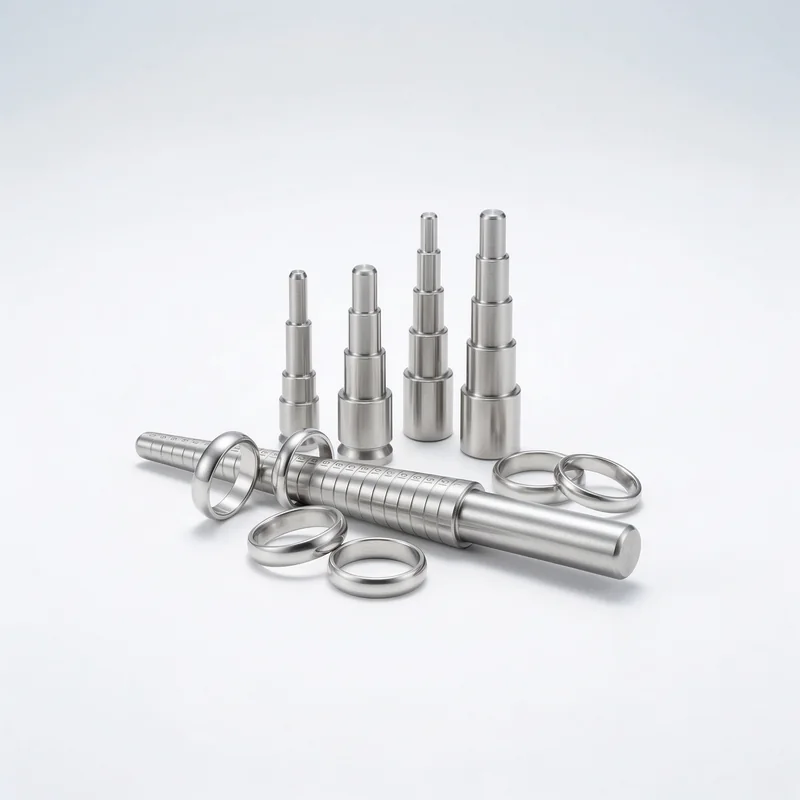
Fit problems are the most avoidable return reason in jewelry. A size chart that only lists the US number is not enough; the buyer needs the millimeter inner diameter, because size conventions differ between factories. For rings, measure the finger at the end of the day and account for knuckle width; for chains and bracelets, record the resting measurement rather than the wrist skin measurement.
Mixing the range on the first order is a judgment call. A small number of proven designs at a workable MOQ gives the bench less to set up and the buyer fewer decisions to defend if something underperforms. Reserve the experimental finishes and newer shapes for a later batch, once the core of the catalog has proved itself with your customers.
Payment and sample terms should be settled before production starts. A sample order, the approved spec sheet, and the deposit schedule are the three documents that keep a bulk run from becoming a negotiation halfway through. If a supplier is vague on which of these are written down, that vagueness usually repeats on delivery day.
| Reference | Specification | MOQ | Unit range |
|---|---|---|---|
| Lab Grown Diamond Earrings — GRA | 925 Sterling Silver · D | 10 | on request |
| Lab Grown Diamond Rings — GRA | 925 Sterling Silver · D | 10 | on request |
| 1ct Round Moissanite Ring D Color VVS1 925 Sterling | 925 Sterling Silver · 1.00 ct · D | 10 | on request |
| Emerald Lab Grown Diamond Earrings — GRA | 925 Sterling Silver · D | 10 | on request |
| Emerald Lab Grown Diamond Rings | 925 Sterling Silver · D | 10 | on request |
Ranges reflect current factory pricing for this catalog and move with metal and stone costs; treat them as planning figures and confirm against a written quotation.
A buyer who asks for the sample, the spec sheet and the certificate first usually places the cleaner reorder. The supplier that resists those three before the first deposit is telling you something useful already.
If you are putting together a first run in this category, start with the stock silhouettes, keep the size run standard, and let the sell-through decide where the next batch expands. That approach protects margin better than chasing the widest catalog on day one.
Start with the middle sizes that sell through fastest for your customer base; add extreme sizes once the repeat pattern is clear. Ask whether half sizes are adjusted on the bench or need a recast before you plan the lead time.
Use the millimeter inner diameter alongside the US number, because size conventions differ between factories. Measure at the end of the day and account for knuckle width on rings; for bracelets and chains record the resting measurement.
Yes. A sample from stock lets you judge weight, finish and communication before the bulk run; compare it against the spec sheet and keep arrival photos for the later comparison.
Read Moissanite Trade Show Guide: What to Bring and How to for the deeper walk-through.
Read Round Brilliant Moissanite Ring Styles That Sell for the deeper walk-through.
MOQ is 1 stone for samples. Bulk orders are priced by quantity tier; send your cut, carat, color and clarity requirements and we will return a wholesale quotation.
Sample stones ship within 7-14 days. Bulk production lead time is 15-25 days after deposit confirmation; international delivery after dispatch typically takes 3-10 business days depending on destination.
Prices are quoted per carat in US dollars with tiered wholesale pricing. We accept T/T (30% deposit, balance before shipment), PayPal and Western Union for sample and small orders.
Looking for loose stones or a custom cut? Talk to the factory directly.
Send InquiryWritten by the Holycome manufacturing & quality team. Every figure and claim in this article comes from our own production floor in Wuzhou, China — in-house casting, stone setting and a three-pass quality inspection we have run since 2008.
Materials are tested for nickel, lead and cadmium release by SGS and CTT International; moissanite centre stones ship with their GRA warranty card and report. We also hold an independent SMETA / Sedex ethical-trade audit and a Hong Kong Customs AML registration.
Reviewed for accuracy by our quality team before publication. Last updated .
Written by the Holycome manufacturing & quality team. Every figure and claim in this article comes from our own production floor in Wuzhou, China — in-house casting, stone setting and a three-pass quality inspection we have run since 2008.
Materials are tested for nickel, lead and cadmium release by SGS and CTT International; moissanite centre stones ship with their GRA warranty card and report. We also hold an independent SMETA / Sedex ethical-trade audit and a Hong Kong Customs AML registration.
Reviewed for accuracy by our quality team before publication. Last updated .
Understanding MOQ for Marquise Bulk Orders When you first browse our marquise cut bulk catalogue, the minimum order quantity (MOQ)…

Why a Marquise Cut Factory Direct Edge Beats Trading Companies When you buy marquise cut stones from a factory like HolyCome, you …

What Comes First: Incoming Stone Inspection The first checkpoint is the incoming stone check. Every marquise cut, whether a single…

Why Plating Thickness Matters for Marquise Cut OEM When you order marquise cut pieces, the silver or gold plating thickness is a k…

Understanding Stone Setting Durability for Marquise Cut Stones When you’re sourcing marquise cut gems wholesale, the durability of…