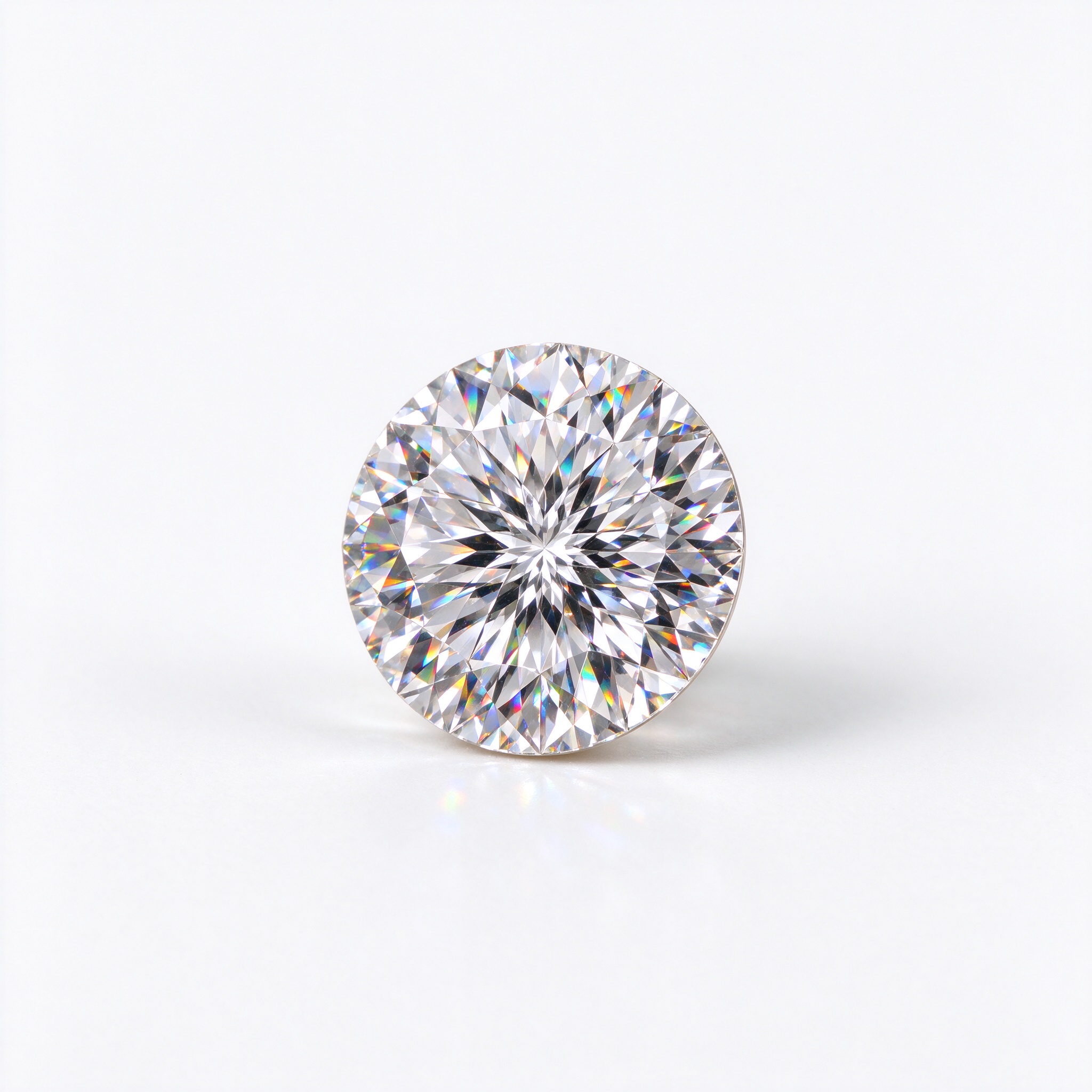
The round brilliant is the default engagement-ring shape for a reason: it is the easiest shape to set, the most forgiving across hand shapes, and the one buyers already trust. But not every round brilliant moissanite ring style sells equally well. After years of packing orders for jewelers in North America, Europe and the Middle East, we have a clear picture of which settings move and which sit on the shelf. This guide walks through the styles worth stocking and the pitfalls to avoid.
1. The classic solitaire
A clean solitaire on a plain band is still the volume king. One round stone, four or six prongs, no fuss. It lets the cutter's work do the talking, and because the stone is round, it looks the same from every angle. For moissanite we recommend a four-prong solitaire in platinum or white gold for D-F color stones, since it maximizes the bright face-up look. Retailers who start here usually reorder 1ct and 2ct rounds like our 1ct round and 2ct round first.
2. The halo setting
A halo puts a ring of small stones around the center, which makes a 1ct center look like a 1.5ct. Round moissanite is the best halo center because its symmetry reads perfectly inside a round halo. The risk: an over-sized halo on a small stone can look costume-y. We tell our retail partners to keep the halo proportionate to the center, roughly 0.5mm of extra diameter around it. This is one of the fastest-growing requests we see on the custom cut inquiry line.
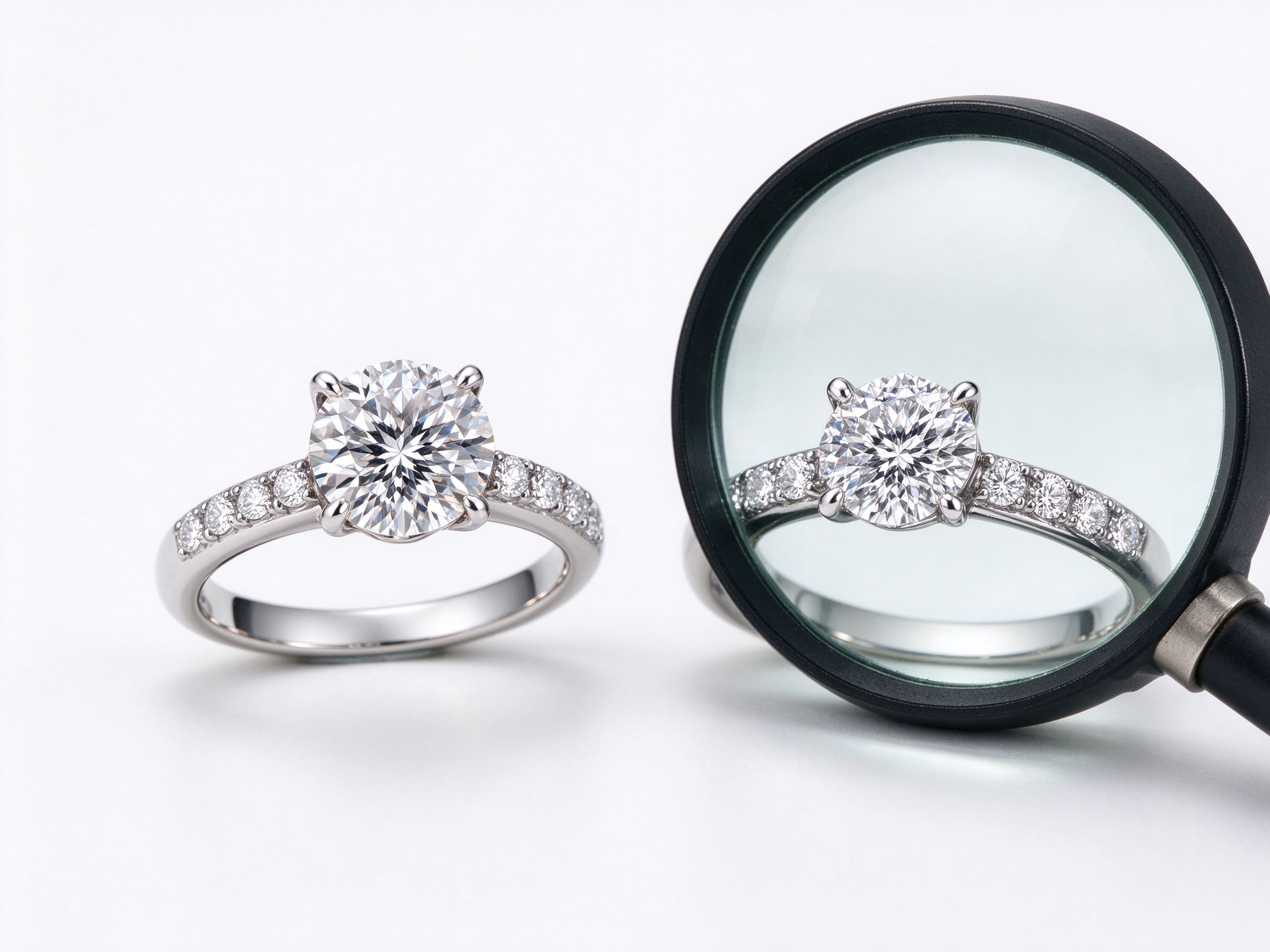
3. Three-stone and side-stone rings
Round centers pair naturally with tapered baguettes or smaller rounds as side stones. The round's even sparkle balances the geometry of step-cut sides. If you are building a three-stone line, order the center and sides from the same production batch so the color temperature matches; mixing batches can show a subtle difference face-up.
4. Eternity and band work
Round moissanite is the standard for eternity bands because it spaces evenly around a curved finger. We cut matched sets in the same diameter to within 0.02mm so the band sits flat. For band work, VVS clarity is usually overkill; VS2 is eye-clean and improves your margin. See our complete cut guide for how rounds compare with other shapes.
5. Vintage and bezel settings
Round stones also sit beautifully in a bezel, which is the safest setting for everyday wear. The one caveat: a bezel covers the girdle, so a deep-proportioned round will look even deeper and can peek out the bottom. If you supply stones for bezels, tell us the setting depth so we can select a stone that sits flush.
Metal and color pairing
D-F color rounds on white gold or platinum read icy and modern. F-G on rose or yellow gold reads warm and bridal, and the slight warmth is actually flattering in colored metal. We rarely recommend below G for round center stones because the round's bright face-up look makes any body color obvious. For a fuller breakdown, read our guide to D, E and F color grading.
What to stock as a new retailer
If you are launching a moissanite line, start with the solitaire and halo in 1ct and 2ct D-F rounds. Those four SKUs cover the majority of engagement-ring demand. Add studs and a 2mm eternity band as fast movers. Avoid loading up on unusual shapes until your customer profile is clear. Our wholesale process and MOQ tiers are explained in the guides index.
Quick FAQ
Do rounds sell better than ovals? Rounds sell in higher volume; ovals sell at a higher perceived value. Most retailers carry both.
What clarity for a solitaire? VVS for solitaire rings where clients will loupe the center; VS is fine for halos where the center is smaller in the frame.
Can you cut matched side stones? Yes. Send us the center stone specs and we will match color, clarity and diameter within tolerance.
Pairing rounds with side stones and accents
Round centers are the most flexible shape for side-stone work. A round pairs equally well with tapered baguettes, pear sides, or smaller rounds. The key is to keep the color temperature consistent. If your center is D-F, order the side stones from the same production batch so they do not drift into a warmer tone. We cut matched side-stone sets on request; tell us the center carat and the design and we will source matching rounds. This is how our retail partners build three-stone and halo pieces that look seamless.
Band widths and proportions
The band width changes how a round solitaire reads. A slim 1.8mm band makes a 1ct round look larger and more delicate. A 2.5mm cathedral band reads more substantial and bridal. For solitaire work we usually recommend a band that is about half the diameter of the stone; anything thicker starts to compete. If your customer has slender fingers, go slimmer; if they like a bold look, the cathedral carries it. We explain mm sizing in the size chart article.
Restocking logic for a round line
Rounds turn over predictably, so restock them on a schedule rather than waiting until stock runs out. The 1ct and 2ct D-F solitaires are your anchors. Keep a small buffer of studs (4mm to 6mm rounds) and a half-eternity band. Avoid overstocking unusual carats that do not move. Our MOQ tier structure, covered in MOQ tier pricing, lets you keep the anchor SKUs stocked without tying up too much cash. When you are ready to expand beyond rounds, the cut guide shows the next shapes to add.
Building a round-stone inventory that turns
The most common inventory mistake we see is stocking too many unusual carats and not enough anchors. Rounds sell in predictable sizes: 0.5ct studs, 1ct solitaires, 2ct statement rings, and 2 to 3mm band stones. Keep those in stock and you cover most demand. Unusual sizes can be ordered to order. This keeps your cash flowing and avoids dead stock. Our inventory guide explains the reorder logic.
How rounds simplify your bench
For a jewelry bench, rounds are the easiest stone to set. Even prongs, predictable girdle, no orientation to worry about. This reduces setting time and errors, which lowers your cost per piece. When you are launching a new line, starting with rounds de-risks production. Once the round line runs smoothly, add oval and fancy shapes. This staged approach is what most successful new buyers do, as we describe in the buying process guide.