Few gem shapes carry as much personality as the asscher. It looks like a piece of architecture: a square step cut with a small table and concentric tiers of facets stacked like a ziggurat. It is the stone of the 1920s, of art-deco skylines and jeweled cocktail rings. Understanding its geometry helps you sell it to the exact customer who will love it. This is the asscher cut explained.
What makes an asscher an asscher
The asscher is a square emerald cut. Like the emerald, it uses step facets: long, parallel, mirror-like planes rather than the burst of a brilliant. But where the emerald is rectangular and open, the asscher is square and steeply crowned. Its crown is a stepped pyramid, so the facets recede inward in concentric squares. Look straight down and you see a tunnel of reflective squares. That optical depth is the asscher's signature.
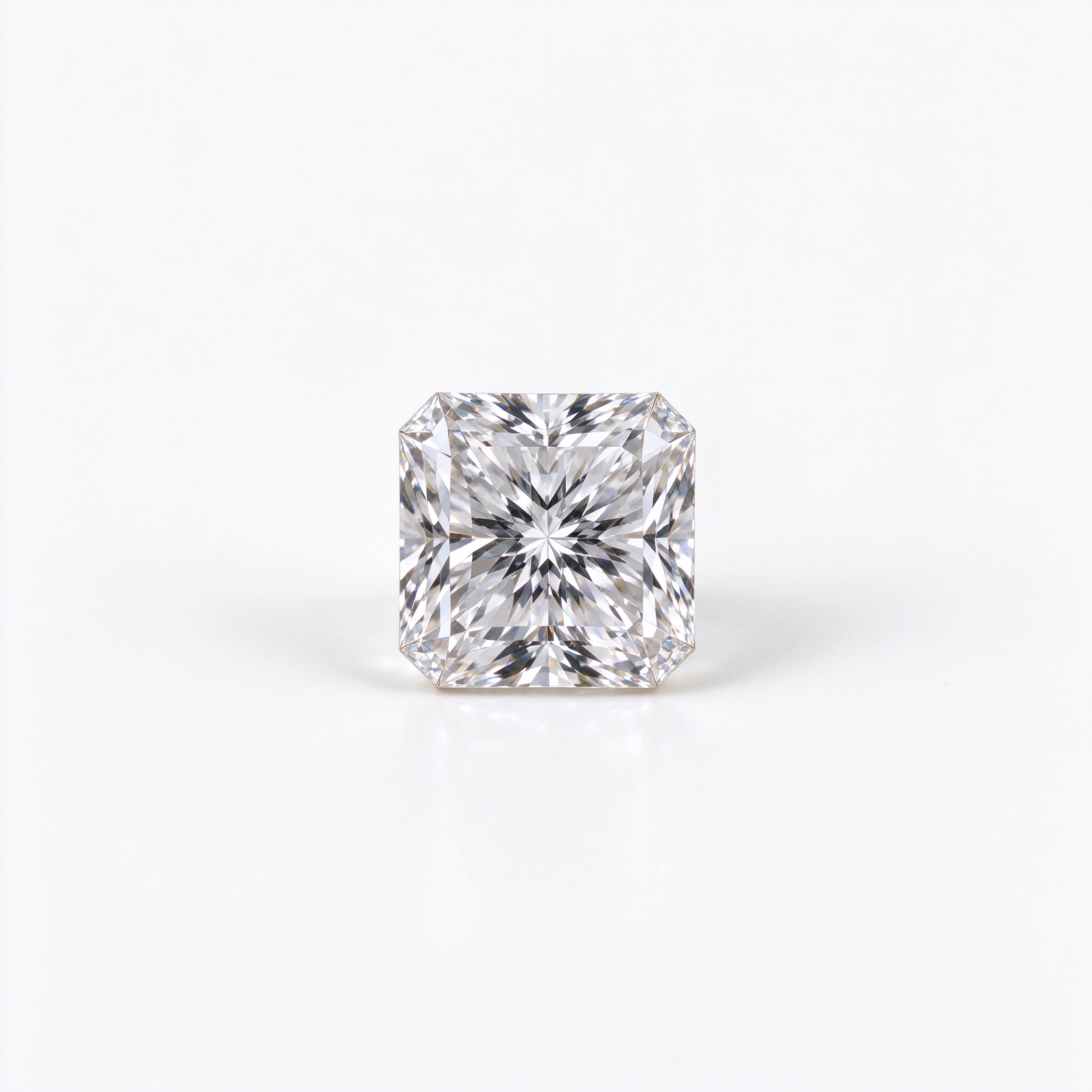
Why it reads expensive
The asscher does not sparkle loudly. It glows quietly and geometrically. That restraint reads expensive to clients who know design. It is the choice of buyers who want something "understated but unmistakably luxury." Because it is less common than a round, it also signals that the wearer chose deliberately rather than following a trend.
Clarity and color: the step-cut standard
Like all step cuts, the asscher's open facets reveal inclusions. We ship asschers in VVS so the concentric tunnel stays perfectly clear. Color also reads through the small table; D-F is recommended for white metal. Our step-cut clarity guide explains why this matters, and it applies fully to asscher.
How we cut and QC it
The stepped pyramid must be symmetric: each concentric square aligned to the last. If the facets are off, the tunnel look breaks and the stone looks lopsided. Our QC team checks the asscher under a scope for facet symmetry before approval. This hand-finishing is why asscher sits at a premium over simpler shapes. Compare it to its rectangular cousin in our asscher vs emerald comparison.
Who buys the asscher
Asscher buyers are usually design-aware: they love 1920s architecture, they own vintage pieces, they want something nobody else at the office will have. It is a high-margin, low-volume shape, perfect for a boutique that positions itself as curated. Stock a clean 1ct and 2ct, like our 1ct asscher and 2ct asscher, and let the geometry sell itself in the asscher collection.
Settings that suit it
The asscher pairs with deco settings: millgrain, filigree, geometric halos, platinum. A plain solitaire also works and lets the stone's geometry lead. Because the corners are cropped, chip risk is lower than a princess. It is a shape that rewards a thoughtful mounting rather than a trendy one.
Quick FAQ
Does the asscher sparkle? It sparkles quietly, in flashes, rather than in a constant burst. That is the appeal.
Is it good for everyday wear? Yes, with cropped corners and a solid setting.
What size reads best? 1ct upward, where the concentric facets are clearly visible.
Why symmetry makes the asscher
The asscher's concentric facets only work if they are perfectly centered. Even a slight misalignment breaks the tunnel effect and the stone looks ordinary. This is why we hand-finish and inspect every asscher under a scope. Under the scope you should see clean, concentric squares receding to the culet. If they look crooked, the stone is rejected. This attention is the difference between a real deco asscher and a square emerald cut with extra facets.
Clarity is non-negotiable
Because the asscher's table looks deep and clear, any inclusion is visible. We ship asschers in VVS so the concentric tunnel stays perfectly clean. This is the same standard we apply to emerald cuts, explained in the step-cut clarity guide. Customers who choose the asscher are design-aware; they will notice a cloud. Worth the small VVS premium.
How to merchandise the asscher
The asscher is a conversation piece. Display it next to vintage reference images. Tell the customer it is a 1920s deco shape. It sells to people who want something nobody else has. Stock the 1ct asscher and 2ct asscher, and show them in the asscher category. Compare it with the rectangular step cut in our comparison.
Why the asscher is a conversation piece
Customers rarely walk in asking for an asscher by name, but once they see it, it often becomes the choice. The concentric facets are distinctive. It signals taste. That makes it a high-margin, low-volume shape for a curated boutique. Display it with deco reference imagery. It attracts clients who want something nobody else has. See the asscher range.
Grading symmetry on arrival
When asscher stones arrive, look straight down: the concentric squares should be centered and even. If they look crooked, the stone is off. This is the key check. We QC every asscher under a scope, but verify samples yourself. The 1ct asscher is the display piece to start with.
Displaying the asscher
Show the asscher next to deco reference imagery. Its concentric facets speak for themselves. Customers who want distinctive design will stop at it. Stock one 1ct as a signature piece. Inspect the concentric symmetry on arrival. See the asscher range.
Marketing the asscher as a signature piece
The asscher is not a volume shape, but it is a signature. Display it as a design piece and it attracts customers who want something distinctive. These buyers are often less price-sensitive because they are seeking a specific deco look. Even one asscher in your case can pull in clients who then buy other pieces. It is a long-term, low-investment addition to a curated store.
When ordering, insist on VVS clarity so the concentric tunnel stays clear. Inspect the symmetry on arrival. We cut and QC every asscher under magnification. See the 1ct asscher as your display piece, and compare it with the emerald in our guide.
Adding an asscher to your case
A single asscher as a signature piece attracts design-aware customers. Inspect the concentric facets on arrival. Choose VVS so the tunnel stays clear. It is low-volume but high-margin. Start with the 1ct asscher and display it with deco reference imagery on the asscher page.