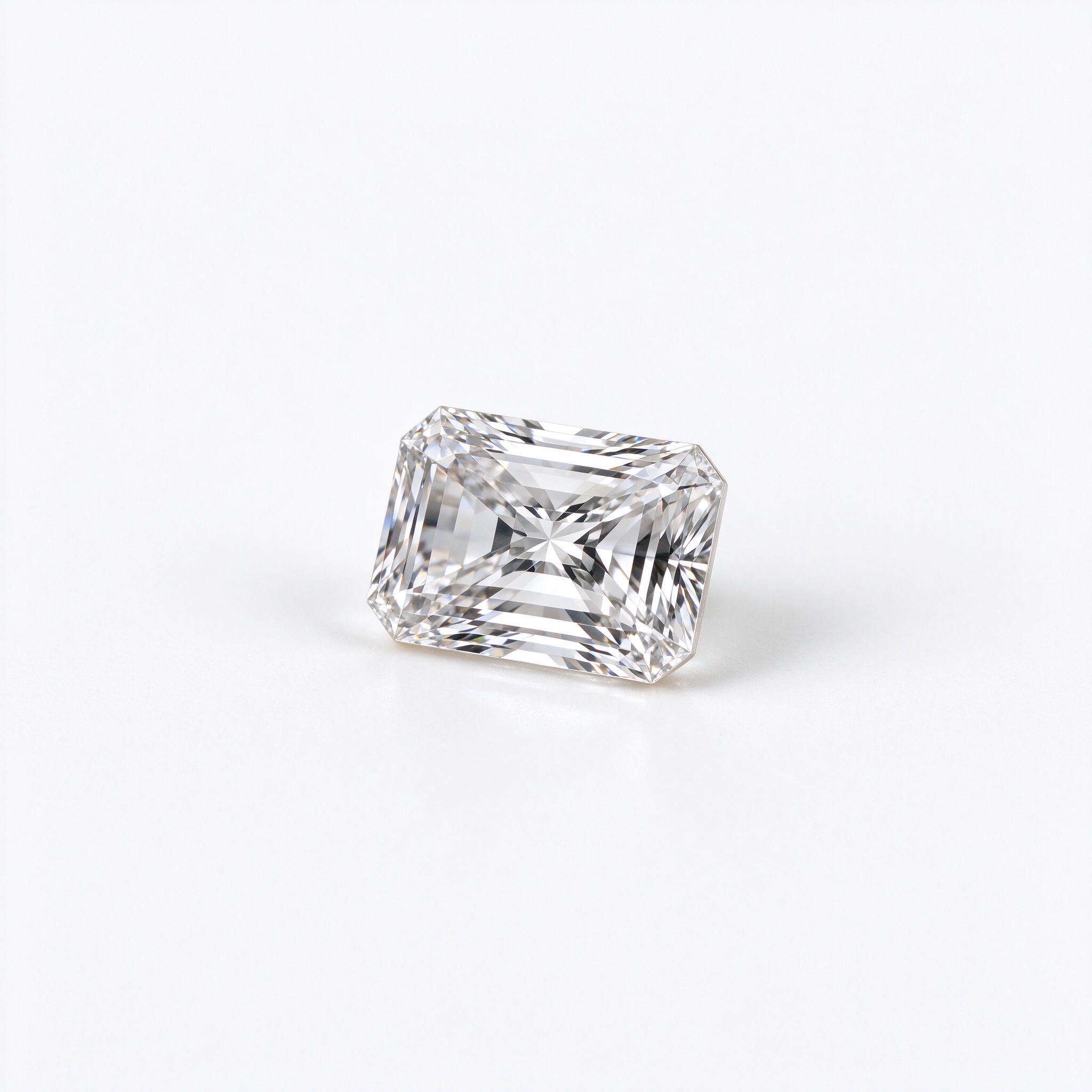
If you look at an emerald cut moissanite and it looks quiet, architectural, almost glass-like, that is the point. Step cuts trade the burst of sparkle for long, open facets that read like a hall of mirrors. But that open window is a trade-off: it hides nothing. In a brilliant cut, tiny inclusions get lost in the fire. In an emerald cut, the same inclusion stares back at you. This is why clarity matters more for emerald cut moissanite than for almost any other shape.
Why step cuts reveal inclusions
A brilliant cut bounces light in a hundred directions across many small facets. An emerald cut uses a few large, parallel facets. The eye sees straight through the open table and down the pavilion. Any cloud, feather, or dark crystal shows up as a visible mark in that clear window. This is true for diamond emerald cuts and even more true for moissanite, because moissanite is eye-clean to begin with, so the standard is simply "is it perfectly clean."
What clarity to buy
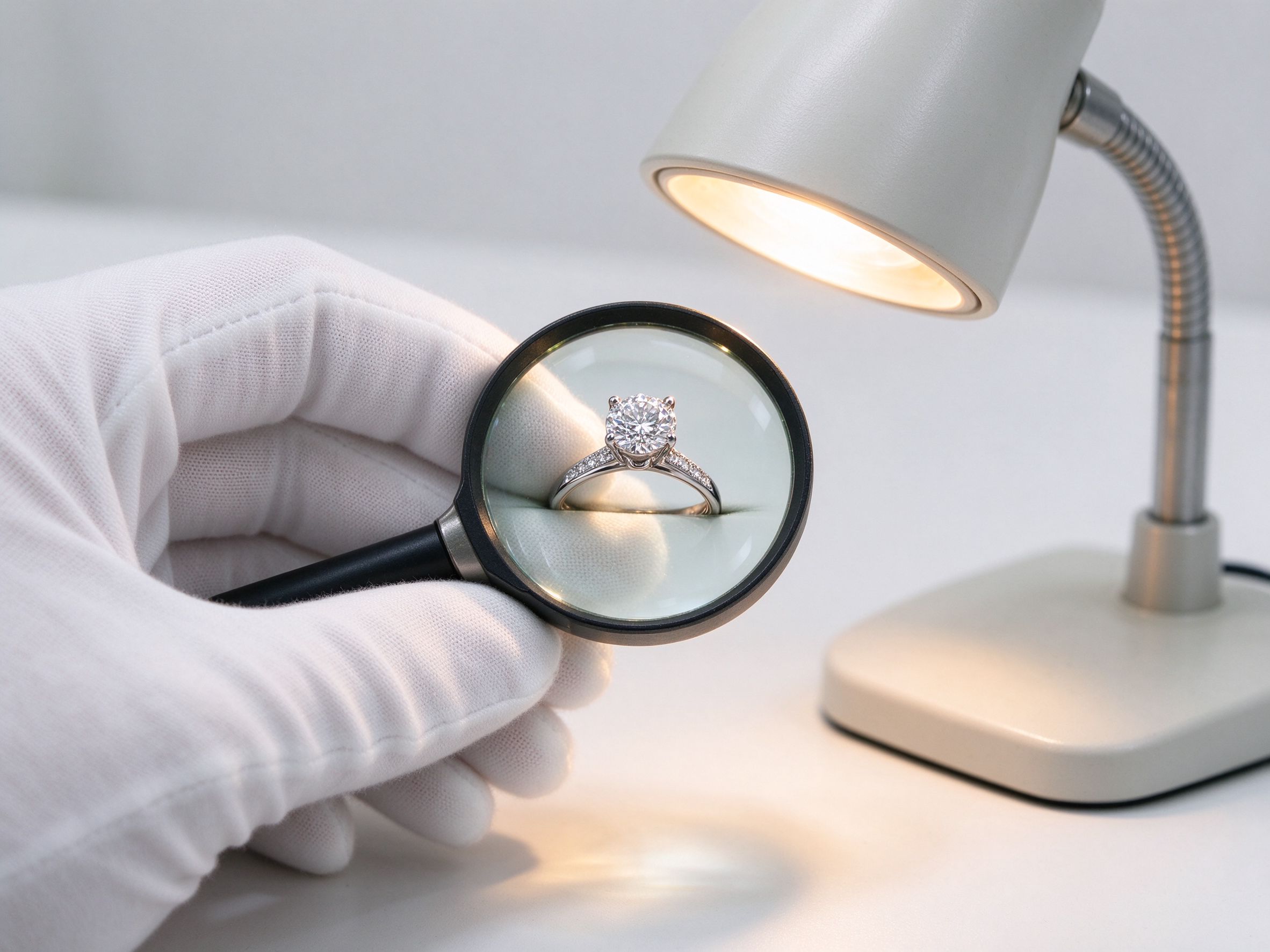
For an emerald cut moissanite, we recommend VVS for face-up solitaire pieces. VS can work for smaller stones or pieces where the customer will not loupe them, but because the open facets are so revealing, most buyers who know step cuts choose VVS. The cost difference is small, and the visual difference in a clear window is obvious. Our emerald cut range is hand-selected to be clean.
How we QC emerald cuts
Because the stakes are higher on clarity, our QC team inspects every emerald cut under a 10x loupe, face-up and through the pavilion. We reject any stone with a visible cloud or dark inclusion in the open window. We also check the step facet alignment: the concentric lines must be even, or the "hall of mirrors" look breaks. This is the same workflow described in our wholesale QC process.
Color also reads differently
The large table means color reads more directly in an emerald cut than in a facet-burst brilliant. For white-metal pieces, choose D-F. F-G can work, but the open window will show any warmth, so we are stricter about color on emerald cuts than on rounds. Our color and clarity guide explains the tiers.
Cut proportions matter too
An emerald cut that is too shallow looks washed out; too deep and it looks dark and small. The step facets must meet cleanly. This is why we do not stock cheap "emerald cut" stones that are just shallow rounds reshape. A true emerald cut is engineered, and you can compare it against the sister step shape in our emerald vs asscher comparison.
Who should sell emerald cut
Emerald cut sells to the understated, architectural buyer: vintage and art-deco clients, professionals, people who want "expensive-looking" rather than "sparkly." It is a high-margin shape because it is less common and the customer is less price-sensitive. Stock a clean 1ct and 2ct, like our 1ct emerald and 2ct emerald, and let the clean clarity sell itself.
Quick FAQ
Can I save money on clarity for emerald cut? We advise against it. An imperfect emerald cut is obvious in a way an imperfect round is not.
Does moissanite's fire show in a step cut? Less than in a brilliant; the look is clean and mirror-like, which is the appeal.
Is emerald cut good for rings? Yes, especially statement solitaires and cocktail rings. Pair with baguette sides for deco style.
What "eye-clean" really means on an emerald cut
On a round, "eye-clean" means no inclusions visible at arm's length. On an emerald cut, the open table makes the bar higher. We call a step cut truly eye-clean when it has no cloud, feather or dark crystal visible face-up in normal light. Because moissanite is lab-grown, we can hit this standard consistently, but we still inspect each stone under a loupe. The cost of VVS on emerald is small, and the visual payoff is large. See our clarity grading guide.
The effect of cut on color perception
The large table of an emerald cut also changes how color reads. A D stone looks cool and bright; an F stone shows a soft warmth through the table. For white-metal bridal, D-F is the safe sell. For yellow gold, F-G can look intentional and retro. Because the step cut is so transparent, there is nowhere to hide, so choose the grade deliberately. We explain the tiers in D, E and F grading.
Why we hand-check every emerald stone
A machine can measure dimensions, but only a trained eye can tell if the step facets align and the open window is perfectly clean. That is why our QC team inspects every emerald cut under a loupe before it ships. This hand-finishing is part of why step cuts carry a premium. You can see the result on the emerald category page, where we stock the 1ct, 2ct and 3ct stones.
Why we reject marginal emerald stones
On a brilliant cut, a slight cloud might pass. On an emerald cut, it shows. That is why our rejection rate on emerald cuts is higher than on rounds. We would rather reject a stone than ship one that a loupe-holding customer will notice. This keeps returns near zero. The cost of that rigor is built into the price, and it is worth it. See the emerald range.
What to inspect yourself on arrival
When emerald stones arrive, hold them under a lamp and look straight through the table. The window should be perfectly clear. Check the step facets for alignment. If you see a cloud or a crooked facet, contact us. This face-up check takes seconds and protects your customers. We explain the workflow in the QC guide.
Ordering clean emerald stones
When you order emerald cuts, specify VVS so the open table stays perfectly clear. Ask for face-up photos before shipment. We QC each stone under a loupe, but seeing it yourself confirms it. This is the standard for step-cut stock. See the clean range on the emerald page and request samples on custom cut.