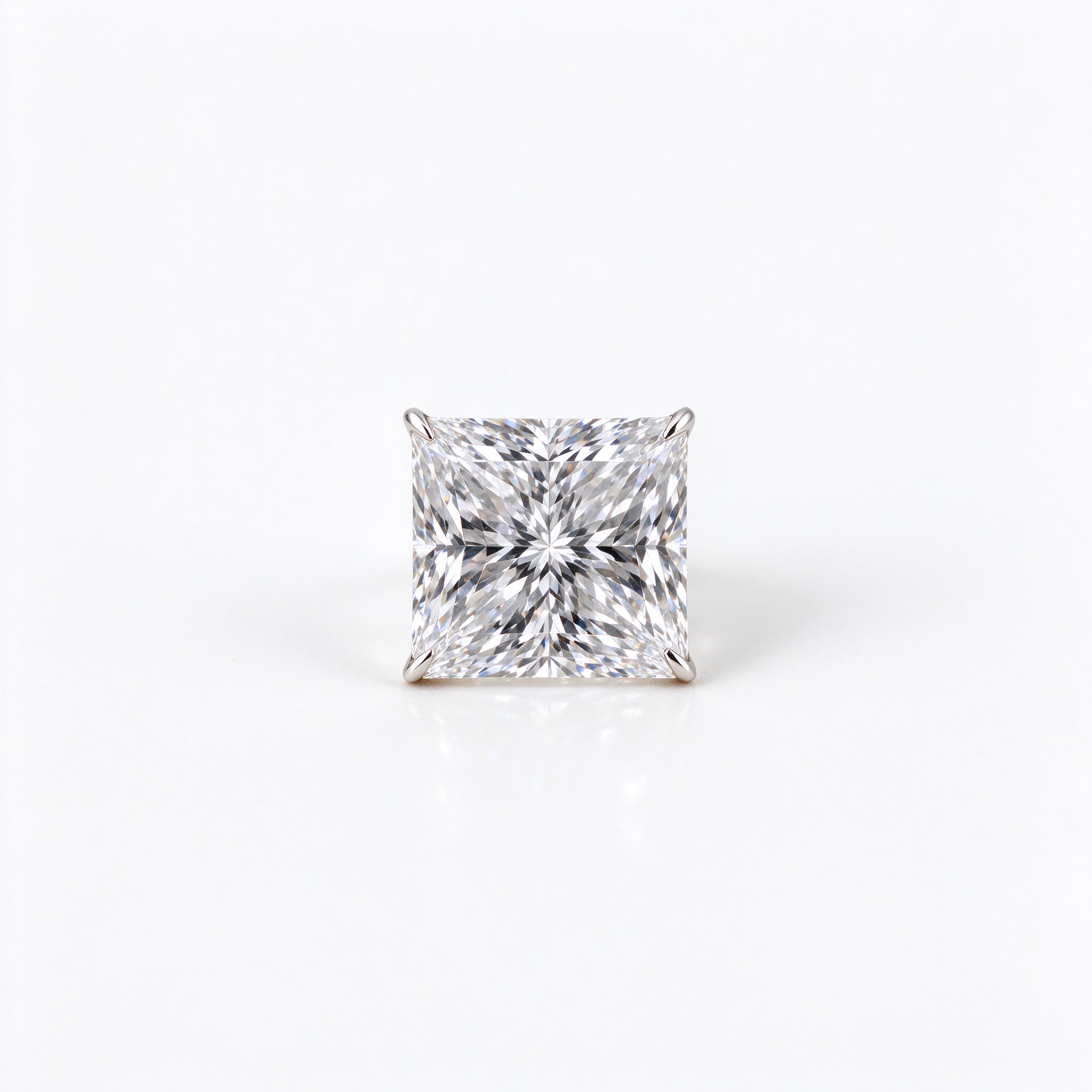
What Is a Princess Cut?
The princess cut is a square or rectangular-shaped stone with pointed corners and faceting on the pavilion. Unlike the emerald cut, which has step facets, the princess cut has brilliant-style facets that produce strong sparkle. It is essentially a round brilliant cut transformed into a square.
The princess cut was developed in the 1960s and quickly became the second most popular engagement ring shape after round. Its popularity comes from its modern, geometric look and its excellent value: because less rough material is wasted during cutting, princess stones cost less than round stones of the same carat weight.
Anatomy of a Princess Cut
A typical princess cut has 49 to 68 facets. The top (crown) is a flat square surface. The pavilion tapers to a point at the bottom. The corners are sharp and pointed, which makes them vulnerable to chipping.
Princess cuts come in both square (1:1 ratio) and slightly rectangular (1.1:1 to 1.2:1 ratio). Square princess is the classic look. Slightly rectangular princess offers a more elongated, modern appearance.
Why Princess Cut Offers Good Value
When cutting a round brilliant from a rough crystal, the cutter must remove material to create the circular outline. When cutting a princess, the square shape follows the natural crystal shape more closely. Less material is wasted, which means the finished stone costs less per carat.
For wholesale buyers, this means princess moissanite is priced 10 to 20 percent below round of the same size and quality. Customers get a larger-looking stone for less money. This makes princess an excellent choice for price-sensitive engagement ring buyers.
Princess Cut Quality: What to Look For
When buying princess moissanite, inspect these quality factors:
- Corner protection: The sharp corners are prone to chipping. Make sure the setting covers the corners (four-corner prongs or a bezel).
- Symmetry: The four sides should be equal. A lopsided princess looks awkward.
- Center brightness: A poorly cut princess can look dark in the center. Inspect face-up for a bright, lively center.
- Crown height: A very shallow crown reduces brilliance. Look for a stone with visible crown facets.
Best Jewelry Uses for Princess Moissanite
Princess cut stones work well in several jewelry styles:
- Solitaire engagement rings: A four-prong princess solitaire is a modern classic.
- Eternity bands: Princess stones set side by side create a clean, geometric band.
- Three-stone rings: A princess center with two round or tapered baguette side stones is popular.
- Stud earrings: Princess studs offer a contemporary alternative to round studs.
Princess Sizes to Stock
Popular princess sizes for moissanite:
- 4mm x 4mm (0.25ct equivalent) - accent stones, earrings
- 5mm x 5mm (0.5ct equivalent) - small rings, pendants
- 6mm x 6mm (0.75ct equivalent) - entry engagement rings
- 7mm x 7mm (1.25ct equivalent) - our best-selling princess size
The 7mm princess is the sweet spot. It offers the square look at a competitive price. Stock this size if you want to test princess demand without overcommitting.
The Princess Cut: Faceting and Light Performance
The princess cut is technically a "square modified brilliant." It has a flat square table on top and a full brilliant-cut pavilion that tapers to a point at the bottom. The 49 to 68 facets are arranged in a pattern that radiates from the center. Because the pavilion is fully faceted, the princess sparkles nearly as brightly as a round, even though it has a square outline.
One unique feature of the princess cut is that the pavilion tapers to a point, not a flat culet. This means the stone sits higher in its setting than an emerald cut of the same size. The point is hidden under the setting, which protects it. The sharp corners of the square top are the vulnerable points and need prong protection.
Because moissanite is doubly refractive, the princess cut shows interesting facet doubling under magnification. This is normal for moissanite and not a defect. Under a 10x loupe, the back facets appear doubled. Diamond princess cuts do not show this doubling. This is one way gemologists distinguish moissanite from diamond, but your retail customers will never notice.
Metal Settings for Princess Cut Moissanite
Princess cut stones work beautifully in several setting styles:
- Four-prong solitaire: Prongs at each corner hold the square stone. This is the classic princess look. Choose platinum or white gold for a modern, clean aesthetic.
- Bezel setting: A thin metal border around the square protects the corners and creates a sleek, contemporary look. Bezel-set princess rings are popular for men's bands and minimalist designs.
- Eternity band: Princess stones set side by side in a channel or prong setting create a clean, geometric band. The square shapes fit together neatly. This is a popular wedding band style.
- Three-stone setting: A princess center with two tapered baguette or round side stones is a classic bridal look. The square center provides a strong visual anchor.
For princess cuts, white gold and platinum are the most popular metals. The cool white tone complements the stone's geometric lines. Yellow gold princess rings have a vintage appeal but are less common. Rose gold princess rings are a modern fashion choice that is growing in popularity.
Common Princess Buying Mistakes
The first mistake is buying a princess that is too shallow. A shallow princess cut looks dark in the center because light leaks through the bottom. When inspecting a princess, look for a bright, lively center. If the middle looks dark or glassy, the cut is poor.
The second mistake is ignoring corner chips. The four sharp corners are the most vulnerable parts of a princess. Always inspect the corners under magnification before accepting a shipment. Even a tiny chip at a corner will worsen over time and may eventually require re-cutting.
The third mistake is buying a rectangular princess when you wanted a square. Some factories sell "princess" stones that are actually slightly rectangular (1.1:1 or 1.2:1). Measure the length and width yourself. If you want a true square, the ratio should be 1.00:1 to 1.05:1.
The fourth mistake is using princess stones in earrings without considering weight. Princess studs look modern, but the sharp corners can catch on hair and clothing. Round studs are more comfortable for daily wear. Reserve princess studs for fashion earrings that are worn occasionally.
The fifth mistake is overstocking princess stones. Princess is the least popular of the top four shapes (after round, oval, and cushion). It sells steadily but not as fast. Stock 5 to 10 pieces of your best-selling size and let demand guide reorders. Do not overcommit.
Frequently Asked Questions: Princess Cut Moissanite
Q: Why are princess corners vulnerable? A: The sharp 90-degree corners are stress points. A hard impact can chip them. Four-corner prongs or a bezel setting protects the corners. Never set a princess without corner protection.
Q: Is a princess cut more affordable than a round? A: Yes, typically 10 to 20 percent less per millimeter. The square shape wastes less rough material than a round. This makes princess an excellent value choice.
Q: Do princess stones sparkle like rounds? A: Yes. The full brilliant pavilion produces nearly as much sparkle as a round. The main difference is the square outline, not the light performance.
Q: What metal looks best with princess cut? A: White gold or platinum. The cool metal complements the geometric lines. Yellow gold princess rings have a vintage appeal but are less common.
Q: Can princess stones be used in eternity bands? A: Yes. Princess stones in a channel setting create a clean, modern eternity band. The square shapes fit together neatly.