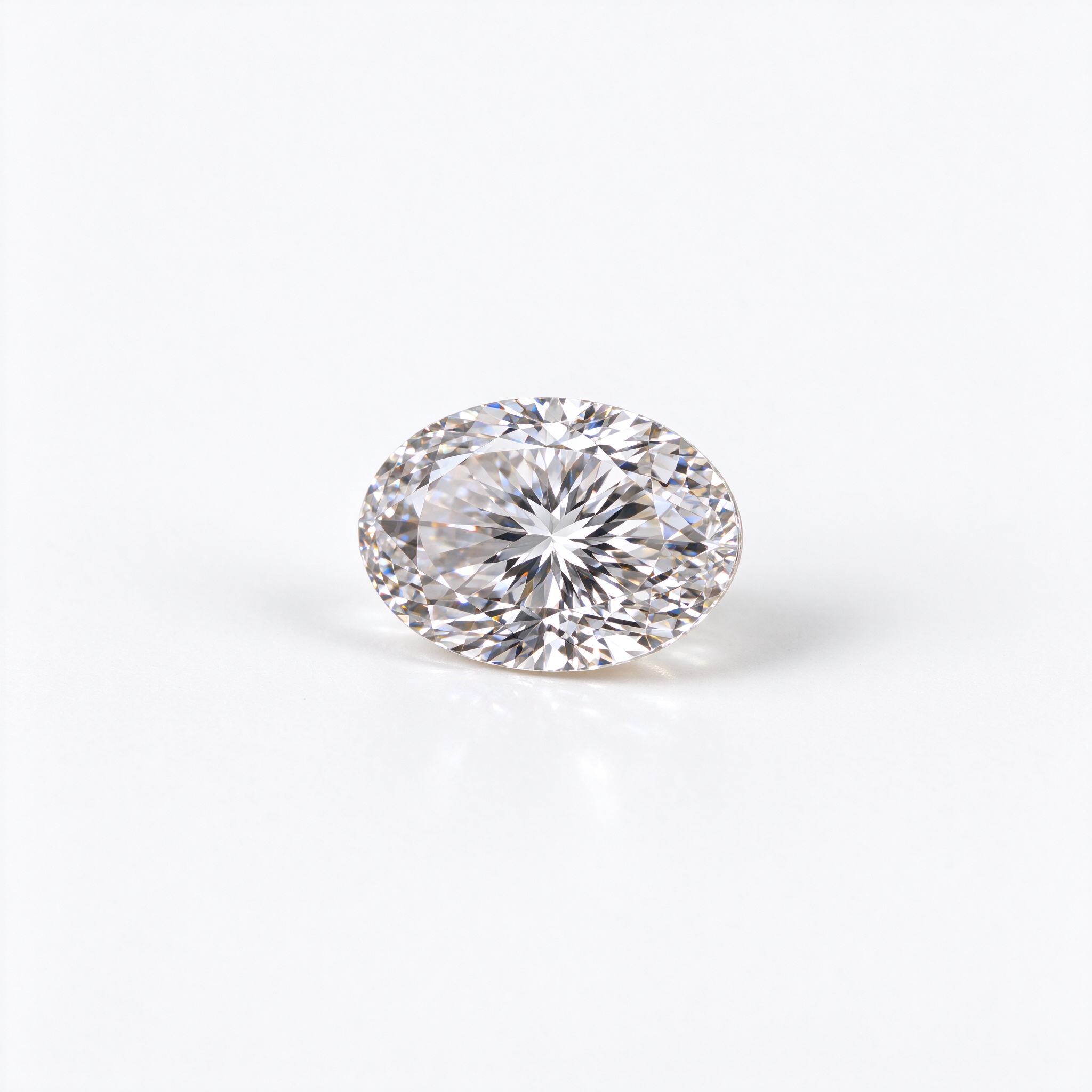
Open almost any listing for an oval cut stone and somewhere in the reviews you will read "it has a dark bow-tie across the middle." For oval moissanite buyers this is the single most common complaint, and it is almost always avoidable. At our Wuzhou factory we cut oval stones to a proportion window that minimizes the shadow, and in this guide we show you exactly what to look for so you do not ship a stone your customer sends back.
What is the bow-tie effect?
When light travels through an elongated brilliant shape, the two pointed ends of the oval sit at a steeper angle than the sides. In some cuts, the pavilion facets near those pointed ends fail to reflect light back to the eye, leaving a dark horizontal band across the center that looks like the knot of a bow tie. On a poorly cut oval it is obvious face-up. On a well-cut oval it is invisible or barely perceptible at normal viewing distance.
It is not a flaw in the material. Moissanite is perfectly clear; the bow-tie is a cut problem. Because moissanite's refractive index is higher than diamond's, the shadow can actually appear sharper on moissanite ovals if the angles are wrong. That is why we calibrate our oval cutting charts specifically for silicon carbide rather than copying diamond charts.
What causes it in practice
Three cut decisions drive the bow-tie:
- Pavilion depth: too shallow near the tips and light escapes, creating the dark band.
- Length-to-width ratio: extremely elongated ovals (over 1.45:1) show more shadow than balanced ones around 1.3:1.
- Faceting near the tips: how the cutter joins the crown and pavilion at the pointed ends decides whether light turns the corner.
How we cut around it
We target an oval length-to-width ratio near 1.3 to 1.4, which elongates the finger without stretching the cut so far that the tips lose their sparkle. We keep the pavilion inside a controlled depth window, and we hand-finish the tip facets. After cutting, every oval is inspected face-up on a white tray under diffused light. If the bow-tie is visible to the naked eye at arm's length, the stone goes back for re-cut rather than into stock.
How to check an oval before you buy
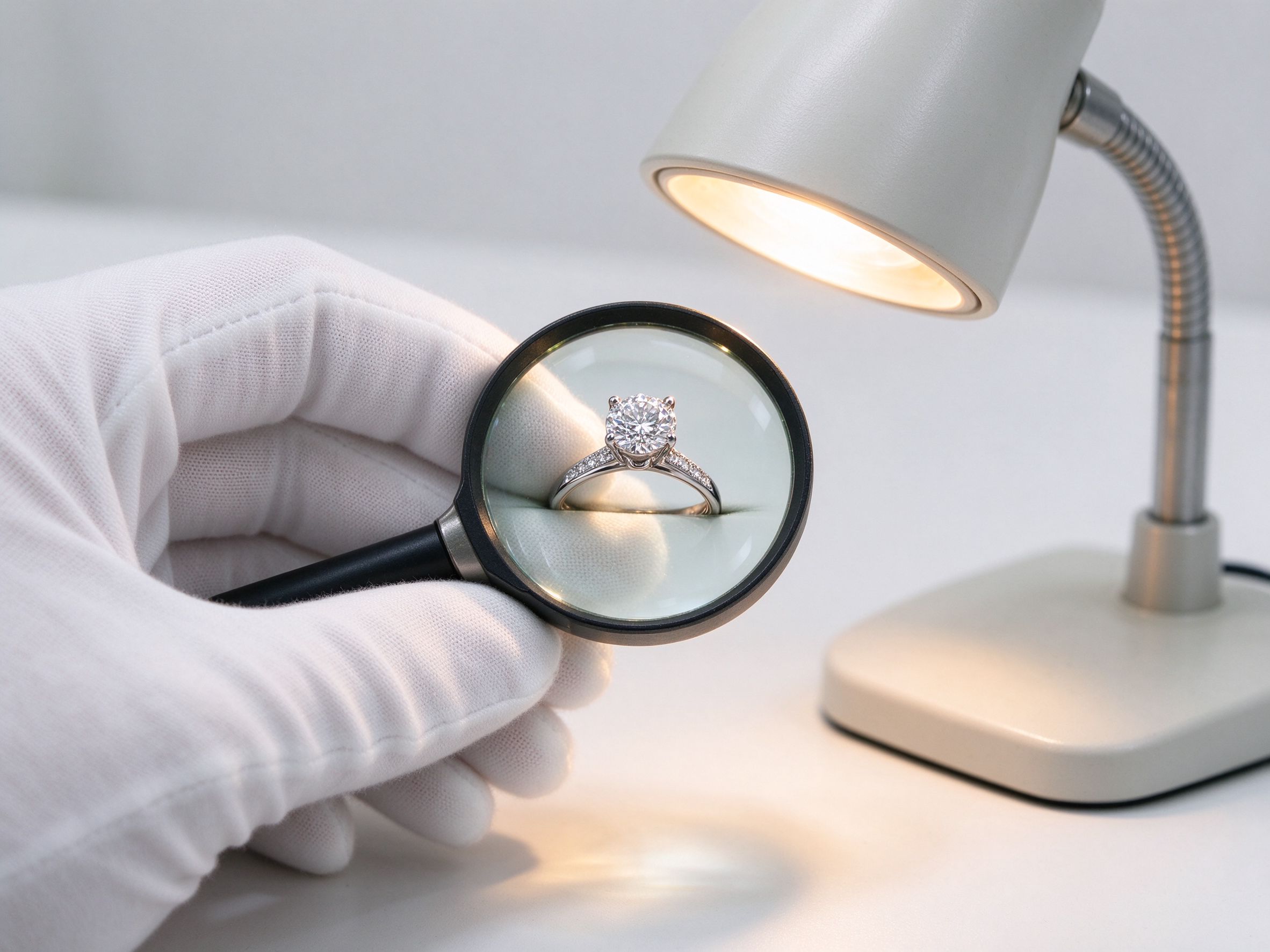
When you receive oval moissanite, do this: lay it flat on a white surface under a lamp and look straight down. Rotate it slowly. A clean oval should glow evenly across the whole face. If you see a distinct dark horizontal band, especially one that stays visible as you rotate, the cut is poor. Compare that to the same check on our oval cut collection, where you can expect even light return.
Does setting hide a bow-tie?
Partially. A halo or a bezel can distract the eye, but a savvy customer will still see it in bright light. It is not worth shipping a marginal oval and hoping the setting hides it. The correct fix is a better cut stone, which costs only marginally more at wholesale.
Oval vs round: the trade-off
Ovals look larger than rounds of the same carat because the elongated face-up spreads across the finger. But rounds are essentially bow-tie-free because their symmetry is circular. If your customer wants maximum size and a modern look, an oval cut well is worth the extra attention to proportions. For a deeper comparison, read our fire and brilliance comparison.
Quick FAQ
Is a slight bow-tie acceptable? Barely visible at loupe distance is normal; visible at arm's length is not. We ship stones that pass the arm's-length test.
Which ratio looks most natural? Around 1.3:1. More elongated looks glamorous but risks the shadow.
Can you cut a custom ratio? Yes. Tell us your target ratio on the custom cut page and we will cut and QC to it.
How lighting changes what you see
The bow-tie is more obvious in some light than others. Under a direct overhead spotlight, a marginal oval can look perfectly fine; under soft diffused light, the shadow appears. This is why we QC under diffused daylight rather than a bright spot lamp. When you test samples, do the same: lay the stone on a white tray near a window, not under a task light. If the light return is even there, it will look even on a customer's hand in normal room light.
Does the cut change over the carat range?
Bow-tie risk is most visible on larger, more elongated ovals. A 1ct oval around 8x6mm is usually well within our clean window. Larger ovals (2ct and up) give the cutter more room to stretch the ratio, which is where careless factories let the shadow creep in. This is one reason we keep the ratio controlled across all sizes. See the sizes we stock on the oval category page, from the 1ct oval to the 3ct oval.
Setting and photography tips
A well-cut oval photographs evenly, which is important because oval rings sell heavily online. If your product photos show a dark center, it is almost always the cut, not the lighting. We suggest photographing oval stones in diffused light with a white background to show the true light return. For more on selling shapes online, read our ecommerce selection guide. And if you need a custom ratio for a specific design, request it on the custom cut page.
How to test an oval before committing to bulk
Because bow-tie risk varies, always order a sample oval first. Lay it on a white tray near a window and look straight down. Rotate it. If the glow is even, the cut is good. If a dark band appears, reject the batch. This ten-second test protects you from a whole order of marginal stones. We expect buyers to do this; it is why our sample tier exists. Read the sample process for how to start.
Bow-tie on ovals vs other elongated shapes
Ovals are not the only shape that can show a bow-tie; pears and marquise can too. But the oval is where customers notice it most, because the oval is the most popular elongated engagement shape. The same proportion controls apply: controlled pavilion depth and balanced ratio. We apply one QC standard across all elongated stones. Compare the shapes in the cut guide and see our clean stock on the oval page.